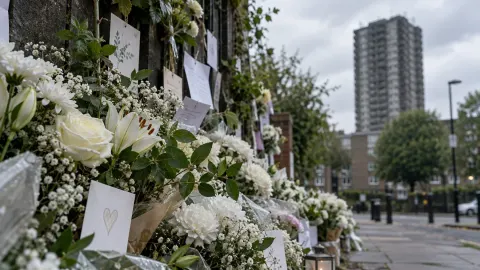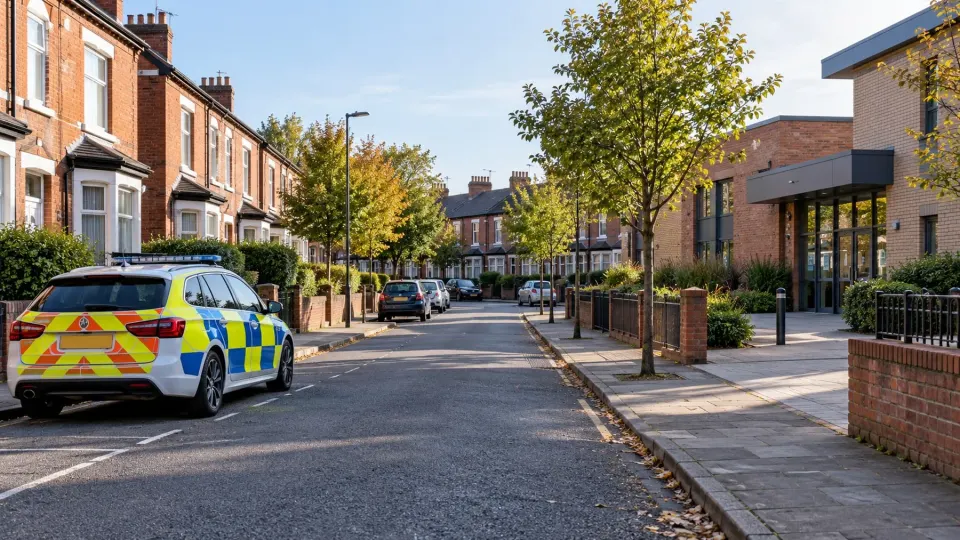
Two men have been charged with preparing acts of terrorism following an investigation into an alleged plot targeting Manchester's Jewish community. This is the significant change since OutOut reported their arrests in September: prosecutors have now authorised charges and police have published an outline of what they allege the men did. A charge is an allegation to be tested in court, not a finding of guilt.
Counter Terrorism Policing named Salam Ahmadyan, 36, of Liverpool, and Rahman Salehi, 34, of Salford. The Metropolitan Police said on Friday evening, 2 October, that both men, described by police as Iranian nationals, had been charged under section 5 of the Terrorism Act 2006. They were remanded in custody to appear at Westminster Magistrates' Court on Saturday 3 October. At the time of writing, that hearing had not taken place; we are not reporting a plea or a court decision that does not yet exist.
This is a case about two named defendants. Their nationality is part of the police's account, but it does not establish that the Iranian state directed the alleged conduct, and it says nothing about other Iranian people living in Britain. The police statement itself says the two men were allegedly in contact with an overseas third party who may be in Iran. The word matters. Location and the other person's identity have not been established in the public material.
What the charges allege
The published charge particulars allege preparation for a terrorist act on or before 20 September. They refer to encrypted communications, acquiring material about an improvised explosive device, obtaining liquids and equipment, researching potential targets and conducting reconnaissance. These are the prosecution allegations as summarised by police. Whether the defendants did any of those things, what any item meant and whether the legal test is met are questions for the courts.
We are deliberately not repeating the chemical combinations or assembly details listed in the charge sheet. They are not needed to understand the story. The key public-interest facts are the nature of the offence charged, the alleged target community, the claimed preparation and the stage the case has reached. Police have not published a final chosen location or an attack date. In particular, it would be wrong to turn concern during the Jewish High Holy Days into an assertion that a particular service or building was selected.
The two men were arrested in central Manchester on Sunday 20 September. Officers subsequently searched addresses in Liverpool and Salford and obtained warrants allowing further detention while investigators worked. Our earlier account of the arrests reflected what was known then: no charges and no public detail of an alleged method. Friday's charge announcement changes that position. Linking the two reports preserves the chronology instead of silently rewriting the past.
What police are saying about public safety
Deputy Assistant Commissioner Vicki Evans said investigators believe they disrupted a plot and do not believe there is an ongoing threat to the public from this matter. Greater Manchester Police said visible protection and engagement with Jewish communities would continue. Those are operational assessments, not a promise that antisemitic threats have ended nationally.
The announcement lands during the Jewish High Holy Days and around the anniversary of the deadly attack at Heaton Park synagogue. Police explicitly acknowledged the fear this timing may cause. Security at worship and community sites is a practical response to that fear, but responsible reporting should not publish invented target lists or amplify rumours about where an attack was supposedly planned. People need reliable contact with police and community leaders, not a map assembled by strangers on social media.
Counter Terrorism Policing also drew a firm distinction from its separate RAF Fairford investigation. Officers said the Manchester case and the Gloucestershire airbase inquiry are not connected in any way. Our Fairford report concerns different suspects and allegations. The cases share a tense geopolitical backdrop, but that is no licence to stitch them into one conspiracy. The public record does not support it.
Anyone with a genuine concern about suspicious activity can use the official counter-terrorism reporting service or call police. An immediate danger warrants 999. Ordinary religious practice, political speech or somebody's ethnicity is not evidence of terrorist conduct. Accuracy here protects community safety and the right of the accused to a fair trial at the same time.
Why the legal stage matters
For nearly two weeks the public story was an arrest and a police assessment. A charging decision means prosecutors consider there is a case to bring before a court; it does not mean the evidence has survived cross-examination or that a jury has decided anything. The defendants are entitled to the presumption of innocence. The court process will establish which claims can be proved and how the defence responds.
That is why a headline should say charged over an alleged plot, rather than the plotters are caught. Even descriptions such as a "bomb plot" can outrun the published information if they imply an assembled device or a fixed target. The police particulars allege acquisition of information and materials; they have not reported that an attack happened. The difference is fundamental for anyone reading a share card without the article beneath it.
There are also limits on what may responsibly be added to a live criminal case. Evidence may be disputed, and prejudicial commentary can undermine proceedings. We will follow court reporting and make any substantive correction or development visible. Speculation about guilt, ideology or outside direction does not become verified because many accounts repeat it.
What should happen next?
The scheduled first appearance at Westminster Magistrates' Court is the next public milestone. It should establish the immediate procedural position and future timetable. Later hearings may explain more about the alleged preparation, evidence and any defence case. Until then, police and prosecutors should be the source for procedural facts, and the court record should replace speculation once proceedings begin.
There is a broader public question too: how protection and reassurance reach people who use Jewish schools, synagogues and community facilities without turning daily life into an endless emergency. Greater Manchester Police says it is working with local leaders and the Community Security Trust. Officials should be judged on concrete protection, clear communication and whether threats are investigated effectively, not on the volume of their statements.
The OutOut verdict
The charges are serious, and the alleged target makes the case especially distressing for a community already living with heightened security. Reporting the accusation precisely does not diminish that distress. It gives the public a firmer footing than rumour.
Police say they have disrupted a threat; prosecutors have brought charges; a court has yet to decide the facts. Keep those three stages separate. Protect people now, let the evidence be tested and resist the internet's urge to convict, invent a state sponsor or blame a whole nationality before the first hearing has even begun.
Sources
- Metropolitan Police: two men charged with suspected terror plot targeting Jewish community in Manchester, 2 October 2026, 20:30.
- Reuters: two UK men charged over alleged terrorism plot, 2 October 2026.