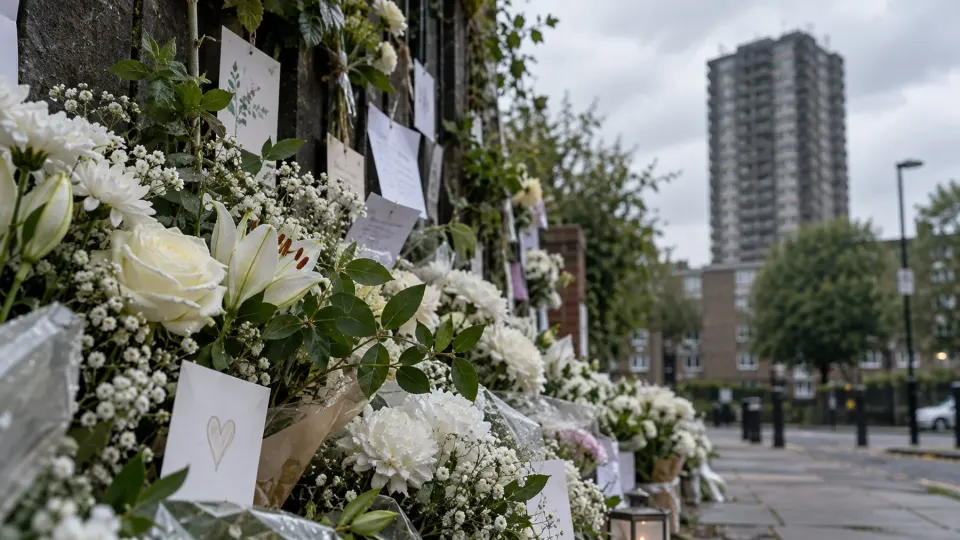
The Metropolitan Police have sent their complete Grenfell Tower case files to the Crown Prosecution Service, asking prosecutors to consider charges including corporate manslaughter and gross negligence manslaughter. The handover, announced on Wednesday 30 September, is a major step in a criminal investigation that began after 72 people died in the west London fire on 14 June 2017.
It is not a charging announcement. The CPS must examine the evidence and decide whether the legal tests for prosecution are met. The people and organisations under investigation remain suspects, not convicted offenders. For bereaved families and survivors who have waited more than nine years, that distinction does not make the milestone small. It makes the next stage particularly consequential.
The Met says 20 case files relate to 54 individuals and 20 companies or organisations. Prosecutors have been asked to consider possible health and safety offences, fraud and related offences, and misconduct in public office alongside the manslaughter allegations. The categories identify potential legal routes, not a statement that every suspect faces every possible charge.
What has actually gone to the CPS?
Police say the submission also contains 14 overarching evidence files. Their summary reports alone run to more than four million words across 12,600 pages and refer to over 45,000 documents, images and exhibits. Investigators gathered 165 million electronic files, took 14,700 statements and retained more than 27,000 exhibits, from cladding and insulation to doors and windows.
Scale is not the same as proof. A vast record has to be organised into specific allegations against specific defendants, with admissible evidence capable of meeting the criminal standard in court. Prosecutors will need to consider causation, knowledge, duties and the limits of each offence as they applied to events before and during the fire. A public inquiry's findings can illuminate what happened; criminal proceedings have different rules and a higher burden of proof.
The Met says it examined the roles of more than 15,000 people and 700 organisations before identifying the 54 people and 20 organisations in the files. That work explains why the case took time, but it does not remove the human cost of the delay. Families have had to watch multiple inquiries, safety debates and political promises while the criminal decision remained pending.

Why the next decision matters
The CPS has committed to making charging decisions before the fire's tenth anniversary in June 2027. That is a target for a decision, not a trial date or a promise of convictions. Prosecutors may authorise charges, request more work, or decide that some proposed cases cannot proceed. Each outcome will require a clear explanation where the law permits one.
The 2024 public inquiry concluded that decades of failures by government, regulators and companies involved in Grenfell's refurbishment contributed to the disaster. The criminal question is narrower and more exacting: can the evidence prove particular offences by particular people or organisations? Treating the inquiry as a verdict in a future criminal case would be unfair to everyone involved, including the families who need a prosecution strong enough to withstand scrutiny.
There is a broader public interest too. Grenfell changed how Britain talks about combustible cladding, building regulation, emergency planning and residents' warnings. A criminal process cannot repair the loss, and a decision not to charge a particular suspect would not erase the inquiry's systemic findings. But the question of legal accountability has hung over every discussion of safety since 2017.
The Met says its investigation team included 220 investigators. Deputy Assistant Commissioner Kevin Southworth described the handover as a milestone while acknowledging the nine-year wait. He said the force had worked to produce the strongest possible evidence for prosecutors. Those are the police's claims about their process; the CPS now has the independent task of testing what the files support.
What readers should watch for
The next meaningful update is not a leaked guess about who may be charged. It is an authorised CPS decision setting out offences, defendants and the legal process, or explaining why charges cannot be brought. Until then, naming people as guilty or promising a particular sanction would confuse suspicion with proof.
If charges are authorised, a court would still have to hear the cases. Defendants would be entitled to contest the evidence. Multiple cases could follow different paths and timescales. Neither a police referral nor a prosecution guarantees that the long account of what happened at Grenfell can be compressed into a single courtroom answer.
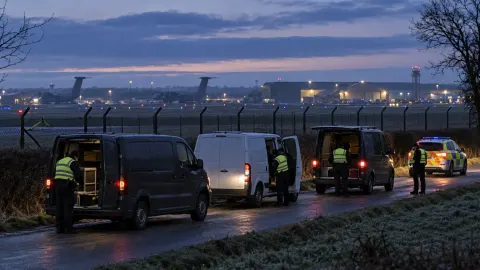
OutOut has previously covered the need to separate investigative action from established guilt in the RAF Fairford arrests. The stakes and facts differ, but the reporting rule is the same: a legal process is a sequence, and each step has its own meaning.
The strongest public measure of progress will be whether prosecutors can reach reasoned decisions on the promised timetable and whether survivors and families receive information respectfully before the headlines. More than nine years after the fire, a communication failure would be another unnecessary injury.
The OutOut verdict
Seventy-two people died. The file has finally reached the desk where criminal charging decisions are made. That deserves careful attention rather than a premature victory lap or a rush to declare the exercise futile.
The enormous evidence count may explain the work, but it cannot be offered as a substitute for an outcome. The public should expect the CPS to act independently, explain its decisions and respect the families' long wait. The paperwork is now in the right place. Justice still has to move through it.
Sources
- Metropolitan Police: all Grenfell files submitted to the CPS (30 September 2026).
- Reuters: police seek consideration of manslaughter and other charges (30 September 2026).