British counter-terrorism police say they have disrupted a suspected plot targeting the Jewish community in the Manchester area after arresting two men in their 30s.
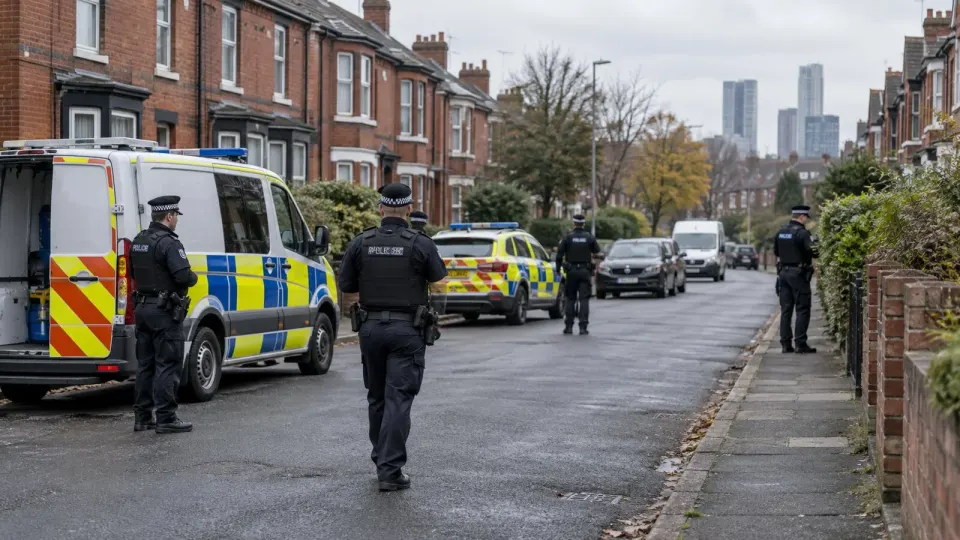
The men were arrested in central Manchester on Sunday 20 September under terrorism legislation, police said on Tuesday. Searches were also carried out in Salford and Liverpool. Both men remained in custody in London while investigators continued their work.
Vicki Evans, the senior national coordinator for Counter Terrorism Policing, described it as a long-running proactive investigation and said detectives believed they had disrupted a plot. She also said police did not believe there was an ongoing threat.
That is the verified public position at the time of publication. Police had not released the men’s names, detailed any alleged target, identified a suspected ideology or announced charges. Arrest is not conviction, and the allegations have not been tested in court.
Those limitations are especially important in a terrorism case. Filling gaps with social-media rumours can prejudice proceedings, spread fear and falsely associate entire communities with acts they neither planned nor supported.
What police have confirmed
Two arrests took place in central Manchester. Searches occurred in three north-west locations. The investigation concerns what police describe as a suspected plot against the Jewish community in Manchester. The suspects are being held under powers that allow investigators time to examine material and determine whether criminal charges are justified.
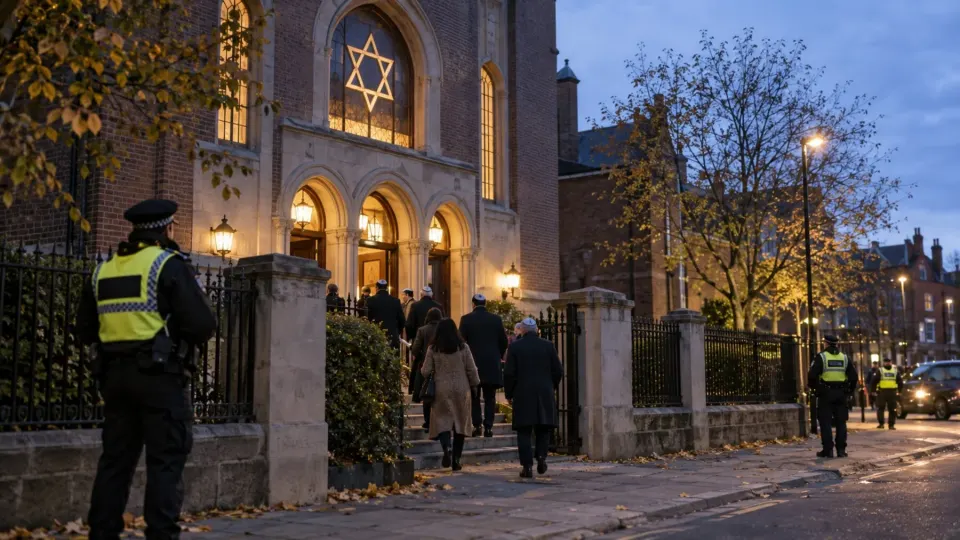
Police said security activity would be increased during the Jewish High Holy Days. The purpose is reassurance and protection, not evidence that officers expect a separate imminent attack. Evans explicitly said investigators did not believe there was an ongoing threat.
The timing carries painful weight. Nearly a year ago, two Jewish worshippers were killed during an attack at a Manchester synagogue on Yom Kippur. Reuters reported that one worshipper was attacked and another fatally shot by police amid the response. Earlier this year, arson attacks targeted Jewish-linked sites in London, and two Jewish men were stabbed in April in what police treated as a suspected terrorist incident.
Britain’s national terrorism threat level is “severe”, meaning an attack is considered highly likely. That assessment covers the country generally; it does not mean police are warning that a specific attack is about to occur at a particular place.
Why careful language protects everyone
When police announce disruption of a suspected plot, journalists need to report the seriousness without turning an investigation into a verdict. “Police say” and “suspected” are not timid phrases. They are the legal and factual boundary between an allegation and a proven case.
The same restraint should apply to motive. No responsible conclusion can be drawn from locations, ages or anonymous online claims. If prosecutors later authorise charges, they will publish offences and the case will move through open court. Until then, speculation serves algorithms rather than public safety.
Jewish communities do not need their fear exaggerated to make it real. Recorded antisemitism has risen sharply since the Hamas attacks of October 2023 and the subsequent Gaza war. People attending worship, school or community events should not have to calculate whether their identity creates a security risk.
At the same time, reporting must avoid suggesting collective blame towards Muslims, migrants or any other group. Terrorism is the responsibility of perpetrators and conspirators, not neighbours who share a religion or background. Security and social cohesion are allies; panic and suspicion are gifts to extremists.
What happens next
Investigators will examine seized devices, communications and other evidence. Detention under terrorism law is subject to legal limits and judicial oversight. Possible outcomes include charge, release without charge, release under investigation or further applications permitted by law.
If charges are brought, public reporting may become restricted to protect the right to a fair trial. OutOut will distinguish the prosecution allegation, defence position and established evidence. Details circulated on social media should not be repeated merely because somebody has added “apparently”.
Community members concerned about security should follow Greater Manchester Police and recognised local organisations rather than anonymous accounts. In an emergency, call 999. Suspicious activity can be reported through official counter-terrorism channels, but ordinary religious practice, political disagreement or ethnicity are not suspicious behaviour.
There is also a practical duty on public figures. Extra patrols and direct communication can reassure people; theatrical statements that reveal operational details or imply guilt cannot. If the investigation produces charges, the courts become the place to test evidence. If it does not, the absence of a charge must be reported with the same prominence as the arrest. Public safety depends on intelligence work, but public confidence depends on officials and publishers knowing where certainty ends.
Follow verified developments in OutOut’s UK news section.
The OutOut verdict
The encouraging part of this story is that a proactive investigation may have stopped violence before anybody was harmed. The frightening part is that Manchester’s Jewish community must again hear that it may have been selected as a target.
Police should provide evidence through the proper legal process, communities should receive visible protection and politicians should resist converting an active case into campaign scenery. The public needs vigilance without vigilantism, reassurance without complacency and facts without the internet’s traditional garnish of invented cousins who supposedly work for MI5.