Thirty lions and tigers are finally being removed from a notorious Argentine zoo where animals spent years surviving inside cramped concrete cages.
Not living.
Not thriving.
Surviving.
The former Luján Zoo, around 70 kilometres from Buenos Aires, was closed by authorities in 2020 following serious safety and animal-welfare concerns.
The gates shut.
The visitors disappeared.
The animals remained.
Humanity had performed its favourite administrative trick: announce that a problem is closed, then leave the living consequences behind.
THE ZOO CLOSED — THE CAGES DIDN’T
At its peak, Luján Zoo reportedly held around 200 big cats.
The attraction became notorious for allowing visitors unusually close contact with dangerous animals, including opportunities to pose alongside them.
Once the photographs stopped and the entrance money disappeared, dozens of lions and tigers were left inside ageing enclosures while their future became trapped somewhere between ownership disputes, government negotiations and international rescue logistics.
When the global animal-welfare organisation Four Paws gained access in 2025, 62 big cats and two brown bears remained at the site.
The bears have since been relocated, while veterinary teams began the enormous task of assessing, treating and finding suitable homes for the surviving lions and tigers.
The Associated Press reported in 2025 that many of the animals had gone years without specialist veterinary treatment.
Apparently, closing a zoo is straightforward.
Actually rescuing the animals inside requires paperwork, funding, international agreements, veterinary teams, aircraft, sanctuaries and somebody willing to admit that locking the front gate was not the same as solving the problem.
WHAT YEARS OF CONCRETE DID
Veterinary assessments identified serious health problems among the animals, including:
* Severe muscle loss
* Obesity caused by inactivity
* Dental disease
* Kidney problems
* Untreated injuries
* Conditions linked to stress and prolonged confinement
Large predators are built to roam, explore, stalk and respond to complex environments.
They are not designed to spend year after year walking the same few metres of concrete until the route becomes carved into both the floor and their behaviour.
Former zoo workers had continued doing what they could, but goodwill cannot replace specialist medicine, proper facilities or somewhere appropriate for a tiger to live.
Four Paws brought in veterinarians, wildlife experts and improved feeding and care procedures while the relocation plans were negotiated.
The rescuers were not preparing animals for a holiday—they were trying to repair damage measured in years.
THIRTY TICKETS OUT
The first major relocation will move 17 tigers and 13 lions to two specialist wildlife sanctuaries.
The animals will be divided as follows:
* Nine tigers and six lions will travel to the Lionsrock Big Cat Sanctuary in South Africa
* Eight tigers and seven lions will travel to The Wild Animal Sanctuary in Colorado
Lionsrock provides large natural enclosures across approximately 60 hectares and already cares for more than 80 rescued big cats.
The Colorado sanctuary operates across vast grassland habitats where rescued animals can experience space, natural ground and professional lifelong care.
This is not a release into the wild. Animals born or kept in captivity for years generally cannot simply be dropped into a forest with a packed lunch and directions to the nearest antelope.
But it is a move from concrete confinement to environments designed around their needs rather than the purchasing of entrance tickets.
The official Four Paws mission page describes the operation as one of the organisation’s most ambitious rescues.
MOVING A LION IS NOT RYANAIR WITH EXTRA LEGROOM
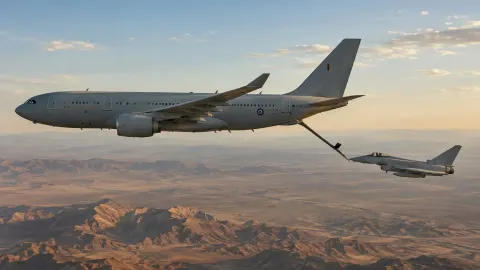
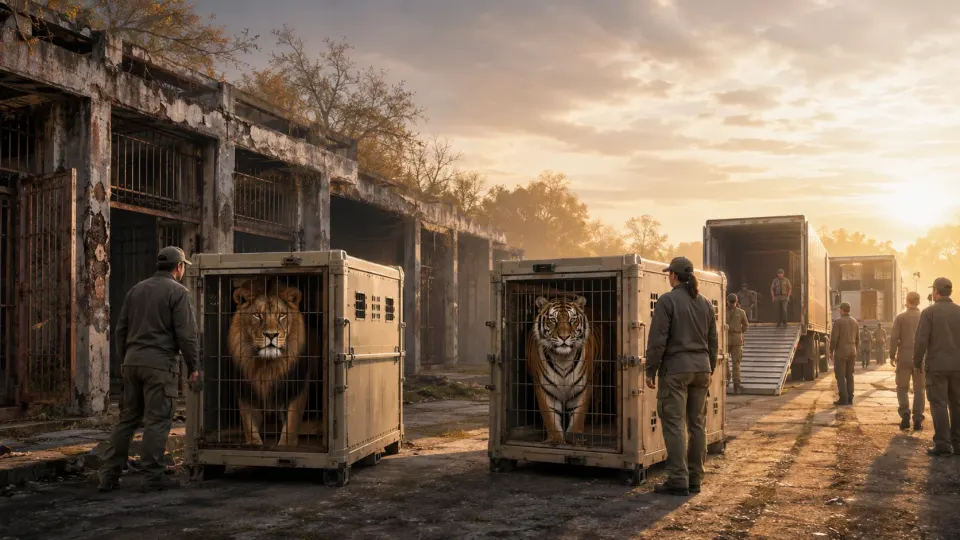
Relocating 30 large predators across continents is an operation involving custom-built transport crates, veterinary supervision, government permits, ground convoys and multiple international flights.
Each animal must be medically assessed before travelling.
Teams must consider:
* The animal’s health and temperament
* Crate dimensions and ventilation
* Temperature during transport
* Feeding and hydration
* Airport handling
* Flight connections
* Emergency veterinary arrangements
Some animals will travel thousands of miles through international aviation hubs before reaching their new homes.
There are no online check-ins.
There is no arguing over whether the tiger’s crate qualifies as cabin baggage.
And nobody at airport security is asking a lion to remove its belt.
According to the latest Associated Press report, the operation is considered one of the largest relocations of captive big cats ever attempted.
THE ONES STILL WAITING
The departure of 30 animals is a major breakthrough, but it is not the end of the story.
Other big cats remain at the former zoo while suitable long-term homes are sought.
They will continue receiving care, but their presence is an uncomfortable reminder that rescue work does not finish when the most dramatic photographs have been taken.
Every remaining animal still requires:
* A suitable sanctuary
* International transport approval
* Medical clearance
* Funding
* A safe journey
* Lifelong specialist care
Thirty animals are leaving.
Others are still staring through the same bars.
Celebration is justified—but declaring victory would be premature.
THE OUTOUT VERDICT
The rescuers deserve enormous credit.
The animals deserved better from the beginning.
A zoo that profited from putting people beside powerful predators should never have been allowed to leave those same animals pacing inside concrete boxes once the business collapsed.
Closing the attraction in 2020 may have stopped visitors entering.
It did not immediately stop the suffering inside.
For years, bureaucracy moved more slowly than an ageing lion with damaged joints.
Now, at last, 30 animals are moving towards grass, space, specialist care and something resembling dignity.
They cannot recover the years spent behind concrete and steel.
But they can finally stop counting them.