Britain announced an £88 million package for Palestinian humanitarian relief and early recovery on Thursday 24 September. The government says it will support healthcare, clean water, sanitation, waste management and protection services for people affected by the conflict in Gaza and the West Bank.
The first qualification belongs near the top, not hidden after the applause. The Foreign, Commonwealth and Development Office says the package combines previously announced support through UNRWA and the UN Horizon Fund with new humanitarian funding. It did not, in its announcement, break out how much of the £88 million is newly committed on Thursday. Calling the entire amount brand-new money would overstate what is known.
There is another useful boundary: the money covers Palestinians in Gaza and the West Bank, rather than Gaza alone. The headline announcement focused on the crisis in Gaza, where access to aid remains central to whether money can become treatment, drinking water or a functioning sanitation service. Those geographic and accounting details matter when public spending and human lives are at stake.
What Britain says the support is designed to do
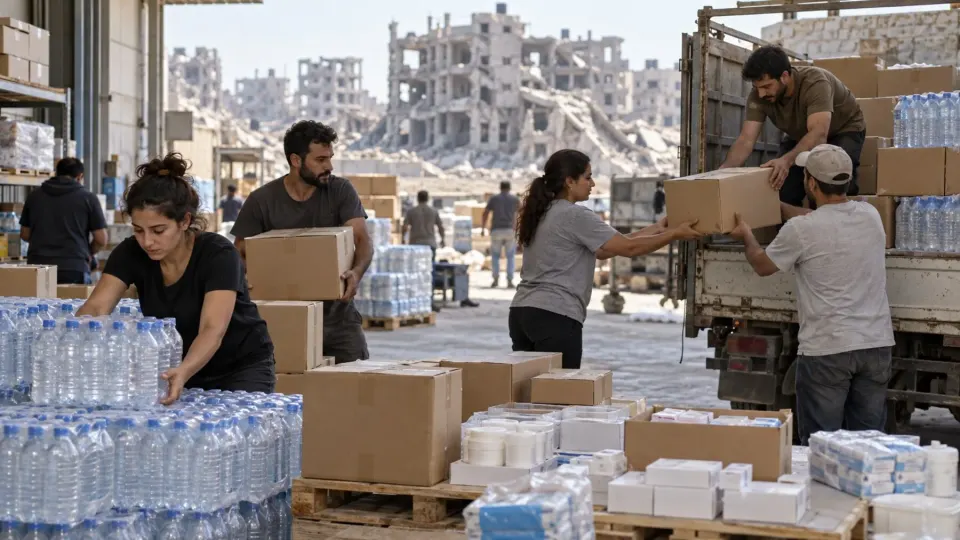
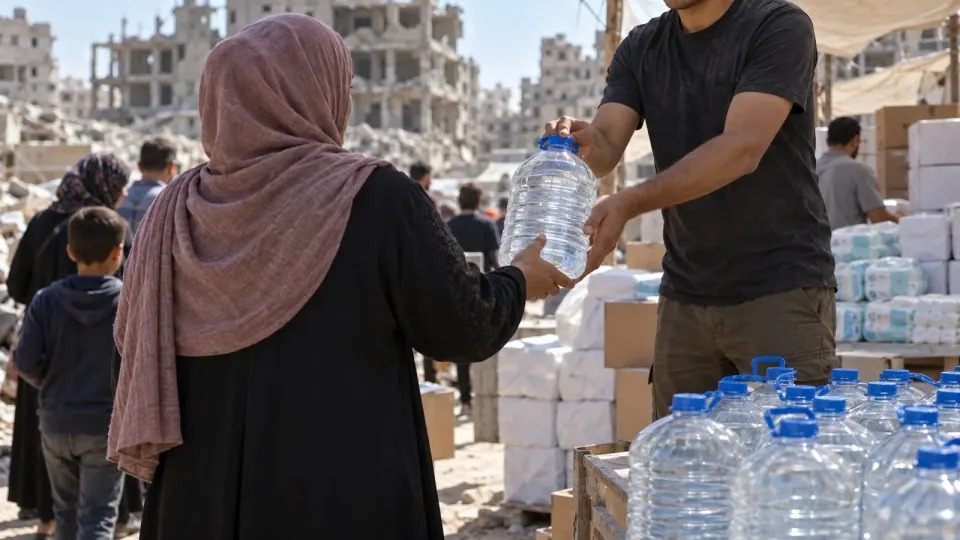
The FCDO says UK-supported health facilities could provide medical consultations for up to 900,000 people. It sets out rehabilitation and prosthetic treatment for 1,000 children with blast injuries; solid-waste services for up to 900,000 people; emergency water trucking for 150,000; and mental-health and psychosocial support for 21,000.
These are government projections of people who could benefit, not independently verified counts of people already served by this announcement. One person might use more than one service, so adding those figures together would not produce a reliable total of unique beneficiaries. Delivery dates, local conditions and sustained access will determine how much of that ambition can be realised.
The government also says its bilateral official development assistance budget for Palestine for the 2026–27 financial year is £127 million, an allocation published in July. The newly described £88 million package sits in the context of that programme; the press notice should not be read as proof of an extra £88 million added on top of the entire pre-existing budget.
That may sound like bookkeeping in a humanitarian disaster. It is precisely because the situation is so serious that accurate bookkeeping matters. The public needs to know what is newly available, what is a restatement of earlier commitments, and how much has actually reached organisations that can deliver it.
A pledge is not the same as access
The announcement accompanied a meeting the UK co-hosted with Jordan and Qatar at the United Nations General Assembly. The stated purpose was to bring regional partners, Palestinian representatives, civil society and international donors together around practical steps on humanitarian access, healthcare and recovery.
Foreign Secretary Ed Miliband urged Israel to end what he described as unacceptable restrictions on Gaza. That is the British government's assessment and diplomatic demand. It does not provide a new independent measurement of restrictions on the day the package was announced. Nor can a press release settle the many operational questions faced by people trying to move medicines, water-treatment equipment and staff safely.
Getting supplies to a port or border is only the beginning. Clinics need working equipment, reliable access to patients and safe passage for staff. Water needs fuel, distribution, storage and monitoring. Waste management needs vehicles, crews and somewhere to put hazardous material. Mental-health support depends on skilled people who can meet those affected consistently rather than once in a headline.
This is why delivery conditions deserve the same attention as the total funding number. If routes close, permissions are delayed or security collapses, the amount committed on a spreadsheet can look substantial while families continue to queue for essentials. That is a practical observation about aid logistics, not a claim that a particular programme has failed.
How should success be judged?
The strongest public follow-up would separate four stages: allocated, contracted, disbursed and delivered. Ministers should identify the new portion of the package, the implementing partners, realistic timelines and how results will be checked. Those are reasonable tests for any government promising to convert taxpayer funding into services in a conflict zone.
The FCDO says that since October 2023, UK humanitarian support has helped deliver sustained food assistance to more than 1.4 million people across the Palestinian territories and improved water, sanitation and hygiene services for more than 830,000. Those are historical government claims about earlier support, not results created overnight by this week's package.
There is no need to pretend that medical consultations, prosthetics and safe water are abstract policy concepts. They are immediate, measurable needs. At the same time, estimating future reach is not the same as proving that each service is already in place. OutOut will treat subsequent delivery numbers as developments to verify, not as automatic extensions of Thursday's announcement.
Our wider World coverage follows the diplomacy as well as its consequences. A country can announce money at the UN and still face the much harder task of securing access and proving outcomes where people actually live.
The OutOut verdict
An aid announcement is welcome when it pays for services people can use. But a headline number deserves a contents label: part earlier commitments, part new funding, shared across Gaza and the West Bank, with access a decisive unresolved test.
The roast here is for the political habit of presenting every funding package as though someone opened a fresh vault between the podium and the microphones. Show the additional sum, show when it reaches the partners and show the water, treatment and safe sanitation that follow. The people waiting for those services have no use for a second press release masquerading as the first delivery.