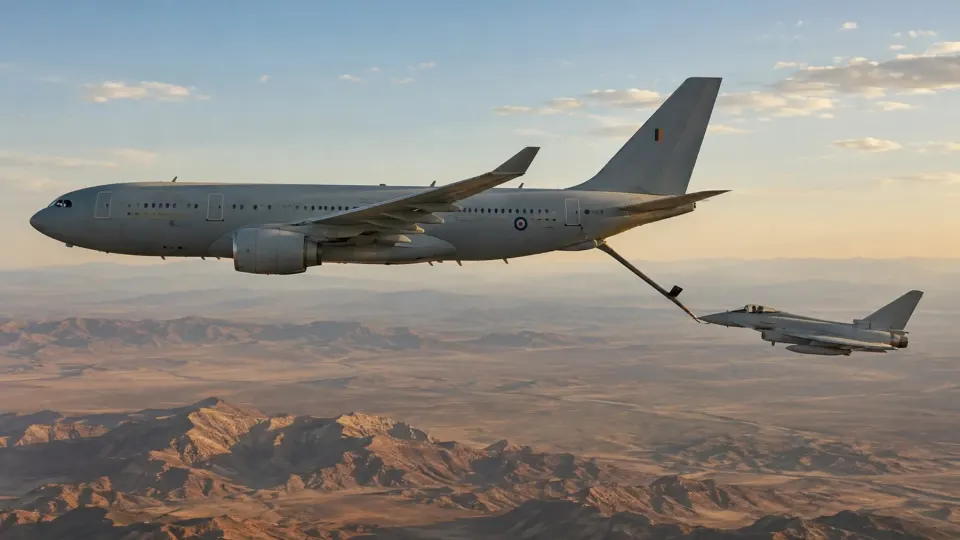
Britain will provide Saudi Arabia with military air-to-air refuelling after a request from Riyadh, Prime Minister Andy Burnham said on Monday 21 September. One RAF Voyager aircraft is due to deploy in the coming days for what the government describes as a limited, defensive mission.
The decision follows intensified missile and drone attacks by Yemen’s Houthi movement against Saudi targets. Burnham said he approved the request on the advice of the defence and foreign secretaries and argued that supporting Saudi defence would help stabilise the region and keep strategic routes open.
That is the government’s case. It does not automatically settle what British support enables, how its defensive boundary will be enforced or how Parliament can judge the mission if “limited” quietly becomes “still here at Christmas”.
What Britain is sending
The RAF Voyager is based on the Airbus A330 and can refuel compatible military aircraft in flight while also carrying passengers or freight. A tanker extends the range and time aloft of the aircraft it supports. It does not need to release a weapon to affect what a military force can do.
Reuters reported that Britain will deploy one Voyager for a time-limited period, subject to review. Public reporting did not specify the exact start and end dates, where the aircraft would be based, which Saudi aircraft it may refuel or the operational rules governing each mission.
Burnham explicitly called the support defensive. That word needs a practical definition. Refuelling an interceptor responding to an incoming missile fits the ordinary meaning. Refuelling an aircraft later used for an offensive strike would raise a different set of legal, ethical and political questions. The public deserves to know how crews will distinguish the two and what happens when a request falls outside the mandate.
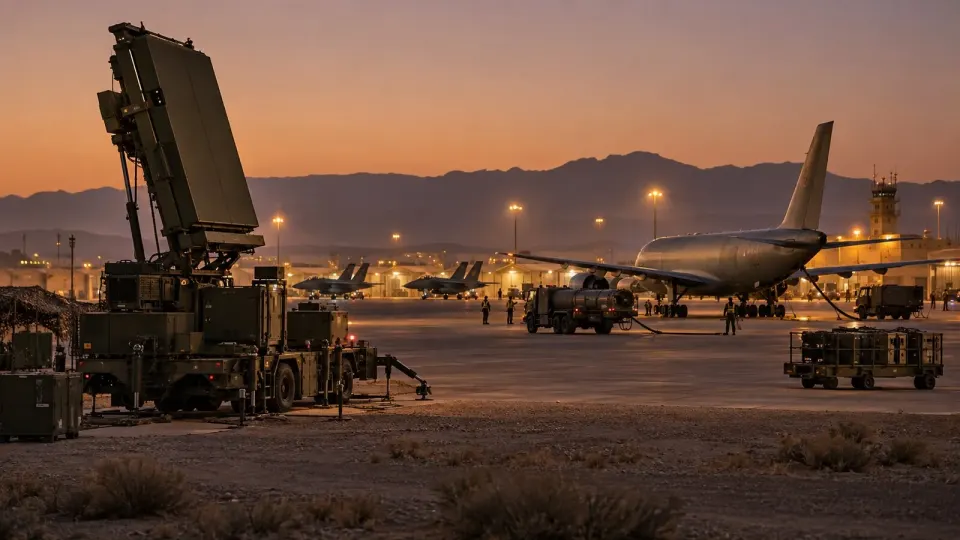
Britain previously deployed the Sky Sabre air-defence system to Saudi Arabia to help protect the country from Iranian missile attacks during the wider conflict triggered by US and Israeli strikes on Iran earlier in 2026. The new deployment therefore sits within an expanding British security role rather than appearing from an empty sky.
Why the route matters
The Houthis control Yemen’s most populous areas and have intensified attacks on Saudi Arabia. The conflict also threatens the Bab el-Mandeb strait at the entrance to the Red Sea, while Britain supports efforts to keep the Strait of Hormuz open. These waterways are crucial to energy and commercial shipping.
A serious disruption can raise freight costs, insurance premiums and oil prices even when Britain does not directly import the affected cargo. That is why ministers describe the mission as support for regional stability and open pathways. There is a legitimate British interest in preventing missiles from hitting civilian infrastructure and in keeping international shipping safe.
There is also a long, grim history. The Saudi-led intervention in Yemen from 2015 was associated with extensive civilian harm, disputed air strikes and one of the world’s worst humanitarian crises. Britain’s close defence relationship with Saudi Arabia—including arms sales, training and technical support—has repeatedly faced parliamentary, legal and human-rights scrutiny.
Past conduct does not mean Saudi Arabia forfeits the right to defend civilians from attack. It does mean British involvement should come with unusually clear safeguards rather than a ministerial shrug labelled “old friends”.
The minimum transparency test
Ministers should state the mission’s legal basis, rules of engagement and geographical scope. They should confirm whether British personnel can refuse a refuelling request, what intelligence will establish the purpose of a supported sortie, and how allegations of misuse will be investigated.
Parliament should also be told the expected cost, the effect on RAF availability and the review timetable. Voyagers are finite assets with existing commitments. A deployment described as small can still create opportunity costs elsewhere.
Ministers should also clarify what would end the deployment. A fixed date, a reduction in attacks or a formal review are measurable conditions. “Until the situation improves” is not a timetable; it is how temporary military commitments acquire birthdays, commemorative mugs and their own line in the next spending review.
Finally, the government should publish aggregate information after the mission: number of sorties, flying hours, aircraft supported and any request refused. Operational security may limit real-time detail, but it does not justify permanent fog.
The distinction between defensive assistance and joining a war is not determined solely by the adjective used at the announcement. It is determined by the operations conducted, the targets protected, the decisions retained by British crews and the consequences that follow.
Follow further verified updates in OutOut’s world news section.
The OutOut verdict
Helping stop missiles aimed at civilians is a defensible objective. Pretending that an airborne fuel station is politically neutral because it carries hoses rather than bombs is not.
The Voyager will increase the capability of whichever aircraft it refuels. That makes strict boundaries essential. Ministers should explain them before the mission expands through the ancient Whitehall manoeuvre known as “we will keep it under review”.
Britain can support Saudi air defence and still demand accountability. In fact, if the mission is as tightly defensive as the government says, transparency should strengthen the case. Parliament does not need live coordinates. It does need more than one aircraft, one adjective and an open-ended calendar.