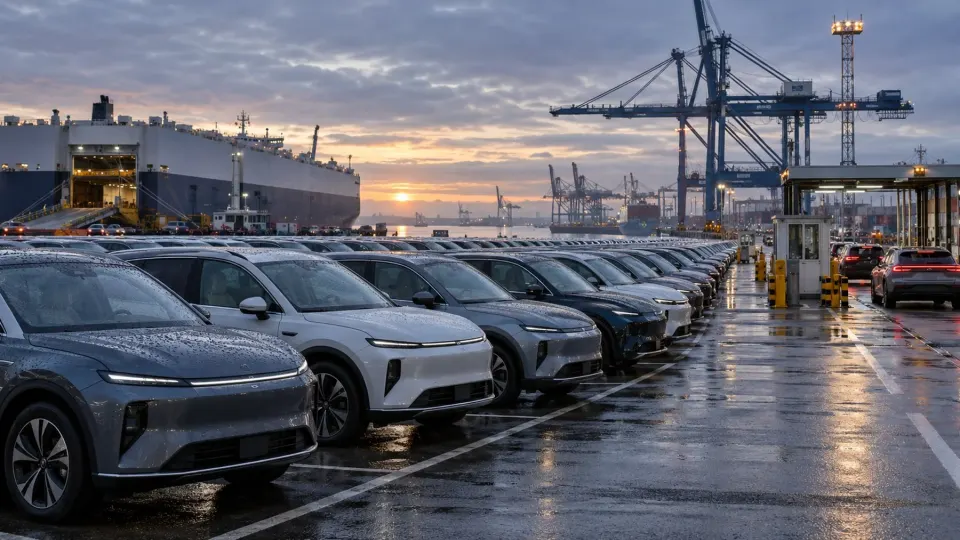
Britain is considering tariffs on Chinese electric cars, according to a report published on Sunday 4 October. The government has confirmed that it is talking to the motor industry, but it has also supplied the most important brake pedal in the story: no tariff has been imposed.
The Times reported that Business Secretary Jonathan Reynolds is drawing up possible measures because ministers are concerned that state support allows Chinese manufacturers to sell vehicles in Britain at unfairly low prices. Reuters said it could not independently verify the newspaper's account. A government spokesperson said policy would reflect the interests of the sector and the country.
So this is a live policy discussion, not a new tax already waiting on Monday's dealership invoice. The distinction matters because tariffs could protect domestic investment, raise prices for buyers, provoke retaliation and pull Britain closer to European Union trade policy—all at the same time.
What is reportedly being considered
The report says ministers could match, or move towards, the European Union's duties on battery-electric vehicles imported from China. The EU introduced additional tariffs after concluding that Chinese producers benefited from unfair subsidies. The precise European rate varies by manufacturer; describing it as a single universal charge hides that structure.
Britain has so far chosen a different route. That has helped make Chinese brands and Chinese-built models increasingly visible in the UK market. Lower prices can speed the move away from petrol and diesel, particularly when many European-made electric cars remain expensive. They can also place severe pressure on manufacturers expected to employ British workers, invest in British factories and meet costly environmental rules.
The alleged practice at the centre of the argument is dumping: selling an exported product below a fair value, often with the help of state support, in a way that injures producers in the destination market. It is an allegation requiring evidence, not a synonym for “a foreign company has a competitive price”. A proper trade investigation normally examines subsidy, pricing and harm before duties are imposed.
Why Europe changes Britain's calculation
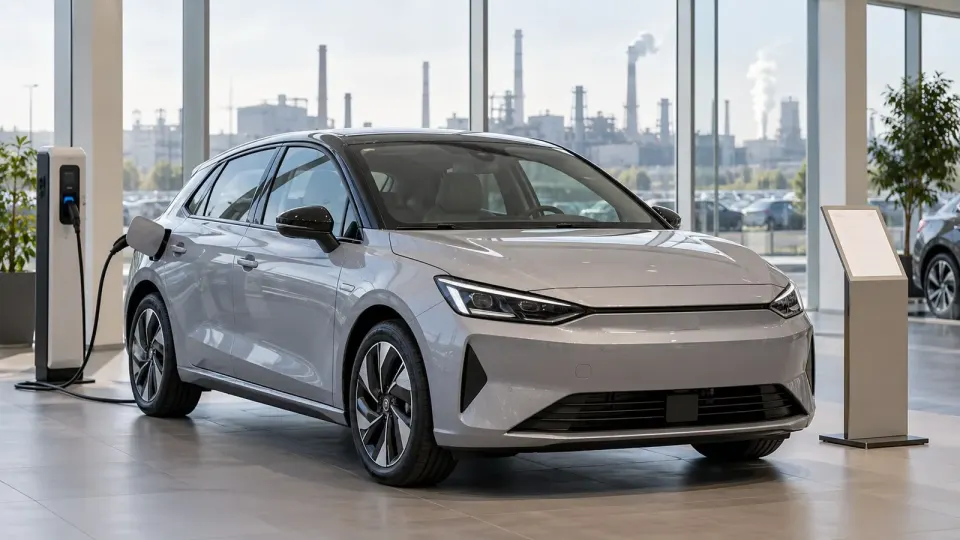
The question is not confined to cars arriving at British ports. Brussels is developing “Made in Europe” measures intended to favour European production and reduce dependence on Chinese components. British plants sit outside the EU but remain tightly connected to its supply chains.
That creates an awkward three-way negotiation. Britain wants affordable electric vehicles for consumers, investment and jobs at home, and continued access for UK-made cars and parts in Europe. A policy that maximises one of those goals can damage another.
Prime Minister Andy Burnham has argued that Britain should be treated as a trusted partner under European rules. EU officials have reportedly pressed the UK to align more closely with the bloc's approach to Chinese vehicles. Ministers insist that any decision should serve the British national interest rather than copy Brussels automatically.
That is the correct test, although “national interest” is doing the usual political work of a suitcase labelled miscellaneous. Is the priority the price paid by a family replacing its car, the survival of a component factory, faster emissions cuts, negotiating leverage with Brussels or relations with Beijing? A serious decision must publish the trade-offs rather than polish the label.
What tariffs could mean for drivers
A tariff is paid by the importer at the border, but its cost does not politely remain there. Manufacturers and retailers can absorb some of it through lower margins, alter specifications or shift production. They can also pass some or all of it to customers.
The immediate effect would depend on the final rates, the brands covered, existing stock and how aggressively companies compete. It would therefore be irresponsible to announce a made-up average price rise before a policy exists. The direction of risk is clearer: higher duties make affected imported cars more expensive unless another part of the chain absorbs the bill.
That could slow electric-car adoption at the cheaper end of the market. It could also give manufacturers investing in Britain or Europe room to compete without facing prices allegedly supported by the Chinese state. The consumer pays today; industrial capacity may deliver value over years. Governments are supposed to weigh both horizons, although election leaflets tend to prefer the one that fits beside a photograph.
There is a climate question too. Britain wants road transport to decarbonise. Affordable models help. But replacing dependence on imported oil with strategic dependence on one country for batteries, electronics and finished cars carries its own economic and security risks. A resilient transition needs competitive prices and diversified supply.
What it could mean for British factories
Britain's automotive sector includes assembly plants, specialist engineering, battery projects, dealerships and thousands of smaller suppliers. The Sunderland investment covered recently by OutOut shows why one production decision can matter far beyond a factory gate; read our report on Nissan's £170 million Sunderland plan.
Protection is not an industrial strategy by itself. A tariff can buy time, but it cannot produce cheaper electricity, train engineers, approve a battery plant, secure minerals or persuade a global board to choose a British site. If duties arrive without those complementary policies, consumers may pay more while the promised manufacturing revival remains in a presentation deck.
Nor should every Chinese investment be treated as identical. Cars can be assembled in different countries using globally sourced batteries and components. Rules need to identify origin and subsidy accurately, otherwise supply chains will rearrange their paperwork faster than ministers can rearrange a podium.
The risk of retaliation
China could challenge British measures or respond against UK exports. Beijing has disputed Western subsidy findings and has used trade investigations of its own after European action. Luxury cars, spirits, agriculture and other politically sensitive sectors can become pieces on the board.
That does not mean Britain must avoid action. It means ministers should explain the evidence, legal basis and likely response before presenting tariffs as cost-free patriotism. Trade defences can be legitimate; improvising them to match a headline is how a policy acquires expensive optional extras.
The government should also separate an investigation from its conclusion. Consultation with industry is useful, but carmakers, importers, unions, environmental groups and buyers have different interests. Publishing data on subsidy, pricing and injury would let the public assess more than the loudest lobby.
What happens next
Watch for a formal government investigation, consultation or announcement setting out products, manufacturers, rates and timing. Until then, there is no lawful basis for a dealer to claim a new government tariff has already raised the price of a vehicle.
Ministers should publish an impact assessment covering purchase prices, emissions targets, jobs, investment and possible retaliation. They should also say what they want from the EU. Aligning with Brussels may help British access to European schemes, but that benefit cannot simply be assumed.
The OutOut verdict
Britain is right to examine whether subsidised imports are distorting its car market. It would be reckless to surrender an industrial sector because cheap vehicles make this quarter's transition numbers look tidy. It would be equally reckless to make electric cars less affordable without a credible plan for competitive production at home.
No tariff exists yet. That sentence belongs near the top of every report, not buried beneath a convoy of political metaphors.
If ministers proceed, they must show the evidence, protect competition and use the breathing space to fix energy costs, skills, batteries and investment. Otherwise Britain will have achieved the rare policy combination of dearer cars, annoyed trading partners and a domestic industry still waiting for the charger to work.
Sources
- Reuters: Britain considers tariffs on Chinese electric cars, 4 October 2026.
- Reuters: UK motor industry warning over “Made in Europe” proposals, 21 September 2026.