
The average litre of diesel has reached 200.01p in the RAC's Friday 2 October reading. Unleaded petrol is also climbing, at 174.71p. For a 55-litre fill, those figures mean about £110.01 for diesel and £96.09 for petrol. The round £2 sign is psychologically arresting, but the much more consequential story is how far both fuels have travelled since February and how long a higher transport bill can work its way through household and business budgets.
The RAC's comparison with 28 February puts diesel up 57.63p a litre and petrol up 41.88p. That is £31.70 more for a 55-litre diesel fill and £23.03 more for the petrol equivalent. These are national averages, not a promise about the price at the next forecourt. A driver filling a smaller tank, buying a different grade or using a supermarket may pay a different amount. The figures nevertheless make the direction hard to dismiss as a few unlucky service stations on a motorway.
Why two groups have different dates for £2
The RAC described Friday's 200.01p as the first time its average diesel price had topped £2. The separate RAC Foundation reported on Wednesday 30 September that its analysis of the government's Fuel Finder data had already crossed the threshold that morning. Different datasets, station coverage and methods can reach the same milestone at different times. It would be misleading to say no national measure had ever registered £2 until Friday. What is clear from both is that diesel has passed the mark, after the RAC had already recorded a nominal record of 199.18p on Monday 28 September.
The earlier benchmark was 199.09p in June 2022. Comparing nominal pump prices is useful for identifying a cash record; it is not an inflation-adjusted measure of which period was hardest for households. Nor does a national average tell a driver how much of a local price is tax, wholesale fuel, distribution cost or retail margin. Those distinctions matter whenever a round number becomes a political slogan.
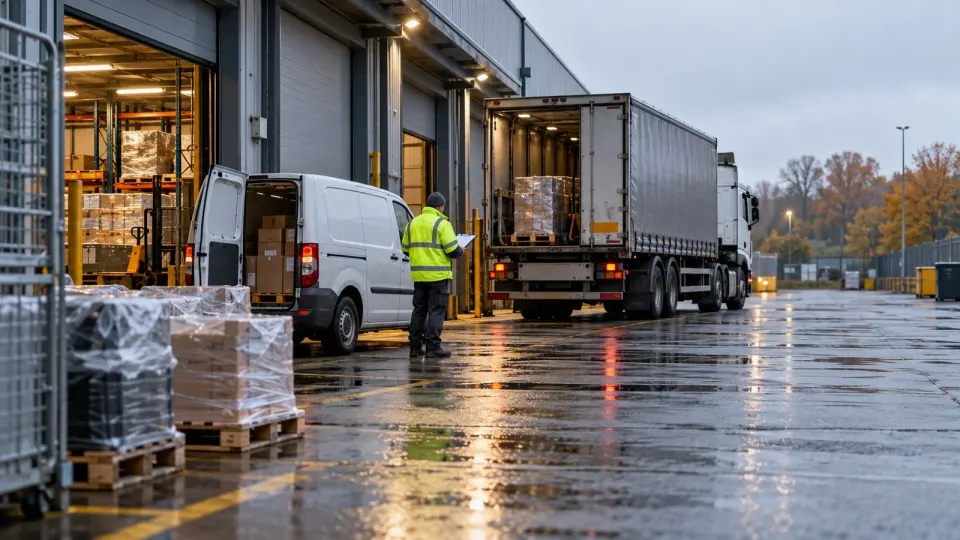
The pump is at the end of a much longer chain
The RAC attributes the extraordinary rise since late February to the US–Iran conflict and disruption to oil and refined-product supply around the Strait of Hormuz. Diesel has its own supply problem: crude oil still has to be refined into the right product, and more barrels of crude do not instantly create more usable diesel. War damage to refineries and attacks affecting Russian production add pressure to a market that freight, agriculture and industry use heavily.
Britain's import exposure matters too. In its 28 September account, Reuters cited government energy statistics showing that diesel imports made up nearly 40% of UK oil-product imports in 2025, with the United States accounting for 31% of those diesel imports. That is historical trade data, not evidence that an announced US export ban is in force. Discussion of possible restrictions can unsettle the market, but a threat should not be written up as an interruption that has already happened.
On Friday, transport minister Keir Mather said the UK was not facing a diesel shortage, according to the Guardian. A high price is a serious problem in its own right; it does not prove pumps are about to run dry. Panic buying can create a local queue where none was needed. Drivers should watch the actual prices and availability near them, rather than treat a speculative export policy as an instruction to fill every container in the shed.
For the earlier oil shock and the route from international markets to British bills, see OutOut's explanation of oil above $100 and UK costs. This week's pump-price figures are the tangible result of the pressures described there, with diesel's refining and import mix making its increase particularly steep.
A household bill, and a business bill
The RAC estimates that a car averaging 45 miles per imperial gallon would cost roughly 20p a mile in diesel at this price. At 10,000 miles a year, that is about £2,020 for fuel. It is an illustration based on one vehicle and mileage, not a universal annual bill; actual economy, traffic, tyres, driving style and paid pump price change the result. Still, it gives a commuter a better yardstick than a dramatic photograph of a price sign.
The consequences do not stop with people who own diesel cars. Vans move parcels and tradespeople; lorries move food and other stock; farms and construction businesses use diesel-powered equipment. Firms may absorb some of an increase, pass some on, or reduce activity. How much reaches a supermarket receipt depends on contracts, competition and the duration of the shock. It is reasonable to expect pressure, but impossible to assign a precise future rise in grocery prices from one day's pump reading.
The RAC also says petrol is, in its analysis, averaging around 4.7p a litre above the level it would expect from recent retailing trends. That is its assessment, not a regulator's finding that every garage is overcharging. The government's Fuel Finder scheme, monitored by the Competition and Markets Authority, requires motor fuel traders to report price changes promptly and is intended to make station-by-station comparison possible. The practical consumer move is to compare nearby forecourts before a routine fill, without driving so far for a tiny saving that the trip consumes it.
What can ministers change?
The RAC Foundation calculated on 30 September that around 86p of a £2 diesel litre went to fuel duty and VAT, based on the rate and price it used. VAT is charged on the product and the duty, so the tax take rises in cash terms when the underlying price rises. Cutting duty or VAT could reduce a driver's bill if retailers pass it through, but it has a fiscal cost and would not repair a damaged refinery or reopen a shipping route. A proposed tax change is therefore a choice to cushion the shock, not an explanation of all the movement since February.
The government publishes a weekly road-fuel price series; as of Friday, its latest release was for the week beginning 28 September. Weekly official data and the RAC's more immediate daily snapshot are different products, so their figures should not be spliced into a single day-by-day line. The next readings will help show whether the rise is persistent. A few days of cheaper crude would not necessarily show up instantly at the pump, as wholesale purchases, exchange rates and station stock have to work through.
The OutOut verdict
The £2 threshold earns the headline, while the £31.70 extra on a diesel fill explains why it matters. It is possible to be angry at the price without pretending that every penny is a retailer's margin, every tax cut is free, or a fuel shortage has been confirmed. The most useful scrutiny now is on transparent local prices, the path of wholesale diesel, and what the government actually announces in its Budget.
Drivers cannot negotiate with a global refinery from a motorway services forecourt. They can compare nearby pumps, avoid a needless detour for a saving of pennies, and budget from their own vehicle's consumption rather than a generic national average. Ministers and market watchdogs have the harder job: show which parts of this bill can be eased, which are imported from a disrupted world market, and how long households should realistically expect to wait.
Sources
- RAC, diesel tops £2 a litre for first time ever, 2 October 2026; daily petrol and diesel figures and 55-litre calculations.
- RAC Foundation, diesel pushes through £2 a litre mark, 30 September 2026; separate Fuel Finder analysis and tax estimate.
- RAC, price of diesel reaches record high, 28 September 2026; prior daily comparison and June 2022 benchmark.
- Reuters, UK diesel prices hit record highs, 28 September 2026; import context.
- The Guardian, minister says UK is not facing a diesel shortage, 2 October 2026.
- Competition and Markets Authority, road fuel monitoring and Fuel Finder, updated 18 August 2026; DESNZ weekly road fuel prices, last updated 29 September 2026.