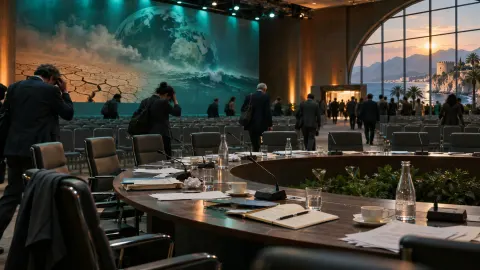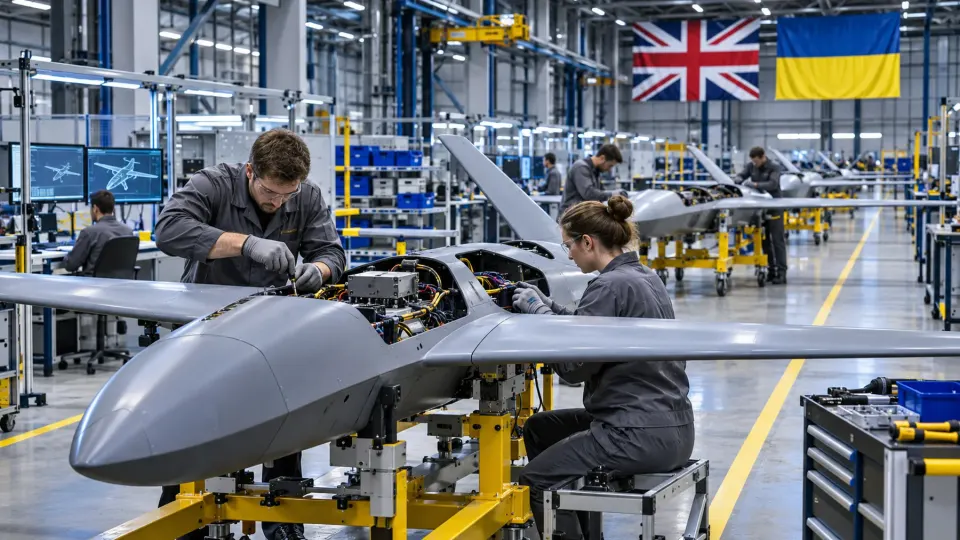
Ukrainian-designed strike drones are to be manufactured in Britain under new industrial agreements announced during Defence Secretary Wes Streeting's visit to Kyiv. The government says the arrangement will allow Ukrainian production facilities to be established in the UK, expanding capacity and making the supply chain more resilient.
The announcement was published by the Ministry of Defence on Saturday 21 November after Streeting met President Volodymyr Zelenskyy and Ukrainian defence minister Denys Khmara. It is a concrete change in where equipment can be made, but the public statement does not identify the factories, name the drone models, set production targets or provide delivery dates.
Those omissions matter. “Built in Britain” is an industrial commitment, not a box of aircraft already waiting beside a runway. The agreements create a route for production; facilities, components, workers, testing and contracts still determine how quickly that route carries anything.
What the UK announced
The MOD says Ukraine will be able to establish production facilities in the United Kingdom for Ukrainian-designed strike drones intended for its armed forces. The policy aims to add manufacturing capacity outside Ukraine and reduce vulnerability in supply chains while Russia continues attacks on Ukrainian cities and critical infrastructure.
The government linked the agreements to £500 million of additional military support announced around meetings of the Ukraine Defence Contact Group and the Coalition of the Willing. According to the MOD, £240 million of that package includes more than 1,000 air-defence missiles, launchers and more than a dozen radars. A further £260 million is intended to provide more than 1,000 long-range strike drones plus maritime, logistics and surveillance systems, communications and electronic-warfare capability.
More than 80% of the latter package is expected to be spent with UK companies, including small and medium-sized businesses. “Expected” is the important word. It is a government projection for procurement, not a completed audit of contracts. The eventual geographic spread, suppliers and number of jobs will depend on awards and delivery.
Why manufacture outside Ukraine
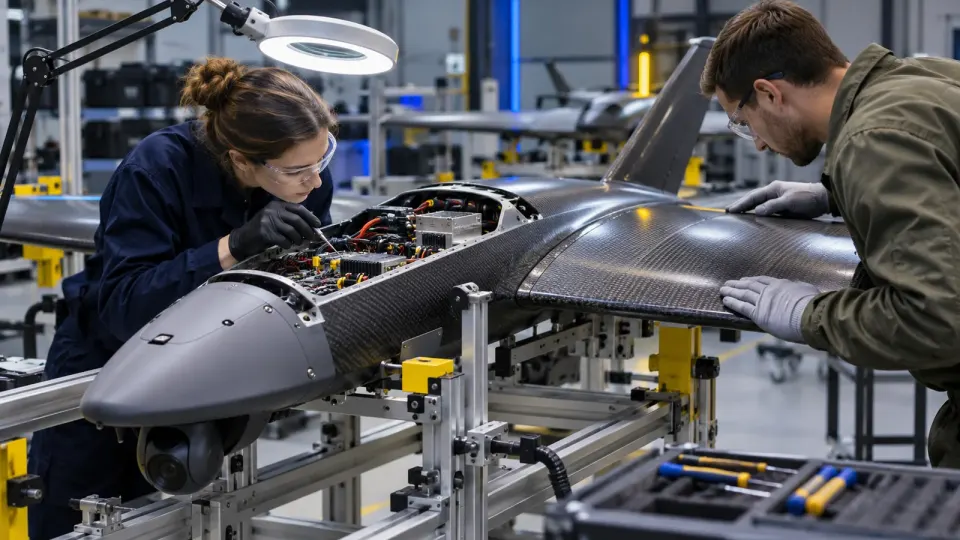
Ukraine has developed and adapted uncrewed systems rapidly under battlefield pressure. Manufacturing within Ukraine remains essential, but factories and power infrastructure are exposed to Russian attack. Additional production in Britain can add capacity, protect part of the industrial base and connect Ukrainian designs with UK components, finance and manufacturing expertise.
It may also shorten the distance between battlefield feedback and production changes. A design that works against one form of jamming or air defence can require modification when the opponent adapts. Joint production is valuable when information moves quickly between Ukrainian operators and British engineers. It is less useful if a programme freezes a design while the battlefield moves on.
OutOut reported in September that the UK planned to give selected British firms access to Ukrainian battlefield data for artificial-intelligence work on drone swarms. That earlier UK–Ukraine drone-data programme concerned research, recognition and coordination. The new announcement concerns physical production. They are related parts of a wider partnership, not the same project wearing a new press-release jacket.
The UK and Ukraine had already set out ambitions for deeper defence-industrial collaboration. A joint declaration published earlier in 2026 referred to production lines, research, supply chains, air defence and long-range capabilities. It also highlighted licensed UK production of the Ukrainian-designed Octopus interceptor drone. Saturday's statement extends the manufacturing story to strike systems, although the MOD did not publicly specify whether the fresh agreements cover one model or several.
What the statement does not tell us
There is no published unit cost, factory location or schedule. The government has not said how many British workers will be employed, which parts will be imported, how intellectual property is licensed or what proportion of each aircraft will be made in the UK. Security and commercial confidentiality may explain some omissions; they do not make the questions disappear.
The phrase “strike drone” also covers a broad range of systems. It can refer to long-range aircraft designed to hit fixed targets, shorter-range one-way systems or other uncrewed platforms carrying weapons. Without model names or specifications, claims about range, payload and battlefield effect would be guesswork. The MOD's public release supports the production announcement, not a catalogue of secret capabilities.
There is an accountability dimension. Military aid is intended to help Ukraine defend itself against Russia's invasion, while public money and industrial policy remain legitimate subjects for scrutiny. Parliament and auditors will need enough information to assess value, delivery and safeguards without requiring operational details that would help an adversary.
The government says the UK remains committed to £3 billion a year of military support for as long as necessary. That is a political and budgetary commitment. It does not guarantee that every individual programme will arrive on time or perform as intended. Defence manufacturing is full of excellent renderings, complex supply chains and calendars that develop a hostile relationship with reality.
The OutOut verdict
The strongest part of the announcement is the practical idea: take Ukrainian designs shaped by a real war and give them additional manufacturing capacity in a country less exposed to Russian missiles. That could help Ukraine and strengthen British industrial capability.
The weakest part is the familiar press-release fog around scale. A factory arrangement without locations, output or dates can be important, but it cannot yet be measured. Ministers have announced the production line; readers are entitled to wait for the production.
Britain's defence industry does not need another slogan painted on a hangar door. It needs contracts that become components, components that become reliable aircraft, and aircraft delivered when Ukraine can use them. Saturday's agreements create that possibility. The next evidence should come in units, dates and independently testable results.
Sources
- UK Ministry of Defence: New UK–Ukraine drone-production agreements, published 21 November 2026.
- UK and Ukraine: Enhanced Security and Defence Industrial Collaboration Declaration, published in 2026.
- Ukraine Ministry of Defence: Middle- and deep-strike drones to be produced in the UK, published 21 November 2026.