
British households' expectations for inflation over the next year rose sharply in September, according to a monthly survey by Citi and YouGov. The expected rate increased to 4.5% from 3.9% in August, while the longer-term measure rose to 4.3% from 4.1%.
Those numbers matter because beliefs about prices can affect wage demands, spending and business decisions. They are not an official forecast that Consumer Prices Index inflation will be exactly 4.5% next September. A survey records what respondents think will happen; it does not operate the national statistical system with a crystal ball and a clipboard.
Reuters said the longer-term reading was close to its highest level in 15 months, apart from a spike in March. The result arrives after renewed energy-price pressure and a period in which food, fuel and other visible costs have dominated household attention. The Bank of England has repeatedly noted that consumers' expectations respond strongly to salient prices.
Why the Bank watches expectations
The Bank of England's target is 2% CPI inflation. When households and firms believe inflation will remain high, workers may seek larger pay increases and businesses may raise prices in anticipation of higher costs. That can make an initial external shock more persistent, even if the original cause—such as oil or gas—later fades.
This does not mean asking for a wage rise causes national inflation by itself, or that households are at fault for noticing expensive essentials. People negotiate based on the bills in front of them. The policy concern is whether many individual decisions reinforce one another enough to keep price growth above target.
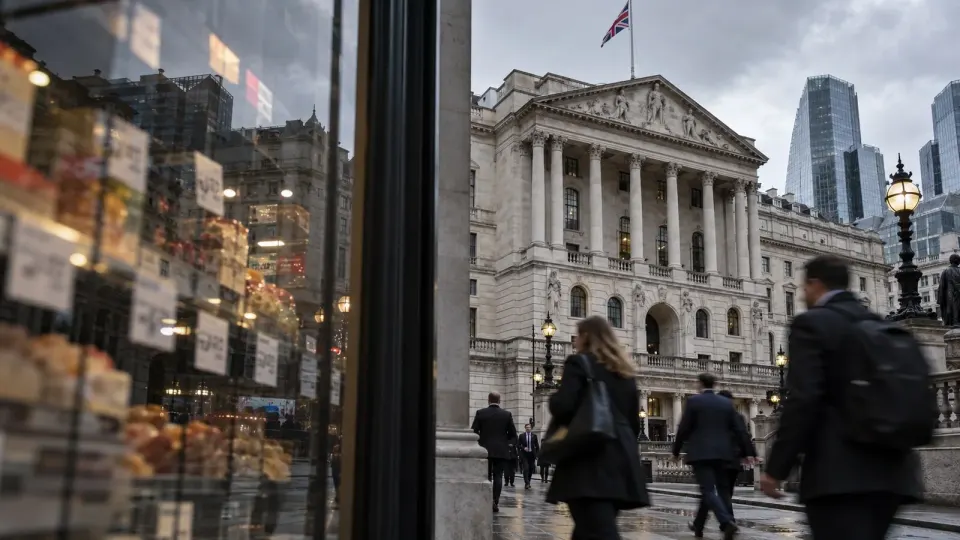
The Bank's August attitudes survey, conducted with Savanta, produced a lower median one-year expectation of 3.2%. The two surveys are not directly interchangeable: they use different samples, timing and methods. Their disagreement is a reason to examine the trend across measures, not select whichever number best decorates a political argument.
At its September meeting, the Bank held Bank Rate at 3.75% and said CPI inflation was expected to rise to around 3.75% in the fourth quarter of 2026 and a little above 4% in early 2027, based on energy prices available in mid-September. That is the Bank's conditional projection, not the same thing as the Citi/YouGov household expectation.
What the 4.5% figure does not say
It does not mean prices will rise 4.5% every month. Inflation compares a price index with the same period a year earlier. It also does not mean all products rise by the same percentage. A household may experience a very different personal rate depending on how much it spends on energy, housing, food, transport and services.
It does not prove that interest rates must rise at the next meeting. The Monetary Policy Committee considers current inflation, wage growth, demand, the labour market, expectations and forecasts. Higher expectations can strengthen the case for caution, but a rate decision requires the whole picture.
Finally, it does not show that consumers are irrational. Household expectations often overweight memorable prices because people buy petrol and food frequently and see those changes directly. Few shoppers calculate a weighted CPI basket before deciding that the supermarket feels expensive. The survey captures that lived perception, with all its usefulness and limits.
The mortgage and spending consequences
If policymakers fear expectations are becoming embedded, they may keep Bank Rate higher for longer or raise it. That feeds into new fixed-rate mortgages, business loans and other borrowing, although market rates also move before the Bank acts. Higher rates can cool demand; they cannot pump more oil or grow a delayed harvest.
Households therefore face an unpleasant chain. An energy shock raises bills, expectations increase, and borrowing costs can remain elevated to prevent the shock spreading. The cure presses on spending already weakened by the illness. Central banking occasionally resembles repairing a thermostat by making the sofa less comfortable.
The new survey should also be read alongside recent OutOut coverage of how oil-driven inflation changed City rate forecasts. That article concerned economists' predictions about policy. This one concerns consumers' beliefs about prices. Related does not mean identical.
The next useful evidence will include official CPI data, wages, business price expectations and subsequent household surveys. A single monthly jump can reverse. A sustained rise across several measures would be more concerning, particularly if longer-term expectations continue moving away from the 2% target.
There is a communications challenge too. If officials dismiss household expectations because they exceed professional forecasts, they risk sounding detached from the prices people actually notice. If they repeat the highest survey figure without context, they may amplify the anxiety they are trying to contain. The honest message is that expectations are imperfect but consequential. Policy must respond to the economic evidence while explaining why a survey belief, an official inflation reading and a central-bank forecast can all be different at the same time.
The OutOut verdict
The 4.5% reading is neither a prophecy nor statistical confetti. It is a warning that households increasingly expect today's pressure to follow them into next year.
Ministers cannot talk expectations down while essential costs are climbing, and the Bank cannot assume public confidence will anchor itself. The response needs credible energy policy, clear communication and inflation decisions based on evidence rather than panic. People are not demanding a seminar in monetary transmission. They want the weekly shop to stop behaving like an auction.