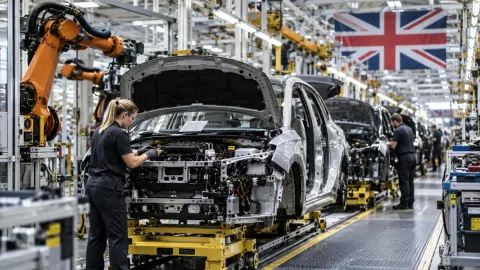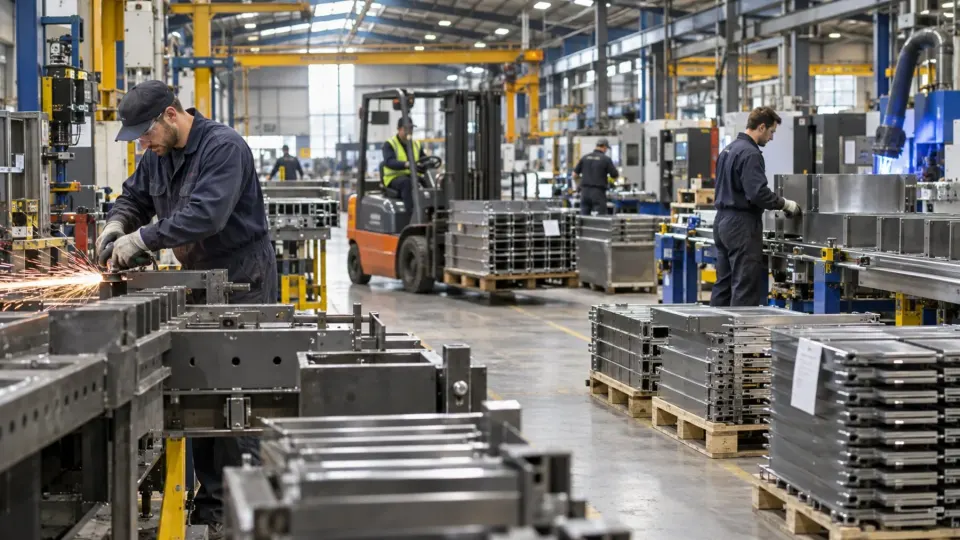
Britain’s factory-order measure has recorded its strongest performance since July 2023 and the largest two-month improvement in the survey’s 49-year history, according to the Confederation of British Industry.
The CBI’s monthly order-book balance rose to minus nine in September from minus 25 in August. Across two months it improved by 36 points. Manufacturers’ expectations for output also reached their highest level since March, while the balance for expected price increases fell to plus 12 from plus 22.
Those figures are genuinely encouraging. They are not evidence that every factory is booming. The order balance remains below zero, meaning more firms still reported order books below normal than above normal. Britain has improved from “rather weak” to “least weak in three years”, which is progress wearing sensible shoes.
What the CBI balance means
Business surveys typically ask companies whether a condition is above normal, normal or below normal. The balance subtracts negative responses from positive ones. A reading of minus nine therefore does not mean orders fell nine per cent, production is nine per cent smaller or nine factories have misplaced the purchase ledger.
It describes the spread of answers. Movement from minus 25 to minus nine suggests pessimism or weakness became much less widespread. The historic 36-point two-month jump shows rapid improvement in sentiment and orders, but the remaining negative reading prevents a victory parade.
Surveys are useful because they arrive before many official statistics and can identify turning points. They also have limits: sample composition, response rates and confidence can shift. Official output, exports, employment and investment will show whether improved order books become sustained activity.
The CBI said there were growing signs conditions were stabilising. That wording is appropriately cautious. Stabilising means the floor may have stopped moving; it does not yet mean the extension is being built.
Why this matters for jobs and prices
Manufacturing accounts for a smaller share of Britain’s economy than services, but it supports skilled jobs, exports, research and regional supply chains. An additional order can flow into overtime, contractor work, transport, materials and later investment.
Improved expectations may encourage firms to keep staff and approve equipment purchases delayed during uncertainty. Cooling price expectations are also helpful. If manufacturers expect smaller increases in selling prices, pressure on customers and inflation may ease.
However, the positive survey arrived on the same day Ineos announced it would mothball three chemical plants in Hull because of energy costs. The two reports are not contradictory. Manufacturing covers sectors with very different power use, customers and global competition. A broad rebound can coexist with severe pain in chemicals, steel or other energy-intensive production.
That is why politicians should avoid using one index as a universal answer. A minister cannot visit a threatened plant and explain that the national balance has improved to minus nine, as if a chart can operate the boiler.
The risks to the rebound
Energy prices remain a major threat. The Middle East conflict and disruption to oil and gas routes can raise business costs and household inflation. Higher inflation may keep interest rates elevated, affecting borrowing and investment.
Britain’s trade relationship with the European Union also matters. Proposed “Made in Europe” rules could exclude UK-made vehicles from some incentives and procurement. Manufacturers need predictable access to their largest nearby market, not a fresh rules-of-origin puzzle every quarter.
Consumer demand is another constraint. Factories ultimately require buyers. If households face expensive fuel, mortgages and food, discretionary spending weakens. Exporters also depend on growth abroad and exchange rates they cannot control.
Finally, one strong movement can partly reflect recovery from an unusually poor starting point. September’s figure should be followed over several months. The useful question is whether balances cross zero, output rises and hiring strengthens—not whether a single release can be made to fit on a minister’s social-media tile.
What government can do
Stable policy is more valuable than a weekly industrial slogan. Firms need faster planning and grid connections, competitive energy, access to skilled workers, functioning trade arrangements and tax rules that survive long enough to inform an investment decision.
Support should distinguish temporary shocks from businesses with no viable future. Public money can help companies improve efficiency, adopt cleaner equipment and train staff, but it should buy measurable outcomes rather than permanently subsidise old processes.
Companies can do their part by converting improved sentiment into investment rather than waiting for perfect conditions that never arrive. New machinery, energy efficiency and apprenticeships can lift productivity and make firms less exposed to the next cost shock. That requires confidence, but confidence is precisely what a sustained run of better orders can create. The test will be whether boardrooms treat September as the beginning of a plan or merely a pleasant chart for the quarterly presentation.
For more context on prices and British industry, follow OutOut’s Money section.
The OutOut verdict
The survey is good news. After several years in which British manufacturing indicators resembled a cardiogram drawn during an earthquake, a record rebound deserves attention.
It also deserves grammar. Orders are “less below normal”, not universally strong. Expectations improved, not guarantees. Price pressure cooled, not vanished.
Celebrate the direction, keep the cork in the bottle and check the next reading. Britain may have found the factory floor. Now it needs to build something on it.