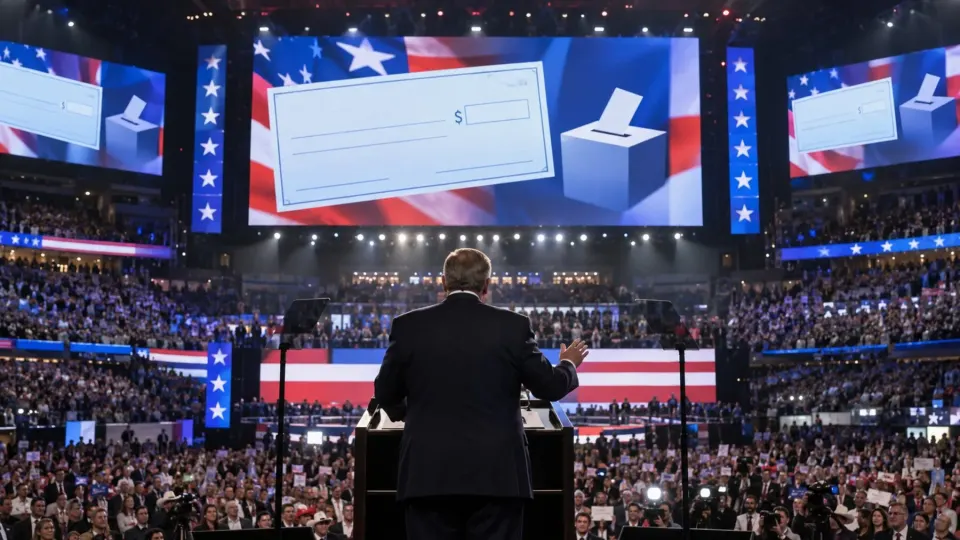
Donald Trump has promised a $5,000 payment to every American adult if Republicans retain control of Congress, transforming the midterm election pitch into something closely resembling a cheque with a voting instruction attached.
The US president made the proposal on Thursday 10 September. Reuters and the Associated Press reported that it would require approval from Congress and could cost more than $1 trillion, depending on eligibility and implementation.
No payment has been authorised. There is no enacted programme, application process or delivery date. It is a campaign promise whose central details would have to survive legislation, budget scoring and disagreement inside Trump’s own party.
What Trump proposed
Trump described the payment as a dividend for US adults, conditional on Republicans winning the congressional elections. His administration has previously floated payments funded by tariff revenue and government savings.
The new promise is larger and more explicit. A $5,000 payment multiplied across the adult population would carry a price approaching or exceeding $1.2 trillion under broad eligibility estimates cited by Reuters. Restricting it by income or tax status could reduce the total, but those rules have not been settled.
Congress controls federal spending. Even with Republican majorities, lawmakers would need to pass legislation. Some Republican senators immediately expressed scepticism about the cost and inflationary effect, showing that party control would not make approval automatic.
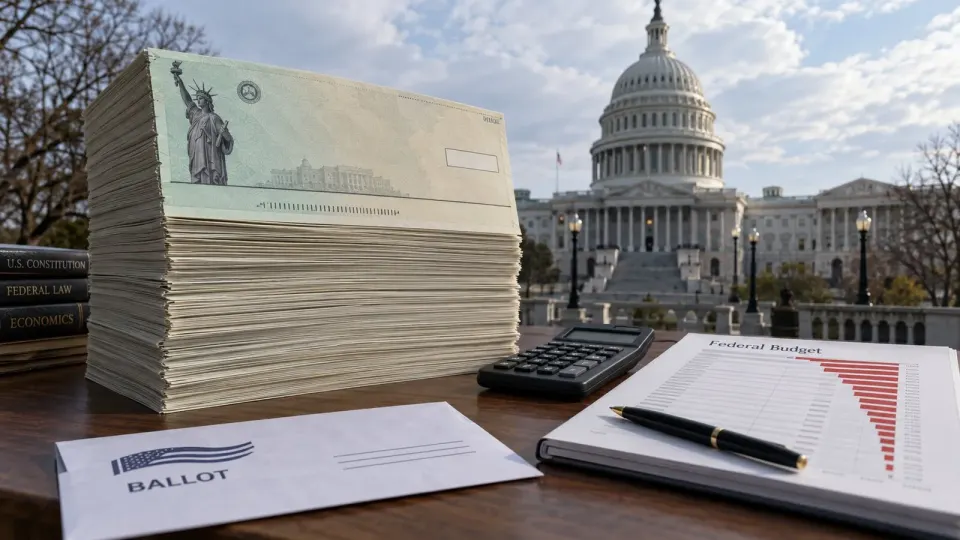
Can tariffs pay for it?
Tariffs are taxes collected by the US government on imported goods. The importer pays them at the border, and costs can be absorbed by companies, passed to consumers or shared through lower margins and changed supply chains.
Calling tariff income “foreign money” therefore hides the domestic part of the bill. Revenue would also have to be large enough, after other commitments, to fund the dividend. Available figures do not bridge a trillion-dollar gap without borrowing, cuts elsewhere or a much narrower group of recipients.
The US already runs a substantial annual deficit. Borrowing for a large cash transfer would add to debt and interest costs. Supporters might argue that households would spend the money and support demand; critics warn that injecting so much purchasing power could lift prices, particularly if the economy is already close to capacity.
Is an election-linked payment legal?
Politicians routinely promise tax cuts, benefits and spending programmes if elected. The direct link between a specific cash amount and a party victory is politically striking, but describing it as criminal vote-buying would require a legal analysis far beyond the language of a campaign speech.
The relevant distinction is between an official programme enacted under law and personally paying individuals to vote a certain way. The former is normal democratic policy-making, however shameless the sales pitch may sound. Courts, Congress and election authorities would assess any concrete plan, not an outraged metaphor.
Voters should instead ask practical questions. Who qualifies? Is the amount taxable? What is the funding source? Would non-citizen residents be excluded? Would the payment arrive once or repeatedly? What happens if tariff income is lower than forecast?
Previous proposed dividends from government savings did not produce the advertised payments. That does not prove this idea can never happen, but it makes legislative text more valuable than rally typography.
For more international political reporting, visit OutOut’s World section. Our Money section follows how policy promises meet public finances.
The OutOut verdict
It is the most American election promise imaginable: a giant novelty cheque, a tariff spreadsheet and Congress hiding behind the curtain whispering, “We have not agreed to this.”
The proposal deserves coverage because it is politically potent and economically enormous. It does not deserve to be reported as money on the way. Until eligibility, funding and legislation exist, the $5,000 dividend is a campaign offer with a four-figure headline and a very small terms-and-conditions box.