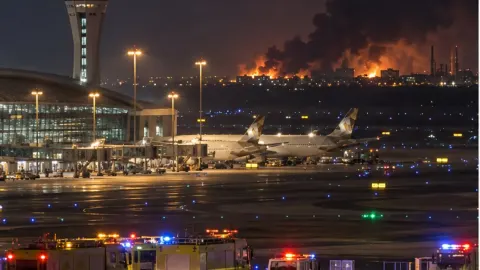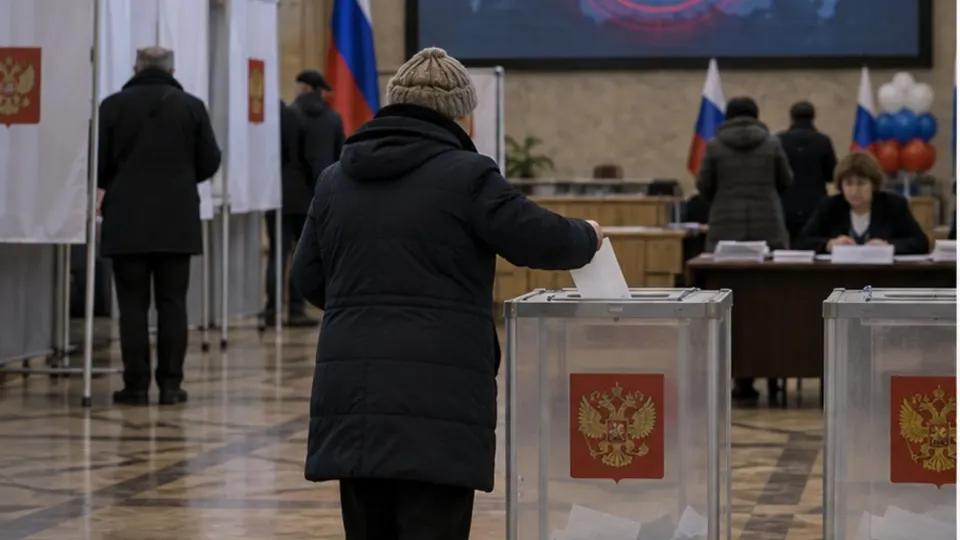
Russian authorities say online voting systems and communications infrastructure came under attack during the second day of the country’s parliamentary election, a vote the Kremlin is presenting as a test of support for the war in Ukraine.
Officials said Moscow’s online system faced a strong overnight cyberattack and that a separate attempt to disrupt communications in Russia’s Far East was defeated. Election commission chair Ella Pamfilova said attacks were continuing but being repelled.
No independent technical evidence identifying the attackers was published with those statements. President Vladimir Putin accused Ukraine of interference without providing evidence. That attribution should therefore be reported as a Russian claim, not an established forensic conclusion.
An election with important choices removed
The vote, running from 18 to 20 September across 11 time zones, is Russia’s first State Duma election since the full-scale invasion of Ukraine in February 2022. United Russia, the governing pro-Putin party, is widely expected to retain control of the 450-seat lower house.
Most anti-war candidates were excluded before voting began. Russia’s Supreme Court ruled that the liberal Yabloko party, which supports a ceasefire, had broken electoral rules. Yabloko denied the allegation. Some party members remain on ballots in individual constituencies, but the exclusion sharply narrows the national choice.

That context matters when officials describe turnout or victory as a direct public endorsement of policy. Elections do more than count ballots accurately. They require genuine competition, access to information, free campaigning and the ability to criticise those in power without unacceptable risk.
Cyberattacks, if proven, are still wrong. A restricted political system does not make its infrastructure fair game. But protecting servers is not the same as establishing democratic legitimacy. A ballot box can be technically secure while the contest around it is politically sealed.
The international dispute around the vote
Russia’s plan to open polling stations in Moldova’s separatist Transdniestria region triggered a dispute with the Moldovan government. Moscow says roughly 220,000 residents there hold Russian passports and are entitled to vote. Chisinau objects to polling arrangements in territory outside its effective control.
Russia has also held or facilitated voting in occupied Ukrainian territories during the war, exercises rejected by Ukraine and Western governments as unlawful. Those precedents deepen scrutiny of where and how Moscow claims an electoral mandate.
The election result will not itself alter Britain’s support for Ukraine, but it may shape how the Kremlin describes domestic backing for continued war. The UK-Russia relationship is already at a low point; Moscow summoned Britain’s chargé d’affaires on Friday over weapons supplied to Kyiv, while the Foreign Office described that move as an attempt to distract from Russia’s invasion.
Follow the broader conflict in OutOut’s world coverage.
What can be judged now
We know Russian officials reported attacks and communications disruption. We do not know who carried them out, their exact technical scope or whether any votes were altered. There was no public evidence of changed results in the reporting reviewed for this article.
The OutOut verdict
Moscow wants the world to admire the lock on the ballot box while politely ignoring who was prevented from entering the room.
Investigate cyberattacks, publish evidence and protect every valid vote. Then confront the harder question: what does a landslide prove when organised opposition, independent media and anti-war candidates have been progressively removed from the landscape? A secure counting machine cannot manufacture a competitive democracy any more than a perfect calculator can improve the numbers it is given.