Peter Fluck, the caricaturist and puppeteer who co-created Spitting Image, has died aged 85. His family said he died at his home in Cornwall in the early hours of Saturday 21 November after a recent illness.
The death was announced through a family statement reported by the BBC, ITV and other news organisations. The statement described the spirit of Spitting Image as epoch-defining and said Fluck's creative life continued for many years after the television series from his studio in Cornwall. It also described him as a private man who avoided fame and attention—an impressive achievement for somebody whose work made the faces of the famous almost impossible to forget.
From drawing faces to rebuilding them
Fluck was born in Cambridge in 1941 and met Roger Law while studying at Cambridge School of Art. They worked together as caricaturists under the partnership name Luck and Flaw, turning public figures into drawings that exaggerated the detail a publicity photograph would prefer to hide.
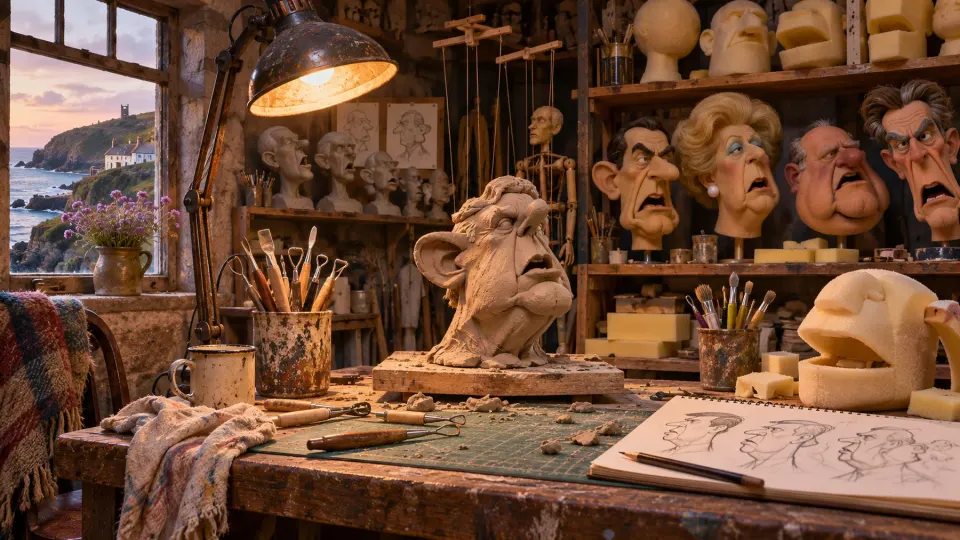
The leap to television was physical as well as creative. Instead of leaving a politician's vanity on a page, Fluck and Law helped turn it into a three-dimensional puppet that could glare, wobble and shout back. Central Television commissioned Spitting Image, and the first episode was broadcast on ITV on 26 February 1984.
The original programme ran until 1996. ITV's anniversary history records 131 episodes across 18 series plus ten specials. It says Fluck and Law spent three years developing the techniques needed to get the puppets on screen. Cambridge University Library, which holds the programme's archive, describes a production that used the pair's “cartoonist eye” to satirise British public life while leaving few prominent people unscathed.
Those are institutional descriptions, not nostalgic exaggerations. The programme placed grotesque puppet versions of prime ministers, opposition leaders, royals, celebrities and international figures into sketches that could be absurd, vicious and technically elaborate. Margaret Thatcher's authority, John Major's greyness and the rivalries of Westminster became shapes, textures and running jokes. Politics had always invited caricature; Spitting Image gave it moving mouths.
Why the puppets mattered
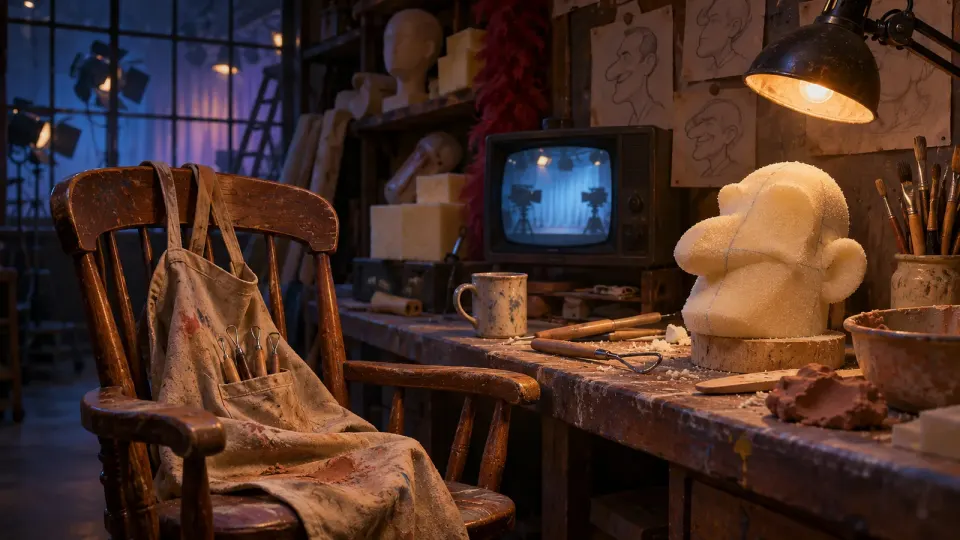
The puppets were not merely costumes for impressions. Their proportions made an argument before a voice artist delivered a line. A nose, chin or posture could tell viewers what the programme thought about power, weakness, vanity or self-importance. The writing supplied the attack, but the object itself had already entered the room carrying a verdict.
The BFI has recalled audiences of up to 14 million for the programme. ITV has cited even higher peak figures in later tributes, illustrating the hazards of comparing audience measures across different accounts. The safest conclusion is not a single magic number but the scale: this was mainstream Sunday-night television, not a niche animation quietly insulting ministers after midnight.
Its influence also came from the labour behind the apparent chaos. Designers, sculptors, mould makers, puppeteers, writers, producers and voice performers had to produce topical television at speed. A political event could change the joke while a puppet remained stubbornly made of foam and latex. The show therefore combined the urgency of a newsroom with the production demands of a creature workshop.
For readers interested in British television's habit of revisiting old formats, OutOut recently examined reports of an X Factor revival. Spitting Image belongs to a different tradition, but its history offers the same warning: bringing back a recognisable title is easier than recreating the conditions that made it matter.
A legacy larger than one programme
Fluck's family said his creative work continued after the original series ended. His importance is nevertheless inseparable from the partnership with Law and from the larger production team. A tribute should not turn collaboration into a lone-genius myth. Spitting Image was built by many hands, while Fluck's particular gift helped establish the visual language those hands served.
The archive now provides evidence beyond memory. Cambridge University Library's collection includes puppets, scripts, designs and production material, allowing researchers to study how topical satire moved from sketch to screen. That matters because remembered television tends to compress itself into famous clips. Archives preserve revisions, failed ideas, construction methods and the industrial effort behind the apparently spontaneous punchline.
The programme's targets and tone also invite debate. Satire can challenge power, reinforce a stereotype, or do both in the same minute. Some sketches have aged better than others. The proper tribute is not to declare every joke sacred, but to recognise the audacity of using sculpture, performance and television craft to make public figures look as ridiculous as power frequently behaves.
The OutOut verdict
Modern politicians spend fortunes selecting backgrounds, tightening messages and pretending the third attempt at a doorstep answer was casual. Fluck's art offered a brutal counter-service: remove the polished face, enlarge the insecurity and rebuild the whole person in latex.
That visual idea changed British television because it made reputation physically unstable. A carefully managed statesman could become a flapping object before millions of viewers on Sunday evening. The target might hate the voice, the script or the nose, but the nose usually arrived first and won.
Peter Fluck's death closes the life of an artist, not the argument his work began. Who gets mocked, how fiercely, and whether satire still reaches the audiences it once did remain live questions. The workshop light may be off; the faces he helped create are still pulling expressions in the national memory.
Sources
- ITV News: Spitting Image co-creator Peter Fluck dies aged 85, published 21 November 2026.
- University of Cambridge: Spitting Image—A Controversial History, archive history accessed 22 November 2026.
- BFI: Spitting Image—still biting after all these years, programme history accessed 22 November 2026.
- ITV Central: 30 facts for 30 years, published 26 February 2014.