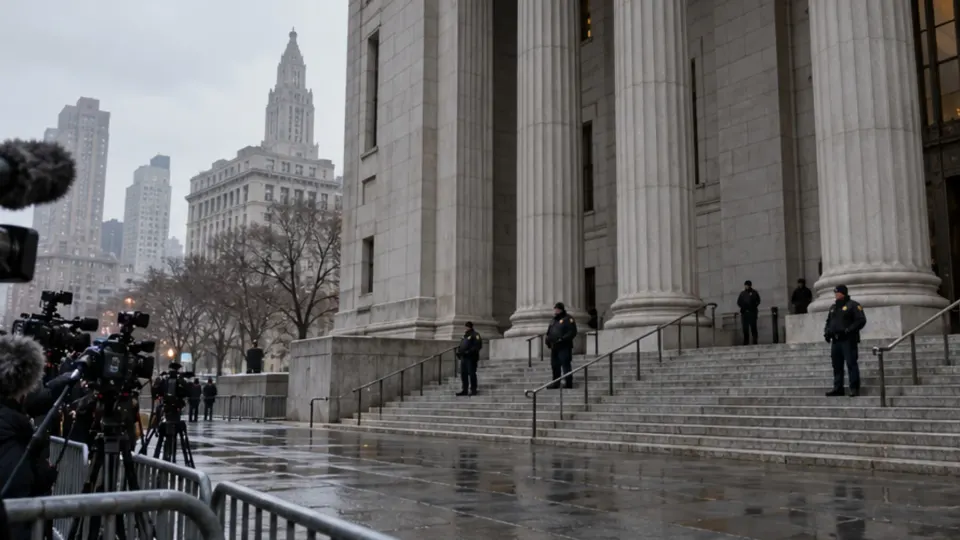
Harvey Weinstein has been sentenced to 15 years in prison in New York after a retrial convicted the former film producer of sexually assaulting Miriam Haley in 2006.
Judge Curtis Farber imposed the sentence on Wednesday 23 September. Reuters reported that a Manhattan jury convicted Weinstein in June 2025 of first-degree criminal sexual act relating to Haley, a former production assistant. Weinstein has denied having non-consensual sex, and his spokesperson maintained his innocence after sentencing. His lawyers can pursue the available appeal process.
The sentence is a major result in a case that had to be tried again after New York’s highest court overturned Weinstein’s original 2020 conviction. It is important to describe that history accurately. The 2024 ruling did not declare Weinstein innocent; the court found that the trial judge had improperly allowed testimony about alleged conduct that was not part of the charges, creating unfair prejudice.
The retrial produced a mixed verdict. Jurors convicted Weinstein on the count involving Haley, acquitted him on a separate count and could not agree on another allegation. A later attempt to try the unresolved count ended in a mistrial, and prosecutors subsequently dropped it. The 15-year sentence therefore relates to the conviction that survived the retrial, not every allegation made against him.
What the New York case established
Haley testified that Weinstein forced a sexual act on her at his Manhattan apartment in 2006. The jury’s guilty verdict means prosecutors proved that charged offence beyond a reasonable doubt to the jurors who decided it. Sentencing followed that conviction and the submissions made to the judge.
Weinstein’s defence argued that his encounters were consensual and attacked the reliability of the allegations. A justice system permits a defendant to contest evidence and appeal legal errors even when the defendant is widely disliked. That safeguard is not a gift to Weinstein; it is part of the standard that gives a lawful conviction its legitimacy.
The overturned first conviction demonstrated why procedure matters. Permitting highly prejudicial evidence outside the charged acts can make a trial unfair, according to the majority of the New York Court of Appeals. The decision caused understandable anguish among survivors, but demanding lawful trials and taking sexual violence seriously are not opposing positions.
The retrial then required witnesses to give evidence again years after the events and after an earlier conviction had been erased. Haley’s participation carried a substantial personal burden. The final sentence cannot return that time or remove the public exposure involved in testifying.
The separate California case
New York is not the only jurisdiction in which Weinstein has been convicted. A Los Angeles jury convicted him in 2022 of rape and sexual assault, leading to a 16-year sentence. Reuters reported that the California convictions were later upheld, although resentencing was ordered.
The separate cases have different evidence, complainants, verdicts and appeal histories. They should not be blended into a single numerical total without explaining whether sentences run consecutively, concurrently or are subject to new orders. Wednesday’s announcement concerns the New York conviction and 15-year sentence.
Weinstein, now in his seventies and reported to have significant health problems, has spent years in custody. Health may affect the practical conditions of imprisonment and can be considered through legal and medical processes. It does not erase a conviction or transfer attention away from the person the jury found he assaulted.
Why the case still matters to the film industry
Reporting about Weinstein in 2017 helped catalyse the global #MeToo movement, as women described alleged abuse and the professional structures that enabled powerful men to operate without meaningful challenge. Weinstein has denied all allegations of non-consensual sex, but he has now been convicted in two states.
The industry lesson is broader than one producer. Power was concentrated in people who could decide careers, while complaints could be isolated through fear, settlements, professional retaliation and institutional silence. Codes of conduct introduced after scandal matter only when workers can report misconduct without losing employment and when organisations investigate powerful figures with the same seriousness applied to junior staff.
Studios, agencies, unions and production companies should maintain independent reporting channels, anti-retaliation protections, trained intimacy coordinators where appropriate and transparent consequences. Background checks and policies cannot replace a culture in which colleagues intervene before misconduct becomes a decades-long open secret.
There is also a media responsibility. Reporting must distinguish convictions from allegations, name complainants only with appropriate consent and avoid turning trauma into entertainment content. The scale of Weinstein’s fame does not lower the standard of accuracy; it raises the number of people likely to repeat an error.
Read more about film, television and the structures behind them in OutOut’s Entertainment section.
The OutOut verdict
This sentence is not a simple restoration of the 2020 outcome. It follows an overturned conviction, a second trial, an acquittal on one count, a deadlock on another and a conviction concerning Miriam Haley. That complicated route is exactly why careful language matters.
The court has now imposed 15 years for the offence the retrial jury found proved. Weinstein retains legal rights; Haley retains the reality that she had to tell her account through two trials. Hollywood’s remaining obligation is not to congratulate itself for finally discovering consequences. It is to build systems that act before courage from people with far less power becomes the only functioning safety mechanism.