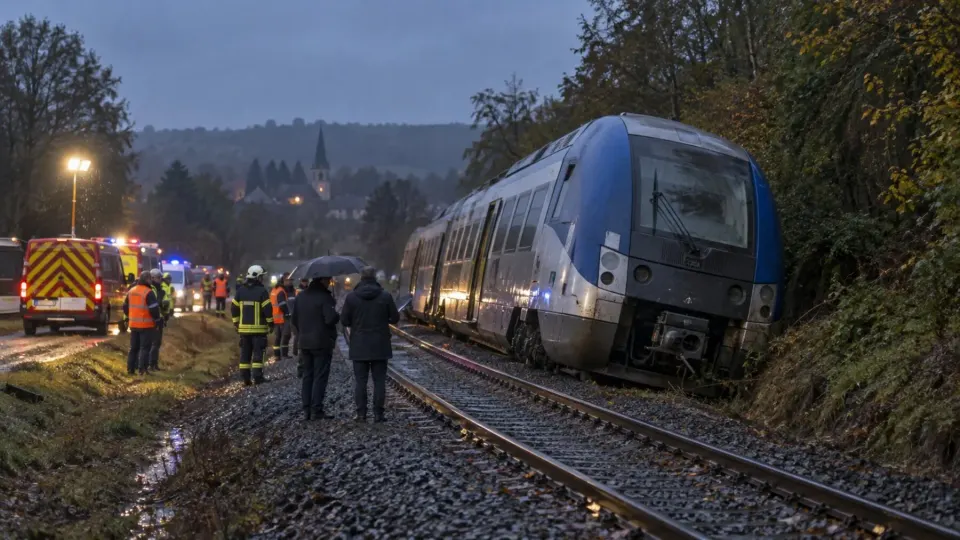
French investigators are examining whether a passenger-train derailment in Normandy was an accident or an act of sabotage after 44 people were injured on Friday evening.
The regional train was carrying 186 passengers from Rouen to Caen when it derailed at Cléon on 11 September, according to the Associated Press. An 18-year-old woman was airlifted to hospital in a critical condition, while dozens of other people suffered injuries.
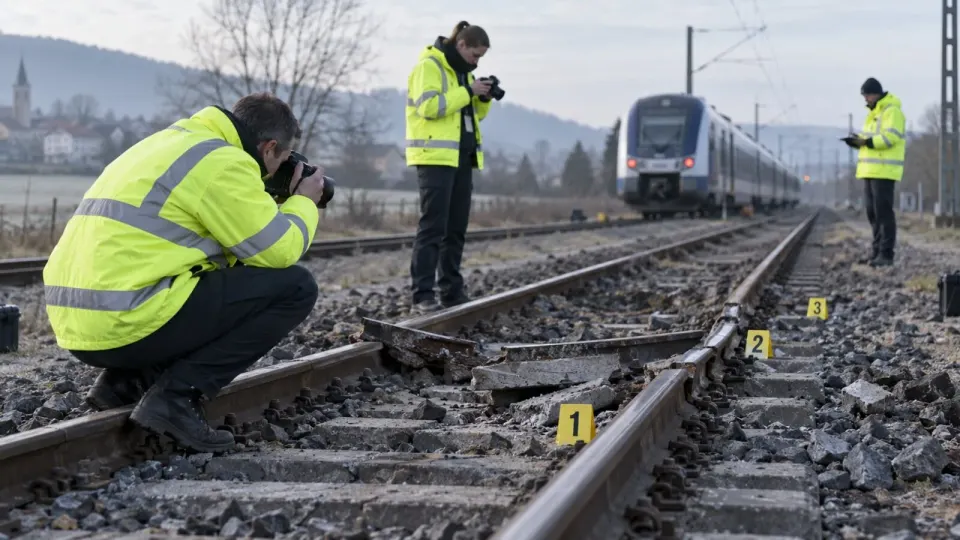
Authorities are investigating a piece of rail found at the scene. A police spokeswoman told AP it was “probably” connected to the derailment, but prosecutors had not reached a conclusion about how it came to be there. That word matters: possible sabotage is a line of inquiry, not an established cause.
What is confirmed
Emergency services attended the site and treated passengers after the train left the rails. The casualty figure reported on Saturday was 44 injured. The most seriously injured passenger was flown for specialist care.
Investigators secured the track and began examining the railway infrastructure. The train, its maintenance record, signalling, speed, track condition and any object recovered from the scene can all form part of a transport-safety investigation.
Criminal investigators may work alongside technical specialists when deliberate interference cannot be ruled out. Their tasks overlap but answer different questions: what physically caused the derailment, and whether anyone intentionally caused it.
Why cautious language matters
Early disaster reporting creates a vacuum, and the internet traditionally fills vacuums with a man pointing at a blurry photograph. A damaged or displaced rail component may be important evidence, but its presence alone does not establish who moved it, when it moved or whether it triggered the crash.
Sabotage would carry obvious security implications for France’s rail network. An accident could expose an engineering, inspection or maintenance failure. Both possibilities demand urgency; neither benefits from investigators being rushed into the answer most likely to trend.
The prosecutor’s caution is therefore part of the story, not bureaucratic evasiveness. Evidence must be documented, tested and compared with damage created during the derailment itself. Witness accounts and onboard data may help establish the sequence.
Passengers also need clarity about disruption. A damaged railway can remain closed while rolling stock is recovered and the track inspected or rebuilt. Travellers should use the operator’s direct service information rather than social posts recycling the first emergency estimate.
The broader rail-security question
European railways are open networks stretching across thousands of kilometres. That accessibility is central to their usefulness and makes total physical protection impossible. Security therefore combines patrols, monitoring, maintenance reports, intelligence and rapid investigation of anomalies.
One incident does not establish a campaign. Authorities will look for forensic evidence and any connection with other events before drawing a broader conclusion. Politicians should allow that work to happen rather than assigning blame from a podium because an evidence laboratory lacks flattering lighting.
There is a human recovery beyond the engineering work. Passengers may need medical follow-up, help retrieving belongings and clear information about compensation or onward travel. Witnesses and railway staff can also be affected after a violent derailment even when their physical injuries appear minor. Those needs should not vanish when cameras move from the rescue to the investigation.
For readers affected by travel disruption, official operator notices and French emergency guidance should take priority. OutOut’s World section will update major developments, while our UK coverage follows transport stories closer to home.
The OutOut verdict
Forty-four injured people make this serious before anybody adds the word “sabotage”. The temptation to race towards a dramatic cause is understandable and dangerous.
France needs a fast investigation with a slow mouth: protect the scene, test the evidence and publish what can be supported. If deliberate interference is proven, the security response must follow. If it is not, the technical cause deserves exactly the same attention. Railway safety is improved by facts, not by giving speculation an express service.