THE ATTACK IS NO LONGER A SINGLE EVENT IN THE DAY
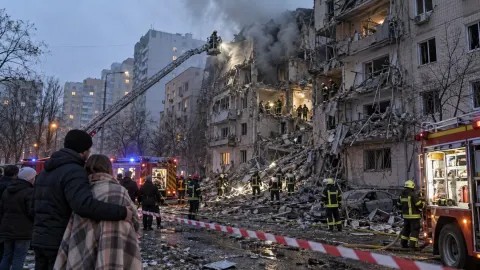
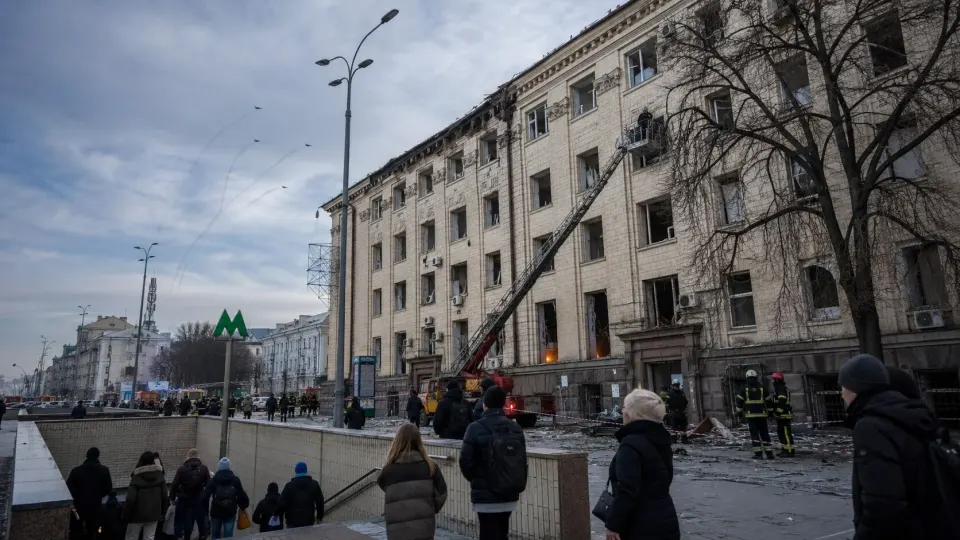
Russian drones struck central Kyiv on Wednesday morning, wounding 11 people and damaging residential and university buildings on what Reuters reported was the seventh day of near-continuous attacks on the Ukrainian capital and its surrounding region.
The numbers describe the immediate damage. The wider story is how repeated alerts are forcing an entire city to rebuild its daily routine around the possibility of another incoming wave.
Wednesday’s strike on a university happened while students were in class. Ukrainian President Volodymyr Zelenskiy said about 160 people had to move into shelter. Windows were damaged and emergency crews were sent to the scene.
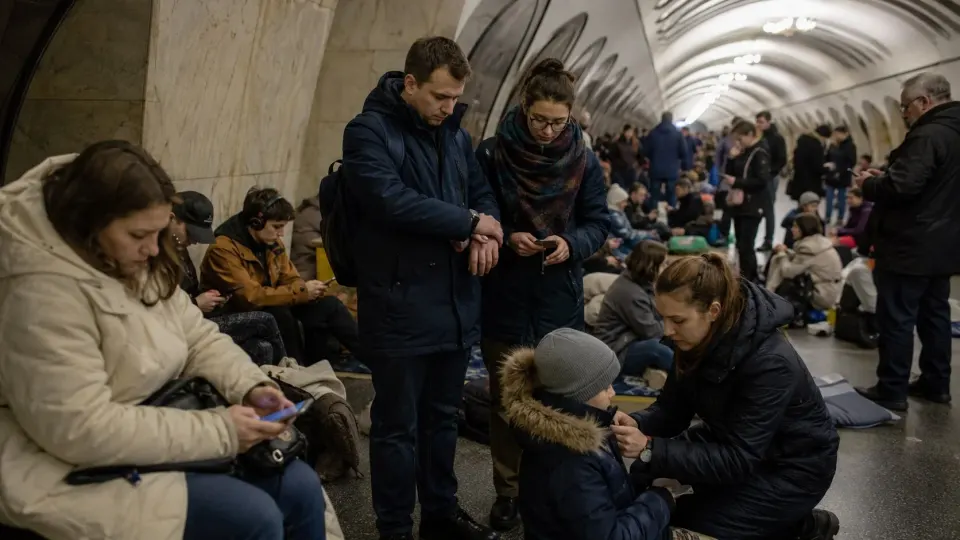
Air defences were heard operating over the city as explosions echoed through the centre. Although some drone groups have been relatively small, their frequency means every alert can stop trains, block routes and send thousands of people underground.
TRANSPORT, WORK AND PARLIAMENT HAVE ALL BEEN INTERRUPTED
Parts of Kyiv’s Soviet-era metro system are suspended during alerts. For residents, that can turn an ordinary journey into a search for a taxi, a long walk or a wait underground with no reliable arrival time.
The disruption reached Ukraine’s parliament twice on Wednesday. Lawmakers were forced below the legislature and tested a digital voting system from underground, according to an opposition deputy who published footage of the process.
Kyiv’s mayor, Vitali Klitschko, has asked the government to consider easing some wartime curfew and traffic restrictions during alerts. The argument is practical: rules designed for security can compound the disruption when alarms are sounding repeatedly throughout the day and night.
ODESA AND DNIPRO WERE ALSO HIT
The attacks were not confined to Kyiv. Ukrainian authorities said missiles and drones struck power facilities in the southern Odesa region, leaving more than 350,000 homes without electricity.
In Dnipro, the regional governor said two people were killed and eight wounded. Food warehouses and educational buildings were among the sites reported damaged.
These casualty figures are attributed to Ukrainian officials and may be revised as emergency work continues.
Ukraine is also preparing for a renewed Russian campaign against its energy infrastructure as colder weather approaches. That concern is sharpened by a shortage of US-designed interceptors used against ballistic missiles. Russian President Vladimir Putin said he had ordered preparations for a new campaign of large-scale strikes.
THE AIRSPACE ARGUMENT IS EXPANDING
Kyiv and Moscow have increasingly targeted logistics and economic infrastructure as both try to weaken the other’s war effort.
Ukraine said it had asked the International Civil Aviation Organization to prohibit member states from using Russian airspace. Zelenskiy had warned airlines and insurers that the growing presence of Ukrainian long-range drones made those skies dangerous for commercial use.
The request does not mean Ukraine is threatening civilian aircraft. It is an attempt to remove civilian aviation from airspace where military drone activity may increase, while applying further economic pressure to Russia.
For Kyiv’s residents, the geopolitical argument sits above a much simpler reality. A class, a commute or a parliamentary vote can now be broken apart by the next siren.
Source: Reuters.