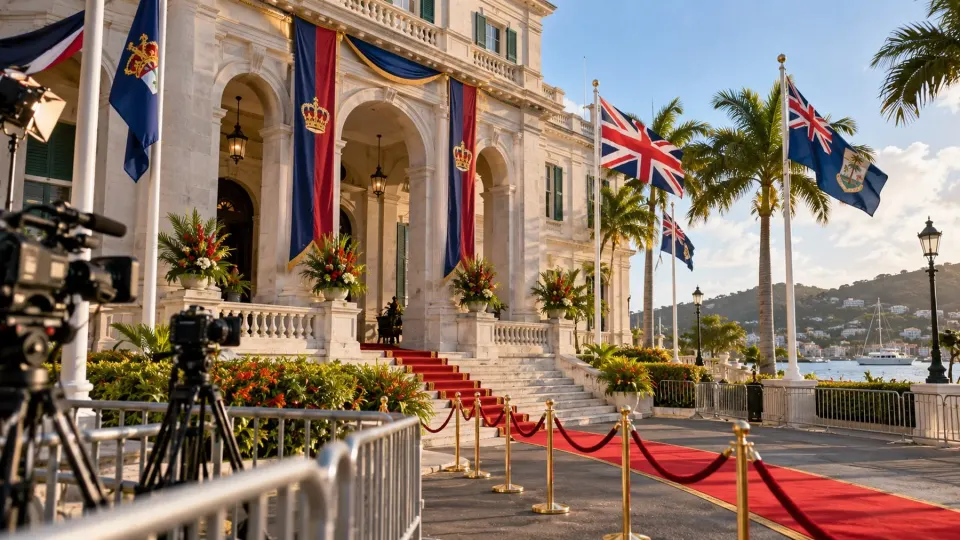
King Charles will address Britain's involvement in the transatlantic slave trade during his Caribbean tour later this month, but Buckingham Palace says he will not issue a formal apology. The distinction is likely to dominate a visit taking in The Bahamas, Guyana and Antigua and Barbuda between 27 October and 4 November.
The Palace says the programme will not avoid what Charles has previously called the “darkest days of our past”. It also says formal apologies and reparations are matters for governments. The UK government has ruled out reparations, while several Caribbean and African countries want negotiations about the enduring consequences of slavery and colonialism.
This is not simply a row over one word in a speech. An apology can carry moral, diplomatic and potentially legal significance. Refusing one while promising acknowledgement produces a carefully engineered position: sorrow without state liability, reflection without a commitment to payment.
Where the King is going
Charles will travel to The Bahamas and Guyana before joining Queen Camilla in Antigua and Barbuda for the Commonwealth Heads of Government Meeting. The Royal Family's published programme emphasises environmental sustainability, biodiversity, youth engagement, community resilience and the Commonwealth.
Those themes matter to host countries and should not be flattened into a British argument about monarchy. Yet the historical relationship is unavoidable. Charles remains head of state in The Bahamas and Antigua and Barbuda; Guyana is a republic. Each country has its own politics, priorities and view of the Crown.
The Palace says the itinerary was developed with host governments and will principally focus on their present and future. That is reasonable. A Caribbean country is not a historical exhibit waiting for a royal visitor to arrive and explain it. But a future-facing programme cannot erase the structures through which wealth and power were accumulated.
Acknowledgement is not an apology
Charles has previously expressed personal sorrow over slavery and described it as an appalling atrocity that stains Britain's history. He has supported research into the monarchy's own connections to the trade. Those actions go further than silence, but they remain short of a formal apology made on behalf of the state.
The Palace's constitutional argument is that the monarch acts on government advice and questions of apology or reparations belong to ministers. That is an important boundary. The King cannot announce billions of pounds in compensation or rewrite foreign policy during a speech.
It is also politically convenient. The government can point to constitutional limits when pressure reaches the Palace; the Palace can point to government responsibility when campaigners ask for a formal response. The apology is passed between institutions like a parcel nobody ordered, while the people asking for it are told that everybody understands the importance of the conversation.
What reparations can mean
Public discussion often treats reparations as a single enormous invoice. In practice, proposals can include formal apology, debt relief, development investment, public-health programmes, education, cultural restoration, institutional reform and direct payments. Different governments and campaign groups advocate different combinations.
Reuters reports that at least 12.5 million Africans were abducted and sold through the transatlantic trade, with Britain responsible for transporting an estimated 3.2 million. Those figures describe human beings subjected to forced transportation, violence, family separation and exploitation—not an abstract dispute about modern etiquette.
Opponents of financial reparations ask how responsibility should be calculated across centuries and institutions, who should pay, who should receive, and how present citizens relate to historical wrongdoing. Those are difficult questions. Difficulty is a reason for negotiation and evidence, not a magical solvent that makes the history disappear.
Jamaica has formally asked Charles to seek legal advice on whether Britain should pay reparations. The King is not visiting Jamaica on this itinerary, but that intervention will follow him into the Commonwealth meeting. Commonwealth Secretary-General Shirley Botchwey said earlier this year that she expected members to make progress toward negotiations.
The lesson from earlier tours
The 2022 Caribbean tour by the then Duke and Duchess of Cambridge attracted criticism for images and arrangements that appeared out of step with the region's modern identity. Royal visits are heavily choreographed, yet choreography can reveal assumptions: who stands behind a fence, who rides in an open vehicle and whose version of history frames the photograph.
The coming tour has an opportunity to avoid that mistake. Listening should involve local historians, campaigners and communities as well as official ceremonies. Acknowledgement should be specific enough to mean something. If Charles discusses enduring inequality, audiences will reasonably ask what action follows.
OutOut's recent coverage of King Charles's AI summit examined the influence a constitutional monarch can exercise through convening people even without executive power. The same principle applies here. Charles may not control government policy, but his language, meetings and research support can shape which questions receive attention.
What to watch during the visit
The exact wording of the King's speeches will matter. So will the response from host governments and civil-society groups. A reference to “darkest days” is different from identifying institutions, profits and continuing effects. A promise to listen is different from supporting a structured negotiation.
It will also matter whether British ministers engage with Commonwealth proposals or use the Palace statement as a pressure valve. The government has ruled out reparations, but saying “no” does not end diplomatic discussion when dozens of countries keep the subject on the agenda.
Finally, coverage should allow Caribbean priorities beyond Britain. Climate vulnerability, biodiversity, debt, trade, youth opportunities and regional security are not supporting acts in a royal morality play. A serious tour can face history and still recognise that these nations exist in the present tense.
The OutOut verdict
Acknowledgement is better than evasion, and Charles's willingness to discuss the monarchy's historical links matters. But carefully expressed sorrow cannot indefinitely substitute for a clear national position on apology, repair and negotiation.
The King cannot personally settle the question, and it would be constitutionally dishonest to pretend otherwise. The government can, however, decide whether Britain's response is a permanent refusal or the beginning of an evidence-based conversation with affected countries.
The tour should not become an apology-themed obstacle course in which every engagement is judged by one forbidden word. Nor should bright language about a shared future be used to blur a past whose economic and human consequences were real. Face both. Respect the hosts. And if Britain believes no reparative action is justified, ministers—not palace spokespeople—should make and defend that case themselves.
Sources
- Reuters: King will address slavery but not formally apologise, 2 October 2026.
- The Royal Family: programme for visits to The Bahamas, Guyana and Antigua and Barbuda, 2 October 2026.
- The Guardian: Caribbean tour and colonial legacy, 2 October 2026.