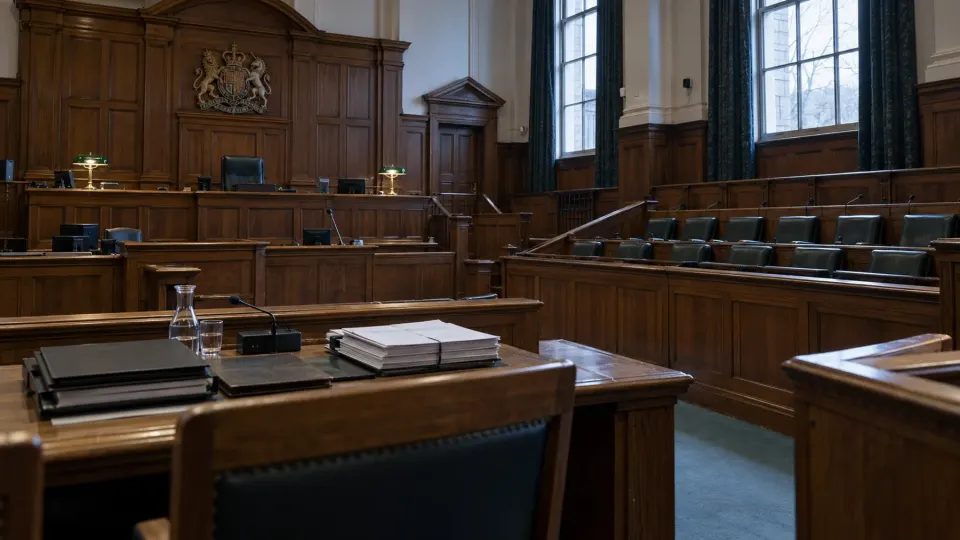
The government has abandoned the most controversial part of its plan to reduce Crown Court delays: a new tier of judge-only trials for offences carrying shorter prison sentences. Justice Secretary Alex Norris confirmed on Saturday 3 October that ministers would not proceed with the proposal after sustained opposition from barristers, civil-liberties groups and MPs.
That does not mean the court crisis has disappeared, and it does not mean every proposed change has been withdrawn. England and Wales still have a Crown Court backlog of almost 81,000 cases. Ministers still intend to expand magistrates' sentencing powers, change how some “either-way” cases are allocated and permit judge-only hearings in a limited category of complex fraud cases.
The useful headline is therefore neither “jury trials saved” nor “jury trials abolished”. A broad restriction has been dropped; narrower reforms remain; and the system still has thousands of victims, witnesses and defendants waiting months or years for a result.
What has been withdrawn?
The abandoned proposal would have created a new Crown Court division in which a judge, rather than a jury, decided cases likely to attract sentences of less than three years. It had been presented as one answer to the backlog inherited by the current government.
Critics argued that removing juries would weaken an important safeguard without tackling the main constraints: too few court sitting days, judges, prosecutors, defence lawyers and usable courtrooms. The Criminal Bar Association welcomed the retreat. The question now is whether ministers have rejected a bad shortcut or merely postponed the difficult spending decisions that made the shortcut tempting.
Jury trial is not used for every criminal allegation. Magistrates already hear the large majority of cases, while the most serious matters go to the Crown Court. “Either-way” offences can be heard in either venue depending on the allegation and the allocation process. The debate concerns where that boundary sits and who gets to decide.
What is still changing?
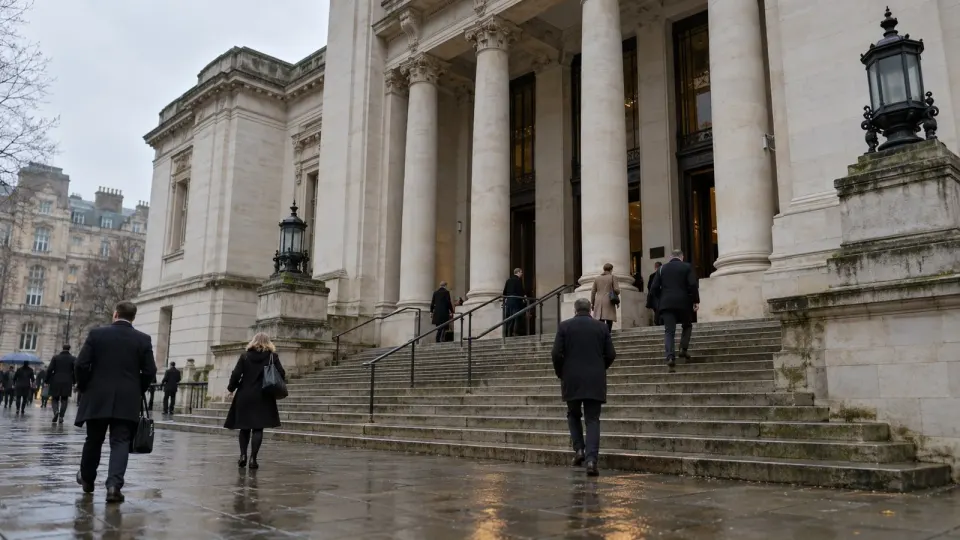
According to the plans reported this weekend, magistrates would receive power to impose sentences of up to two years. The government also wants magistrates, rather than defendants, to make the final venue decision for either-way offences. Those measures could move work out of the Crown Court, but they are not administrative trivia.
Where a case is heard affects procedure, sentencing powers, legal representation and the experience of everybody involved. If more serious work moves into magistrates' courts, those courts need enough trained staff, legal advisers, advocates and hearing rooms to absorb it. Moving a queue from one building to another is not the same thing as shortening it.
Ministers also intend to allow some complicated fraud trials to be decided by judges alone. Supporters say lengthy technical cases can consume juror time and place exceptional demands on ordinary members of the public. Opponents say complexity is not, by itself, a reason to remove community participation and warn that drawing a narrow exception is harder than announcing one.
The precise legislation will matter. A promise made in a weekend interview is not yet a revised statute book. Parliament will have to examine the offences covered, the allocation test, appeal routes and safeguards.
Why the backlog matters more than the slogan
A court backlog is not a spreadsheet inconvenience. A victim waiting for trial cannot finish the process. A witness's memory can fade. A defendant on remand may remain imprisoned before guilt has been determined, while a defendant on bail can live under unresolved allegations for a prolonged period. Lawyers and police must keep old cases alive while new ones arrive.
Delays can also affect outcomes. Witnesses disengage, diaries collide and fragile cases become harder to present. Justice that arrives years late may still be legally valid, but it is plainly less effective for the people required to live through the wait.
The government says reform is necessary because the existing system cannot continue. That diagnosis is difficult to dispute. The argument is over whether fewer juries would have addressed capacity or simply made the constitutional cost easier to see than the operational benefit.
OutOut has previously examined the difference between a charging decision and a proven case in our Manchester terrorism-case update. The same discipline applies here: process is not decorative. The identity of the decision-maker, the evidence tested and the route of appeal are part of how a verdict earns legitimacy.
What would a credible repair look like?
First, ministers should publish a measurable recovery plan: sitting days, courtroom availability, judicial recruitment, legal-aid capacity and expected waiting times by region. “Modernisation” is not a metric.
Second, any transfer of cases to magistrates must come with resources. Magistrates' courts already manage enormous volumes. Giving them more serious cases without more capacity would produce the governmental equivalent of clearing a kitchen by putting every dirty plate in the lounge.
Third, technology should solve identifiable problems. Digital case files, reliable remote administrative hearings and better scheduling can reduce wasted time. Artificial intelligence may help organise material, but it cannot cross-examine a witness, cure an unsafe building or make an absent barrister appear in two trials at once.
Finally, reform should be evaluated openly. If a change reduces waiting times without increasing collapsed hearings or appeals, publish the evidence. If it merely relocates delay, say so and change course.
The OutOut verdict
Dropping the broad judge-only tier is the correct decision. A government should need overwhelming evidence before removing juries from a substantial new category of Crown Court cases, and the public case presented so far did not meet that standard.
But campaigners should resist declaring the justice system repaired because one proposal has been binned. Nearly 81,000 outstanding Crown Court cases remain. Magistrates may receive more work and more sentencing power. Complex fraud could still lose juries. The constitutional fire alarm has stopped ringing; the building is still full of smoke.
The next test is unglamorous: fund the people, rooms and time required to hear cases properly. Britain does not need justice made quicker by becoming thinner. It needs a system capable of delivering careful decisions before everybody involved has forgotten what an ordinary timetable looked like.
Sources
- Reuters: Britain scraps plans to curb jury trials after backlash, 3 October 2026.
- Financial Times: government reverses much of plan to scrap jury trials, 3 October 2026.