John Malkovich has cancelled a planned performance in Tel Aviv after promotional material attributed a political statement to him that he says he never made.
The actor had been scheduled to appear in The Music Critic, a touring stage production combining comedy, classical music and savage historical reviews of famous composers. The Tel Aviv performance was planned for April 2027.
A press release circulated to media included a quote presenting Malkovich as pleased to return and expressing closeness and solidarity with the Israeli audience. Malkovich said the words were false, had not been written by him and had never been submitted for his approval.
The show’s Israeli producer, Alon Yurick, acknowledged the error and described it as human error. The public-relations company involved apologised, and outlets that had used the statement corrected or removed it. Malkovich nevertheless withdrew from the engagement.
Why the quote mattered
In ordinary publicity, a manufactured line about being delighted to visit a city might be dismissed as stale promotional language. In Israel during continuing conflict and intense international debate, a statement about solidarity carries political meaning.
Malkovich said performing in a country does not amount to endorsing its government or policies. By placing stronger words in his mouth, the release appeared to define a position he had not chosen.
That is more than a minor copy error. Quotes are presented as a person’s own words. Journalists, audiences and promoters rely on the basic understanding that somebody either said them or authorised them.
How publicity quotes should work
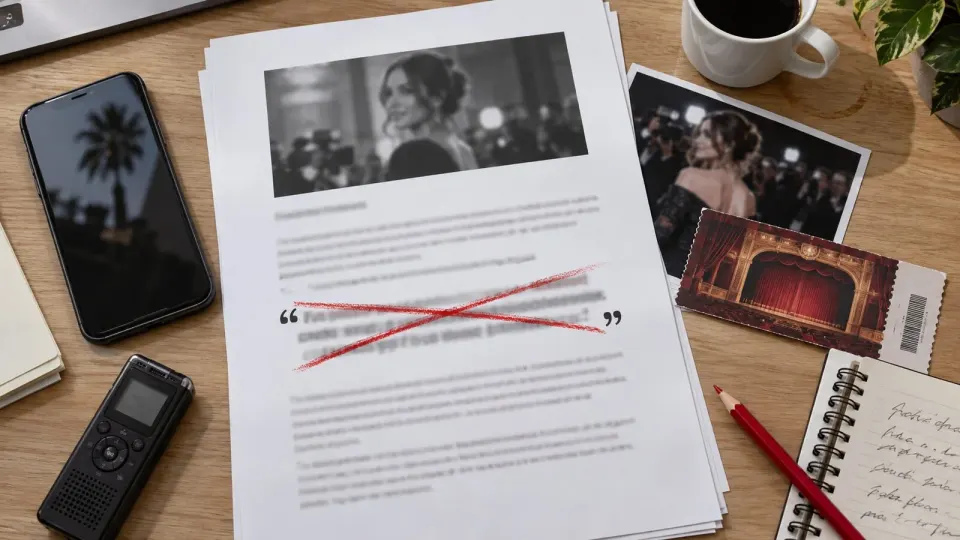
Press releases often contain approved quotations drafted collaboratively by publicists, organisations and the person being quoted. That practice can produce language nobody would use in conversation, but the essential safeguard is approval.
If approval is absent, quotation marks convert marketing copy into false attribution. The problem becomes especially serious when the subject is politics, war, identity or public support for a contested cause.
The producer’s admission narrows the factual dispute: the statement was not Malkovich’s. The remaining questions concern how it entered the release and why checks failed before distribution.
The wider cultural context
International performances in Israel have become highly contested amid the war in Gaza, violence and occupation in the West Bank, and campaigns calling for cultural boycotts. Some artists have refused engagements; others argue that performing for audiences should not be treated as support for a government.
Malkovich’s statement sought to preserve that distinction. His withdrawal was prompted by the use of his name and supposed words, not by a newly announced general policy against performing in Israel.
That nuance is easy to lose when the story is pulled into competing political narratives. The confirmed sequence is simpler: a quote was issued, Malkovich rejected it as false, those responsible apologised, and he cancelled the show.
For more culture reporting, visit OutOut’s Entertainment section. Our story on Brad Pitt’s 16-dog coffee advert is what happens when a celebrity publicity campaign chooses deliberate absurdity instead.
What happens to the production?
The cancellation concerns Malkovich’s Tel Aviv date. Ticket holders should use instructions from the venue or official seller for refunds or any replacement arrangements rather than relying on screenshots circulating on social media.
The Music Critic has toured internationally, with Malkovich performing texts built from notoriously harsh reviews while musicians play the works being attacked. The production itself is not the source of the dispute; the issue is the promotional campaign surrounding one booking.
The OutOut verdict
A public-relations company has one rule above all others: do not invent the public’s words.
The apology is necessary, but the cancellation shows why it is not always enough. Once a false statement enters headlines, a correction rarely travels to every person who saw the original. Malkovich could either continue under a political declaration he did not make or withdraw and make the correction impossible to ignore.
The irony is brutal. A show about critics saying terrible things now has its own publicity disaster because somebody decided the star had not said enough.