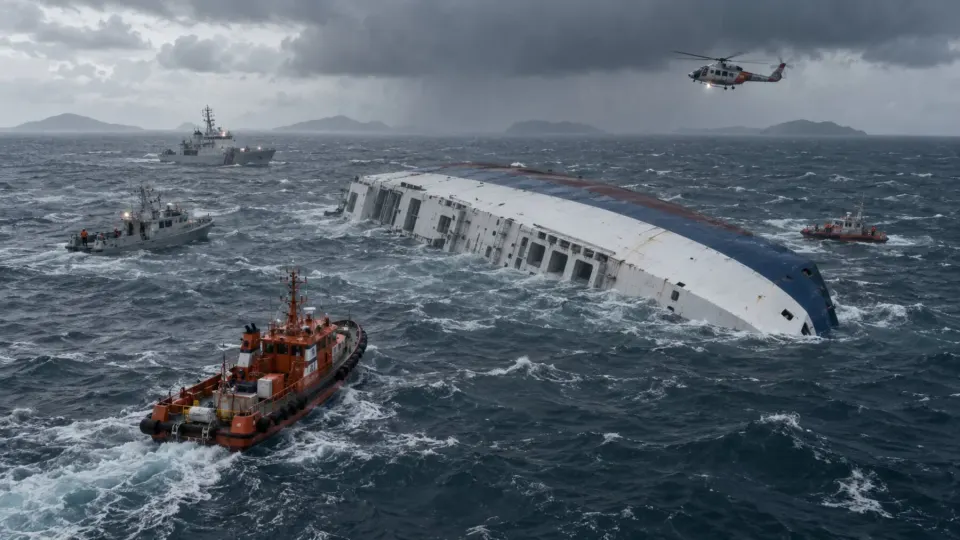
Indonesian rescuers are searching for at least 129 people after a passenger ferry overturned in bad weather in the Java Sea early on Sunday 13 September.
The Virgo Transport 8 was travelling from Surabaya in East Java to Banjarmasin in South Kalimantan, on Borneo. Associated Press reported that more than 240 people were aboard. At least 108 people had been rescued and six bodies recovered as operations expanded on Sunday.
Those figures are provisional and may change as survivors are identified and the passenger list is checked. In Indonesian ferry disasters, the number actually aboard has sometimes differed from the manifest. That makes early arithmetic necessary but not final.
What happened
The captain reported rough seas and waves up to three metres before issuing a distress call to say the ship was listing, according to I Putu Sudayana, head of Banjarmasin’s search-and-rescue office. Contact was lost at about 2am and the agency received a report two hours later.
The manifest listed 243 people: 213 passengers and 30 crew. The 119-metre vessel was also carrying 89 vehicles. It had been built in Japan in 1987 and operated there until being sold to its current Indonesian operator last year.
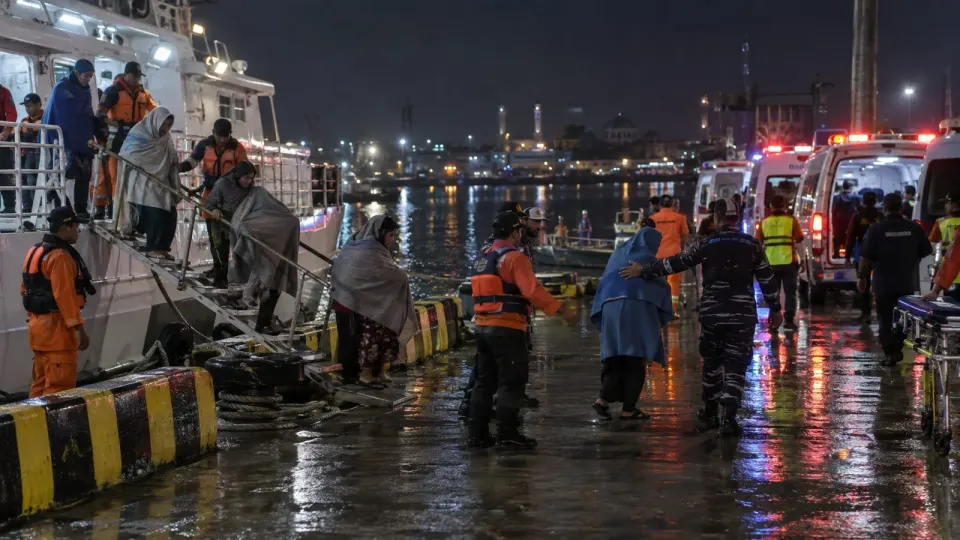
Aerial searches showed the ferry floating upside down rather than sunk. Four navy ships, other vessels and two helicopters joined the operation, alongside tugboats and passing ships. Video released by Indonesia’s National Search and Rescue Agency showed the overturned hull in choppy water and survivors arriving at port.
Relatives gathered at a command centre in Banjarmasin’s Trisakti port, checking manifests and rescue lists. Their wait is the centre of this story, not the dramatic shape of the wreck. Numbers describe the scale; every unresolved name represents a family still without an answer.
Why time matters
An overturned vessel creates several possible search areas. People may remain on the hull, be trapped in air pockets, enter the water or reach life-saving equipment. Wind, current, darkness and weather constantly expand the area crews must cover.
The ferry remaining afloat may help rescuers inspect it, but it does not make the operation simple. Divers need to assess stability, access and visibility. Surface teams must search a moving sea while avoiding assumptions about where passengers entered the water.
Indonesia’s geography makes ferries essential. More than 17,000 islands are linked by sea routes used for work, family life and trade. AP noted that maritime disasters occur regularly and weak enforcement has often been blamed. Each incident therefore prompts two investigations: what immediately happened to this vessel, and whether inspection, loading, training or weather decisions exposed a wider failure.
It is too early to assign a cause beyond the reported sequence. Rough seas were present, but investigators must examine the ship’s condition, cargo and vehicle securing, stability, communications and compliance. Weather can trigger a disaster without being its only explanation.
This accident follows several recent ferry emergencies in the region, including a deadly fire in the Philippines. The proximity of those events should not collapse them into one cause; different ships, operators and jurisdictions require separate evidence. It does underline how heavily millions of people depend on safe passenger shipping.
OutOut will carry material updates in the World section as verified rescue figures change.
The OutOut verdict
There is no roast for a rescue operation with so many people missing. The useful work is precision: report changing numbers with timestamps, distinguish the manifest from the confirmed count and do not turn unverified clips into conclusions.
For now, more than a hundred people are alive because crews, nearby vessels and survivors acted in brutal conditions. The priority is finding the missing. Accountability comes next, and it must follow evidence all the way from the bridge to the regulator.