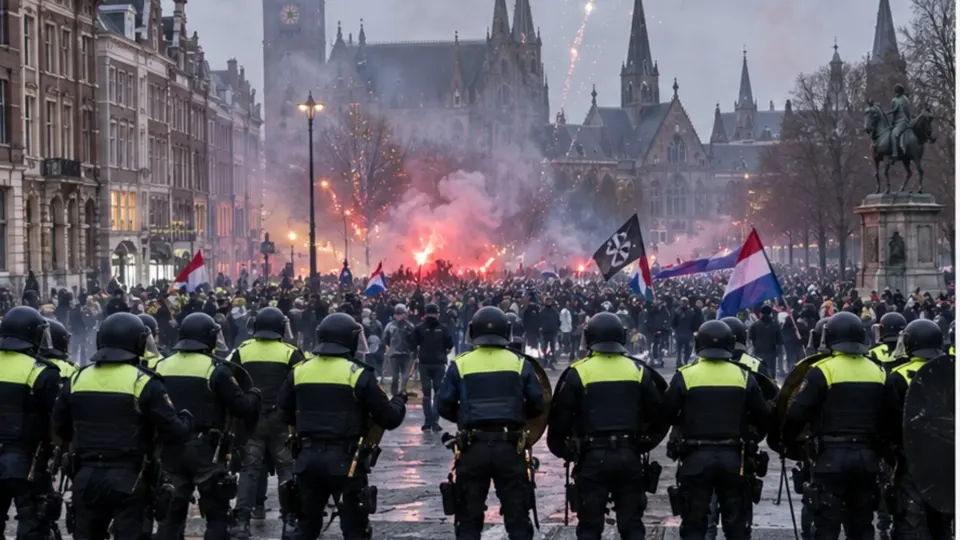
Dutch riot police dispersed several hundred far-right protesters in The Hague on Saturday 19 September after violence erupted at a demonstration opposing immigration and asylum policy.
Police made several arrests after fireworks and other objects were thrown at officers. The municipality banned a planned march, ordered the crowd at the central Malieveld park to disperse and deployed riot units, mounted police and dogs.
Justice Minister David van Weel said demonstrators made Nazi salutes, chanted antisemitic slogans and attacked police. Those details were his public account of the disorder, reported by the Associated Press. Individual criminal responsibility will be determined through evidence and legal proceedings, not by social-media clips or collective assumptions.
Why the authorities stopped the march
Peaceful protest is protected in democratic societies, including protest against government immigration policy. Authorities can impose restrictions when violence creates an immediate safety risk. The important distinction is conduct: an unpopular view does not automatically justify dispersal, while fireworks and attacks on officers are not transformed into democratic participation by carrying a placard.
The Hague municipality acted after disorder had begun, rather than prohibiting the gathering solely because of its politics. Police said the situation required arrests and crowd control. AP photographs showed riot officers, mounted units and a heavily policed city-centre scene.
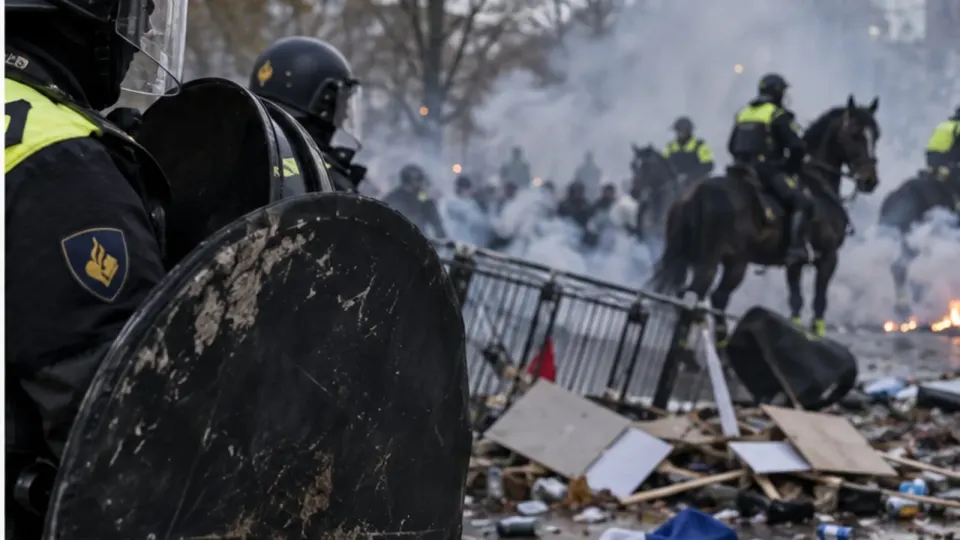
The violence echoes unrest around a right-wing demonstration a year earlier. During those clashes, a police car was burned and the headquarters of the centrist D66 party was attacked. D66’s leader, Rob Jetten, is now the Dutch prime minister, giving Saturday’s events an uncomfortable political memory as well as an immediate policing problem.
The viral-video trap
Scenes of fireworks, shields and horses travel faster than verified timelines. Short clips can show a genuine act while concealing what happened before or after it. They also encourage partisans to label an entire crowd from a single frame—or to dismiss clear violence because another angle looks calmer.
The responsible reading is narrower. Several hundred people attended. Some protesters used violence, according to police and AP reporting. The justice minister alleged extremist gestures and slogans. Arrests were made. That is enough for a serious story without inventing motives for everyone present.
The issue matters to British readers because similar arguments about asylum, protest policing and extremist symbolism are active across Europe. The Netherlands is not a laboratory for proving whichever British political point somebody already had open in another browser tab.
It also demonstrates why political leaders should be precise. Condemning violence need not erase legitimate policy disagreement. Defending free expression does not require pretending fireworks aimed at police are advanced constitutional scholarship.
For more verified European reporting, visit OutOut’s world news section.
What happens next
Dutch prosecutors will decide which alleged offences proceed. Authorities are likely to review the protest’s organisation, police tactics and whether further restrictions are justified. Evidence from body cameras, public footage and witnesses should clarify individual actions.
The OutOut verdict
If your immigration policy requires a Nazi salute and a firework launched at a police officer, the policy presentation has experienced a fairly serious branding failure.
The state must protect lawful protest and punish proven violence with the same consistency. The answer to extremism is not vague panic or performative outrage; it is evidence, proportionate policing and courts. Democracy is strongest when it can tell the difference between an argument and an attack—even while the internet is busy editing both into a 12-second clip.