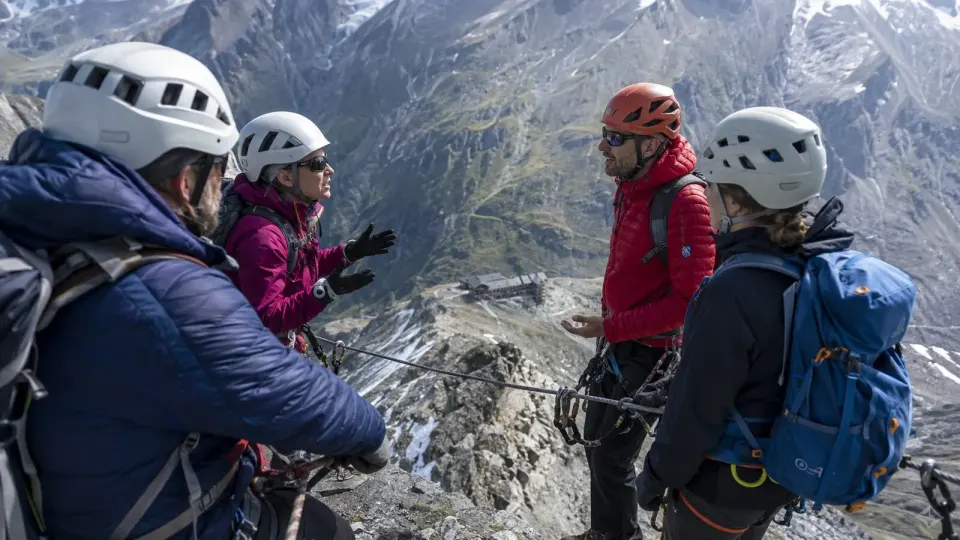
There are places to lose your temper. A narrow protected climbing route near the top of Austria’s highest mountain is not one of them.
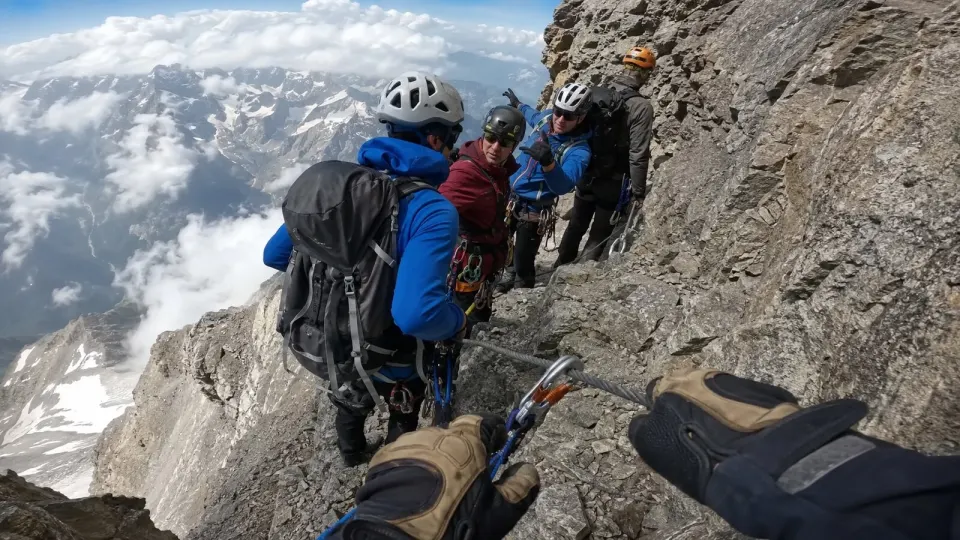
Headcam footage posted by a Polish climber appears to show a confrontation with a mountain guide high on Grossglockner, a 3,798-metre peak in the Austrian Alps. In the video, angry words are exchanged and physical contact appears to occur while both parties occupy steep, exposed terrain.
Police are investigating. The footage is dramatic, but it is still one participant’s recording of a disputed encounter. It should be viewed as evidence to be examined, not a complete court judgment with better scenery.
What does the climber say happened?
The uploader says the incident took place on 22 August on the approach to the Erzherzog-Johann-Hütte via the Mürztalersteig, a demanding protected route. He says he had stopped to wait for his wife when a guide travelling with two clients arrived behind them.
According to his account, the guide stepped between the couple, became verbally aggressive and pushed him. The guide can be heard identifying himself as a mountain professional during the exchange.
The original clip spread rapidly through climbing communities because the setting makes ordinary aggression uniquely dangerous. At sea level, a shove may start a fight. On a high Alpine route, it can change somebody’s life.
Why etiquette is safety equipment
A via ferrata uses fixed cables, ladders and metal anchors to protect climbers as they move through exposed terrain. People attach themselves with specialist lanyards and carabiners, but the system does not make them invulnerable.
Passing another party requires communication, space and patience. Faster climbers and professional guides may understandably want to maintain pace, especially when weather or client fatigue is a concern. Slower parties also have responsibilities: avoid blocking bottlenecks, let others pass when safe and understand the route’s demands.
None of that grants anyone permission to intimidate or make physical contact in a dangerous position. Expertise should lower the temperature, not provide a louder title to shout.
The route’s altitude adds another layer. Thin air, cold, fatigue, fear and time pressure can all damage judgment. Those are reasons for calm systems, not excuses for abandoning them.
What happens now?
Reports say Austrian police are examining the incident and that the guide’s professional relationship with a local association has come under scrutiny. Any final account should depend on that investigation and responses from those involved.
The viral video has already produced the predictable avalanche of instant verdicts. Some viewers focus on the apparent push; others debate whether the couple was obstructing the route. Only the first question justifies a police investigation. Being delayed behind somebody does not turn an exposed mountain into a nightclub queue.
The OutOut verdict
Mountain guiding is built on trust. Clients pay not just for route knowledge, but for a professional who stays composed when the environment, weather or people become difficult.
The climber’s account has not yet been tested through a completed investigation, and a short camera view can miss what happened before it started. Even with that caution, the footage is a grim advert for how not to manage conflict at altitude.
Grossglockner is 3,798 metres high. There is enough exposure already. Nobody needs to add an ego with its own weather system.