Greenland and Denmark say a planned security agreement with the United States will not surrender the Arctic island’s sovereignty. Donald Trump, meanwhile, says it gives Washington “permanent control” over Greenland’s security and “all other needs”. Both descriptions cannot comfortably occupy the same igloo.
The three governments announced late on Friday 18 September that the United States would be allowed to develop a significant military presence in Greenland and that hostile powers would be prevented from establishing bases there. The agreement is expected to be signed around the United Nations General Assembly next week.
The complete text has not been published. That is the most important fact in the story. We do not yet know the size of the proposed US presence, which decisions require Danish or Greenlandic consent, or whether Washington gains any authority over foreign investment, resources or infrastructure.
What each side is saying
Greenland’s prime minister, Jens-Frederik Nielsen, said the proposal recognises the sovereignty and territorial integrity of the Danish kingdom and the Greenlandic people’s right to self-determination. Danish Foreign Minister Lars Løkke Rasmussen said an agreement should strengthen Arctic and North Atlantic security while respecting the kingdom’s red lines.
Trump used much broader language. He said the United States would forever have the ability to do what it considered necessary to defend Greenland and claimed the arrangement delivered permanent control over security and other needs. His statement followed months of threats and demands concerning the island, which Greenland and Denmark have repeatedly said is not for sale.
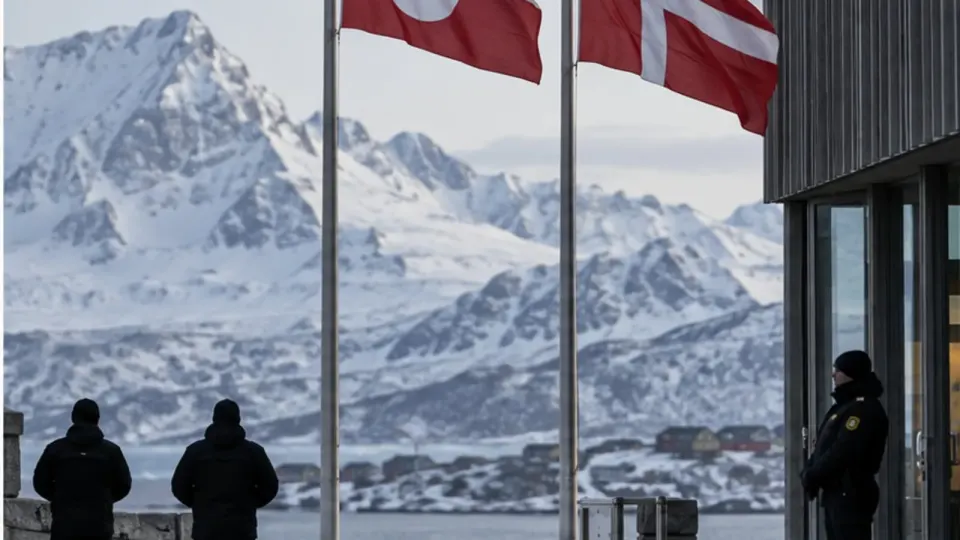
Those public messages may partly be aimed at different domestic audiences. Washington can present strategic access as a victory; Copenhagen can insist sovereignty remains intact; Nuuk can emphasise self-determination. The legal wording will decide whether this is ordinary defence cooperation with unusually loud marketing or a genuine transfer of practical power.
Why Greenland matters
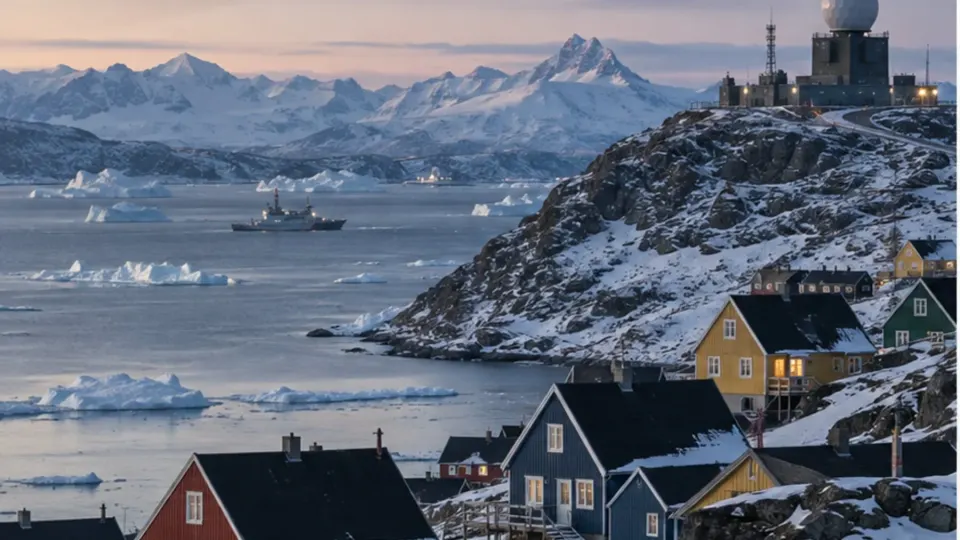
Greenland sits between North America and Europe, close to increasingly important Arctic sea routes. It already hosts the US Pituffik Space Base, which supports missile warning, space surveillance and Arctic defence. Climate change is opening access to routes and resources while Russia and China pursue greater regional influence.
That makes stronger allied security cooperation understandable. It does not make local consent optional. Greenland is self-governing within the Danish kingdom, and its people have their own political future to decide. Strategic maps tend to colour the island as an enormous useful shape. People actually live inside that shape.
Some residents in Nuuk told Reuters they feared American control and preferred cooperation through NATO. Their concern is not anti-security; it is about who sets the rules when powerful countries describe somebody else’s home as a strategic asset.
The agreement could also affect Britain. Greenland sits inside the wider North Atlantic security environment shared by NATO allies, and any expansion of US facilities may influence surveillance, shipping protection and defence planning across the region. Follow more verified developments in OutOut’s world news section.
What to watch next
The published text needs to answer four questions: who authorises US operations, whether Greenland can refuse particular deployments, how foreign investment is screened, and whether mineral or infrastructure rights are included. Parliamentary scrutiny in Denmark and political consent in Greenland will matter as much as any signing ceremony in New York.
The OutOut verdict
If a deal respects sovereignty, publishing its terms should help prove it. If the explanation requires everyone to accept that “permanent control” does not mean control, the press conference has already wandered onto thin ice.
Arctic security is serious. So is the principle that Greenlanders are citizens, not scenery surrounding a useful runway. The grown-up agreement is the one they can read, challenge and choose—not the one announced in capital letters from somewhere warmer.