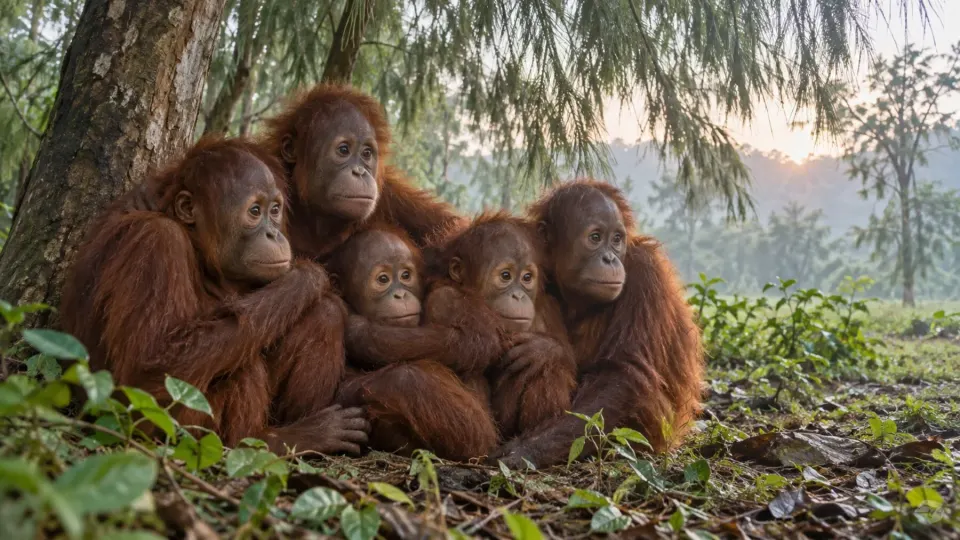
Five young orangutans have been found huddled in a forest in the Indian state of Odisha, an extraordinary discovery that has triggered a wildlife-trafficking investigation.
Orangutans do not live naturally in India. Their wild range is on the islands of Borneo and Sumatra, thousands of miles away. The presence of five juveniles together in Balasore district therefore cannot be explained by an adventurous family holiday or a badly programmed migration app.
Indian reports say forest officials rescued the animals and transferred them to Nandankanan Zoological Park near Bhubaneswar, where they were placed in quarantine and given veterinary care. Investigators including Odisha’s Special Task Force and the Wildlife Crime Control Bureau are examining how they entered the country and why they were left in the forest.
Officials suspect smuggling, but the route, people responsible and intended destination had not been established when this article was prepared.
Why five young animals are such a serious clue
Moving one orangutan illegally would require planning, money and contacts. Moving five young animals points towards a supply chain: capture or acquisition, concealment, transport across borders and a buyer or intermediary expecting delivery.
Wildlife trafficking often works through several stages, so the people who abandon animals may not be those who originally removed them from the wild. Investigators will need transport records, phone data, CCTV, vehicle movements and intelligence from other agencies before they can say where the orangutans came from.
The fact that the animals were found alive does not make the journey harmless. Young apes require specialist care and strong social bonds. Removing them from their mothers can involve violence, stress and a high risk of illness. Trafficked animals may be kept in cramped conditions with poor food and little veterinary attention.

What happens to the orangutans now?
Quarantine protects both the rescued animals and other wildlife. Veterinarians can assess dehydration, injuries, infection and nutritional needs while reducing the risk that an unfamiliar disease enters an existing zoo population.
Identification is also important. There are three recognised orangutan species — Bornean, Sumatran and Tapanuli — and all face severe conservation pressure. Genetic testing may help establish the animals’ species and possible region of origin, which could provide investigators with another lead.
Any long-term decision must put welfare first. Returning trafficked great apes to the wild is not as simple as buying five plane tickets. Authorities would need to establish where they came from, whether a suitable rehabilitation programme can receive them and whether they have the health and survival skills required for release.
Why orangutans are trafficked
Young orangutans can be targeted for the illegal pet trade because they are intelligent, expressive and easy to market through sentimental photographs. That demand conceals the harm behind the image. A baby in captivity is not an exotic toy; it is evidence that a wild animal has been separated from its habitat and, very often, its mother.
International commercial trade is tightly controlled under the Convention on International Trade in Endangered Species. Enforcement is difficult because traffickers exploit complex routes, false paperwork and online sales.
The wider threat to orangutans includes habitat loss, forest fires, mining and agricultural expansion. Trafficking adds direct removal to populations already under strain.
Readers who want more international reporting can follow OutOut’s World section. The story also belongs in the broader conversation about how viral animal clips should be viewed: the cute face is the beginning of the question, not the end.
The OutOut verdict
Five baby orangutans in an Indian forest is a compelling image, but it is not a whimsical wildlife surprise. It is a possible crime scene with five vulnerable survivors sitting in the middle of it.
The priority is their health. The next job is tracing the route in reverse until investigators find the people who treated endangered apes like cargo.
Share the rescue video if it helps the investigation and public understanding. Just do not let the heart emoji erase the machinery of trafficking that may have put the animals there.