Britain’s air-traffic system suffered another failure on Monday 21 September, delaying flights at airports including Manchester, Glasgow and Belfast and disrupting passengers at Gatwick and London City. NATS, the company that manages UK air traffic, said a connectivity problem at its Prestwick centre in Scotland caused the trouble.
The fault was fixed and systems began returning to service, Transport Secretary Heidi Alexander said. But the timing turned an operational incident into a much larger question. It arrived less than two weeks after a separate software defect halted flights around the country and led to roughly 2,000 cancellations affecting hundreds of thousands of people.
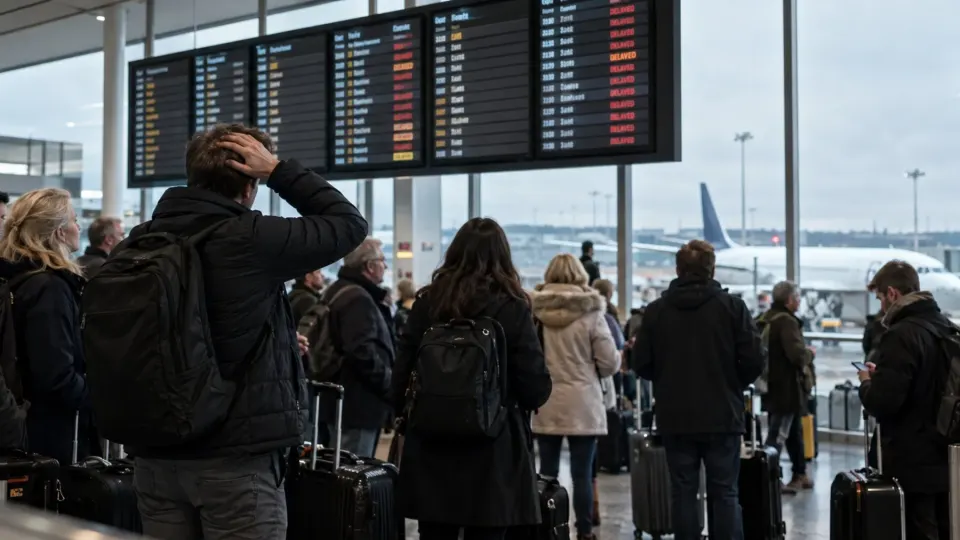
NATS says the two faults were unrelated. Passengers staring at a red departure board may reasonably consider that distinction technically important and emotionally useless.
Reuters reported that 24 flights had been cancelled by 8.58am GMT on Monday. Ryanair said 25,000 of its customers faced delays, easyJet cancelled some flights and British Airways warned passengers to expect disruption. Airports south of Manchester were broadly unaffected, according to NATS, although northbound services and flights leaving Scottish airports experienced delays.
What failed this time
NATS described the problem as a connectivity issue at Prestwick, one of the centres used to manage UK airspace. It did not publicly provide a detailed technical explanation in the reporting available when this article was prepared. There is no evidence that the incident was a cyberattack, and nothing responsible is gained by inventing one because “connectivity issue” sounds insufficiently cinematic.
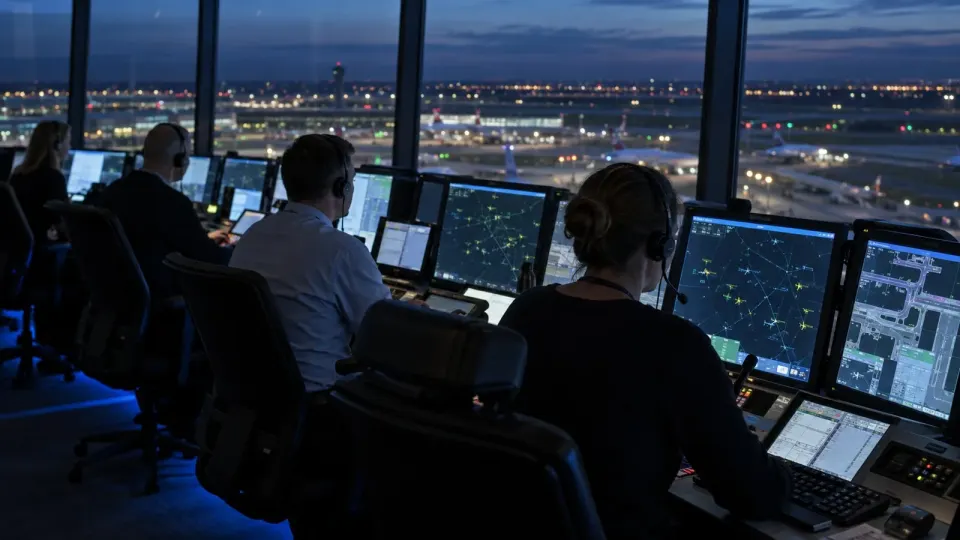
Air-traffic control systems coordinate aircraft routes, altitude and separation across crowded airspace. When a critical system becomes unavailable or uncertain, traffic may be reduced while controllers use contingency procedures. That caution can rapidly create queues because airports and airlines work to tightly planned schedules: an aircraft delayed on one leg may miss its next slot, leave a crew out of position or strand passengers awaiting a connection.
Monday’s disruption was smaller than the earlier failure, but recurrence matters. The August 2023 NATS outage cost airlines about £100 million, Reuters reported. EasyJet said the latest incident again raised questions about the resilience of NATS systems. Ryanair repeated its call for chief executive Martin Rolfe to resign. Those are the airlines’ positions, not an independent finding that one executive caused either fault.
The government now needs more than reassurance that each individual glitch is different. If a household loses power twice in a fortnight because one fuse failed and then a cable snapped, the explanations can both be true while the owner still asks whether the wiring is dependable.
What passengers are entitled to
The Civil Aviation Authority said travellers were unlikely to receive statutory compensation for delays or cancellations directly caused by the air-traffic incident, because disruption outside an airline’s control is generally treated as an extraordinary circumstance.
That does not remove airlines’ duty of care. Depending on the length of the delay, affected passengers may be entitled to food and drink, communication, and overnight accommodation with transport if required. If a flight is cancelled, the airline should offer a refund or alternative transport. Keep receipts for reasonable expenses and contact the airline rather than assuming “no compensation” means “sleep on the terminal carpet at your own cost”.
Exact rights depend on the journey and circumstances, so passengers should use the CAA’s current guidance or speak to their airline. Travel insurance may cover some losses that aviation law does not.
The questions NATS and ministers must answer
First, what component or connection failed at Prestwick, and why did the failure affect multiple airports? Second, did contingency arrangements work as designed? Third, do the two recent incidents reveal a shared weakness even if their immediate causes differ—for example ageing infrastructure, insufficient redundancy, testing gaps or staffing pressure?
Fourth, how quickly will an independent account be published? Technical systems improve when incidents are documented, causes are tested and corrective work is visible. A statement saying service has resumed is necessary for Monday’s passengers; it is not a resilience strategy for next month’s.
Alexander had already been considering Rolfe’s future after repeated failures. Personnel decisions may be justified, but changing the name on an office door is not a substitute for examining architecture, procurement, maintenance and emergency procedures. The aim should be safer, more reliable airspace—not an impressive sacrifice followed by the same blinking router.
There is also a regulatory question. NATS performs a critical national function but operates within a commercial aviation system where airlines, airports, regulators and government all hold different pieces of responsibility. When disruption spreads, each organisation can accurately describe the small part it did not cause. Passengers experience the whole system, not the organisational chart.
For more practical consumer coverage, follow OutOut’s UK news section.
The OutOut verdict
Air-traffic control is difficult, safety-critical work. The fact that controllers respond cautiously to uncertainty is a strength, not a failure. Nobody sensible wants punctuality achieved by crossing fingers at 35,000 feet.
But resilience is the promise that one broken link does not repeatedly turn a national transport network into an airport-themed escape room. Two unrelated failures in two weeks still equal two failures. NATS and ministers should publish a clear technical account, set out the remedial work and explain how redundancy will be strengthened.
Passengers have heard that the latest problem is fixed. What they need next is evidence that the system is being fixed.