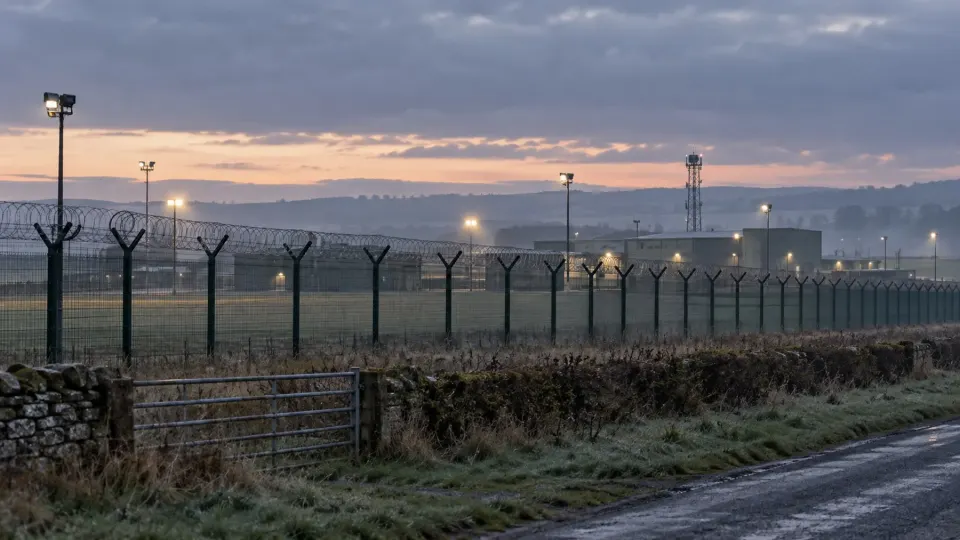
Two men were arrested inside the perimeter of RAF Molesworth in Cambridgeshire early on Thursday 8 October after security patrols found an abandoned vehicle nearby and then a small breach in the fence. The Metropolitan Police say the men, aged 36 and 32, are Latvian nationals living in the UK. They were first arrested on suspicion of trespass on a prohibited site and criminal damage, then further arrested on suspicion of entering a prohibited place for a purpose prejudicial to the United Kingdom under section 4 of the National Security Act 2023.
Those are suspicions under investigation, not charges or findings of guilt. Police have not announced a motive, described what the men were allegedly trying to obtain, or alleged that either acted for a foreign state. Counter Terrorism Policing is leading the inquiry because of the nature of the incident. Its involvement does not, on its own, establish a terrorism offence. In a case around a sensitive military site, this distinction is more than a legal footnote; it is the difference between a verified report and a social-media thriller.
The known sequence
The Met's statement, issued at 15:45 on 8 October, says Ministry of Defence Police patrols found an abandoned vehicle near the RAF Molesworth perimeter at about 22:00 on Wednesday 7 October. Cambridgeshire officers joined searches of the area. Officers later identified a small breach in the fence and located the two men inside the base boundary at about 02:00 on Thursday. The men were taken to a Cambridgeshire police station and were in custody when the statement was issued.
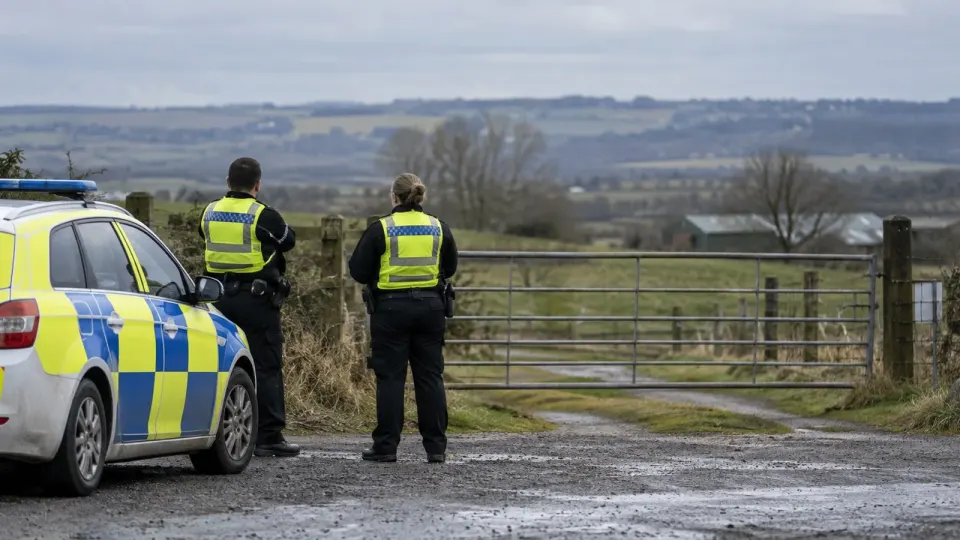
Officers also began searches at two addresses in the Peterborough area. The abandoned car was recovered and taken to a police location. Concerns during examination led to explosive-ordnance specialists checking it, with a precautionary cordon affecting roads around Glatton, including part of the A1. Police say the specialists found nothing of concern and the cordons were lifted. An explosives check is a reason to report that the safety process happened; it is not evidence that explosives were found.
The allegation under the National Security Act is serious. Section 4 concerns entering a prohibited place for a purpose prejudicial to the safety or interests of the UK. In the public statement, police have given the suspected offence but not the evidence they believe would establish that purpose. The proper next stages are investigation, a charging decision if evidence warrants one, and the opportunity for any accused person to answer the case. Until then the public record remains limited.
Why the site draws attention
RAF Molesworth is a military site used for intelligence activity involving the United States and NATO, according to Reuters and the Associated Press. That makes an alleged perimeter breach newsworthy even before investigators know why it happened. Secure bases are designed to restrict entry because of the people, equipment and information inside. A small opening in a fence can therefore trigger a large police response without proving that anything was stolen or that an operation was planned.
The reference to nationality has to be handled with the same discipline as the reference to the law. Police identified the men as Latvian nationals resident in the UK; that fact does not identify an employer, political allegiance or sponsor. Thousands of ordinary people share that nationality. Guessing espionage from a passport would tell us far more about the guesser than about this case. The investigators say they are keeping an open mind about motivation.
There is an understandable temptation to connect this arrest to the recent case at RAF Fairford. Police specifically addressed it. Commander Helen Flanagan, who heads Counter Terrorism Policing London, said that at the time of the Molesworth statement there was nothing to suggest a connection with the events at Fairford the previous week. That is a provisional police assessment, not a promise that the inquiries can never intersect; it is also the best public evidence currently available on the link. Our account of the RAF Fairford investigation is a separate report, with its own suspects and allegations.
This case is a test of more than the physical perimeter. It is also a test of the information perimeter around a live investigation. Police statements give times, locations, arrest grounds and the status of searches because the public deserves an account of an incident that closed local roads and involved a sensitive base. They do not necessarily disclose evidence while officers are trying to understand the men's movements. That gap is not an invitation for anyone with a map and an imagination to supply a motive.
For residents around Glatton, the immediate practical concern was whether roads were open and whether the vehicle posed a danger. Police say the cordons have been removed after the specialist assessment. For everyone else, the questions to track are whether the men are charged, the precise offence if they are, what the authorities can establish about their purpose, and whether the base reviews its security. There may be later answers; none should be retrofitted into the story as facts known on Thursday afternoon.
The legal language may sound definitive when read quickly: “purpose prejudicial to the UK” is part of the offence officers suspect, not a court's verdict. A report that says “arrested on suspicion of” can convey both seriousness and uncertainty at once. That is especially important when two identifiable individuals could face reputational harm long before a court hears evidence. They must be treated as innocent unless and until guilt is proven.
The OutOut verdict
A broken fence at a sensitive intelligence site is no joke. Nor is an arrest under national security legislation. But neither fact gives the internet a licence to invent a spy plot, assign a state sponsor or borrow evidence from RAF Fairford. The useful public service is a clear timeline and a hard line around what police have actually said. Investigators need to explain a breach; commentators need to stop treating a suspicion as the finished explanation. The gate may have had a gap. The reporting should not.