THE APP IS GETTING LEANER BEFORE THE CARS LOSE THEIR DRIVERS
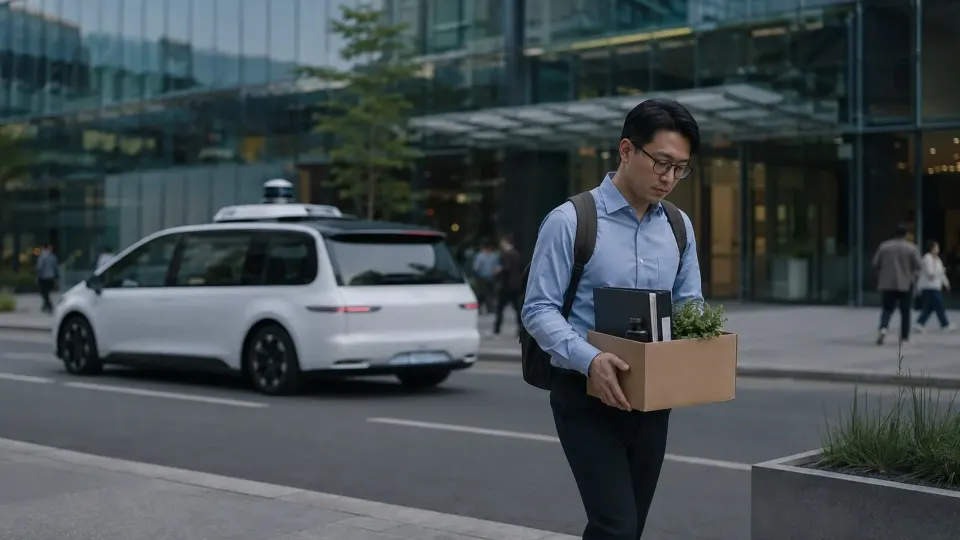
Uber will cut about 3,300 employees — roughly 10% of its global staff — in its largest round of job losses since the Covid pandemic.
Chief executive Dara Khosrowshahi told employees the business had accumulated too many layers during years of rapid growth. The overhaul is intended to simplify decisions, combine teams and redirect savings towards future technology.
This affects Uber’s corporate workforce, not 3,300 drivers being removed from the app. The company reported about 34,000 employees at the end of last year, while the people who carry passengers and deliver food generally work through a separate contractor model.
The cuts arrive as the company faces pressure from two directions: delivery rivals are crowding Uber Eats, while autonomous vehicles threaten the ride-hailing marketplace that built the business.
THE MIDDLEMAN CAN SEE THE ROBOTAXI COMING
Uber’s strength has been connecting passengers to large networks of human drivers without owning every vehicle. A mature robotaxi market could alter that relationship.
Waymo already operates autonomous services and has used Uber’s app in some US cities while expanding independently elsewhere. Tesla is also pursuing robotaxi services. If passengers can book directly from companies operating their own driverless fleets, Uber risks losing some of the value of being the middleman.
Its answer is not to resist autonomous driving. Uber plans to invest more than $10 billion in robotaxi technology and partnerships over the coming years, aiming to become the marketplace where driverless rides are booked even when somebody else built the car and its software.

MANAGEMENT LAYERS AND REMOTE WORK ARE BEING CUT
The restructuring will reduce by 20% the number of employees sitting seven or more reporting layers below the chief executive. Teams with only one or two direct reports will be cut nearly in half, according to Reuters.
Fully remote positions will be limited to about 1% of the workforce, while Uber keeps its requirement for staff to attend an office three days a week.
Khosrowshahi did not blame artificial intelligence for the redundancies. That distinguishes his explanation from several other technology companies that have presented AI as either the cause of job cuts or the tool expected to make a smaller workforce productive.
Uber is nevertheless spending heavily on AI. Separate reporting cited by Reuters said employees consumed the company’s entire 2026 AI budget in just four months.
INVESTORS LIKED THE FIRST LOOK
Uber shares rose nearly 2% following the announcement, although the stock had fallen close to 8% over the year amid competition concerns.
Markets often reward cost reductions before the human consequences have even reached the office printer. For affected employees, the promise of a simpler organisation means something much more immediate: a job search in a technology sector already producing large rounds of redundancies.
For Uber, the gamble is that a smaller corporate structure can move quickly enough to remain central to transport after the steering wheel becomes optional.
Source: Reuters.