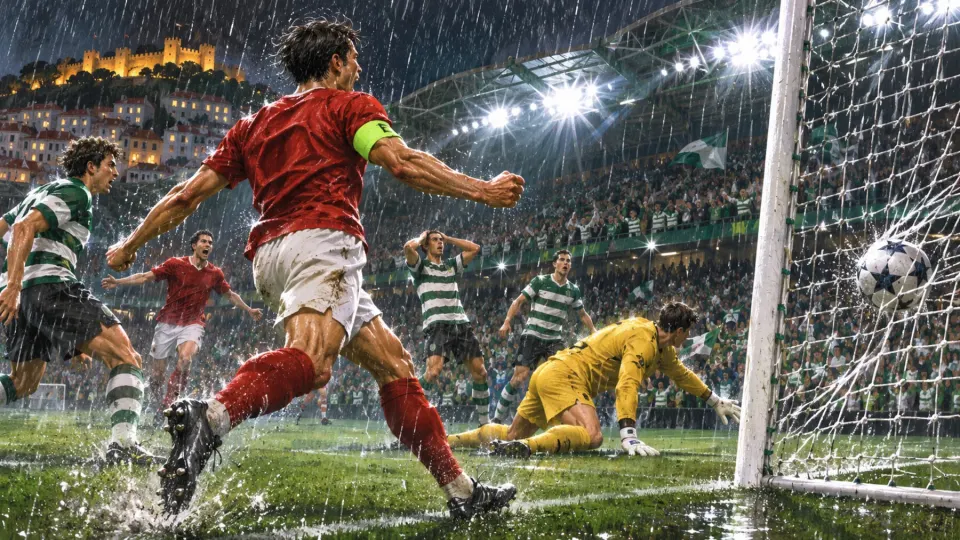
Bruno Fernandes scored twice on his return to Sporting CP, but Manchester United were denied Mauricio Pochettino's first victory as head coach in a chaotic 2–2 Champions League draw in Lisbon on Wednesday night.
Sporting led through Luis Suárez before Fernandes scored a penalty and then struck again one minute later. United appeared to have won it when goalkeeper João Virgínia punched the ball into his own net late on, only for the goal to be ruled out after a VAR review identified a foul. Sporting then equalised through Pedro Gonçalves, and Youri Tielemans was sent off for a second booking in stoppage time.
That is the sequence recorded by Manchester United and the match reports. It contains two goals from a former Sporting player, two goalkeeping errors, one overturned own goal and a red card. If Pochettino asked for a calm European evening to establish basic defensive habits, football delivered a flaming trolley and asked him to sign for it.
How the game changed
Sporting took the lead after United goalkeeper Senne Lammens failed to deal with a cross and Suárez converted. United reached half-time behind but were awarded a penalty shortly after the restart. Fernandes scored against his former club and did not celebrate extravagantly.
One minute later he had another. Lammens sent a long ball forward, Joshua Zirkzee challenged the goalkeeper and Fernandes finished the loose ball. United had turned the match around with the speed of a team briefly remembering that transitions can happen in their favour.
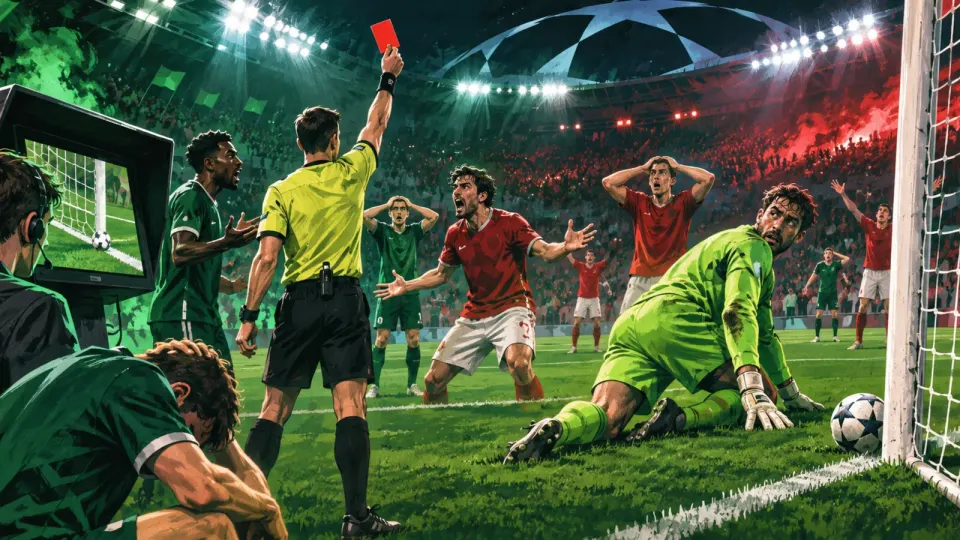
Sporting responded and the match stayed unstable. Virgínia's apparent own goal looked decisive, but VAR asked referee Hernández Hernández to review Zirkzee's contact with the keeper. The goal was disallowed. The decision was controversial in post-match discussion, but the official result is not changed by the volume of a television studio.
The equaliser and red card
Sporting levelled when Gonçalves capitalised on another Lammens mistake. United's goalkeeper had moments he will not be adding to a personal highlights reel, but reducing the result to one player's errors ignores how often the match exposed space and invited danger.
Tielemans then received a second yellow card in added time. United completed the closing moments with ten players and took a point that left them 19th in the league-phase standings after five matches, according to the club's report.
It was Pochettino's first Champions League game in charge and another match without his first United victory. That is a factual milestone, not a meaningful sample for judging an entire appointment. Managers inherit confidence, fitness, tactical habits and a fixture list; they do not receive a reset button hidden beneath the technical-area seat.
Fernandes returns to where it began
Fernandes developed at Sporting before joining Manchester United in January 2020. His two goals carried the obvious personal narrative, but they also underlined his current importance: penalty responsibility, late movement and the willingness to take possession when the match became frantic.
The next challenge is turning individual influence into a stable team performance. United produced attacking moments in Lisbon while remaining vulnerable at the other end. A side seeking control cannot require its captain to score twice merely to remain level with events.
OutOut has previously covered Pochettino's willingness to make headlines with his argument that Chelsea's 2017 title should go to Tottenham. Manchester United will prefer the next headline to involve points rather than inherited grievances. Readers can follow further results in the Sport section, including our recent report on Harry Kane's ankle surgery.
What the draw means
The league-phase format rewards consistent accumulation across eight fixtures. United remain outside the automatic qualification places and cannot treat a point in Lisbon as either catastrophe or completion. The remaining matches will decide whether they progress directly, enter a play-off or leave Europe early.
Pochettino's immediate work is less glamorous: reduce the unforced mistakes, protect central spaces, manage discipline and preserve the attacking confidence that produced two quick goals. Tactical control does not mean removing risk entirely. It means the same match should not require a forensic reconstruction every seven minutes.
United return to domestic action against Brentford before their next European assignment. Squad selection will show whether Pochettino treats Lisbon as a one-off burst of disorder or the starting evidence for changes in goal, midfield and the press. One draw cannot settle those choices, but the combination of errors and recovery gives the coaching staff considerably more useful footage than a sterile 0–0 would have done.
The disciplinary detail also travels beyond the final whistle. Tielemans' dismissal came after the momentum had already swung repeatedly, but late-game control includes managing bookings as well as the ball. In a league phase decided across eight nights, avoidable absences can become expensive long after one frantic draw has ended.
The OutOut verdict
United found a comeback, misplaced it, found a winner, lost it to VAR and finished with ten men. This was not a football match so much as an administrative hearing conducted at sprinting pace.
Fernandes delivered the part supporters wanted: two goals at his old stadium and the authority to drag United back into the contest. The rest of the team delivered a warning that Pochettino's first win will need more than emotional momentum.
A draw away to Sporting is not disgraceful. The method was simply exhausting. United returned with one point, several lessons and a goalkeeper probably checking whether Lisbon airport sells very large sunglasses.
Sources
- Manchester United: Sporting 2–2 United match report, published 25 November 2026.
- UEFA: Champions League matchday-five highlights and round-up, published 25 November 2026.
- Sky Sports: Sporting 2–2 Manchester United report, published 25 November 2026.