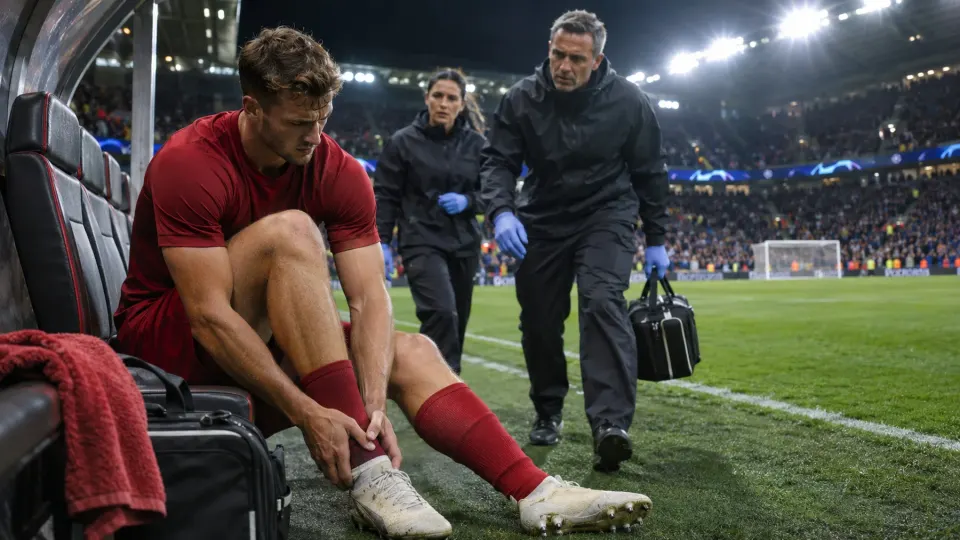
Harry Kane has undergone successful surgery after tearing a ligament in his left ankle during Bayern Munich's 1–1 Bundesliga draw with 1. FC Köln. The operation took place overnight after Friday's match, and Bayern confirmed on Saturday 21 November that the 33-year-old would now begin rehabilitation.
That is the firm medical update. What Bayern have not published is an expected return date. Reuters reported that German media were estimating an absence of about three months, but that figure is not a club timetable and should not be presented as one. An ankle ligament injury can turn a football calendar into an optimistic work of fiction; the useful facts are the diagnosis, the surgery and the start of rehab.
What happened against Köln
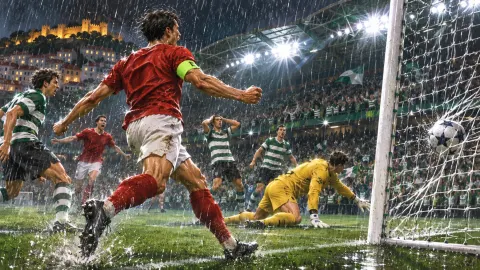
Bayern's official match report says Kane started up front at the Allianz Arena and was replaced by Tom Bischof after 20 minutes. The club later identified the injury as a tear to the ligament in his left ankle. The match finished 1–1 after Mikey Moore put Köln ahead and Nathaniel Brown equalised before half-time.
The result left Bayern with 22 points from ten league matches. That matters, but the immediate sporting consequence is bigger than two dropped points. Kane has been the reference point for Bayern's attack: a scorer, creator and the player around whom movements in the final third are organised. Removing him is not the same as changing one name on the team sheet. It changes where the ball is held, who occupies centre-backs and how supporting attackers time their runs.
Head coach Vincent Kompany did not use the injuries as an excuse for the draw. In Bayern's post-match reaction, he said the team had to accept the situation and find a positive response. That is the correct public line. Privately, the coaching staff now have the less inspirational job of redesigning an attack while their main striker works through swelling, strength tests and increasingly complicated resistance bands.

The timetable Bayern actually face
Bayern are due to visit Lille in the Champions League on Wednesday 25 November and Hamburg in the Bundesliga on Saturday 28 November. Those fixtures arrive far too soon for Kane, whose club says only that rehabilitation is beginning. December also brings league, cup and European commitments, making squad depth an immediate issue rather than a January discussion.
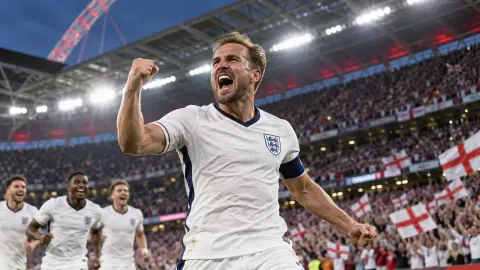
There is an England dimension too, but it needs restraint. Kane is England's captain and remains central to the national side. An extended absence would affect planning, yet there is no value in declaring him unavailable for a specific future international before Bayern or England provide a medical schedule. Recovery is assessed through milestones: pain and swelling, movement, strength, running, changes of direction, contact work and finally match readiness. A newspaper cannot accelerate any of them by putting a date in a headline.
The injury lands at a striking point in Kane's career. Earlier in November, Bayern announced that he had extended his contract until 2029. The club described him as the reigning Ballon d'Or winner and said he had scored 156 goals in 161 competitive appearances for Bayern at the time of that announcement. Those numbers explain why an absence creates such noise. They also explain why Bayern will not gamble with the return of a player carrying such a large share of the attacking load.
OutOut has already seen Kane turn an England match on its head, including his goal in the 3–2 Wembley defeat by Spain. That older performance does not tell us how quickly an ankle will heal, but it does show the range of jobs England and Bayern lose when he is unavailable: finishing, link play, leadership and the useful habit of making defenders stare over both shoulders at once.
What remains unknown
The club has not said whether Kane will be out for weeks or months, whether the operation found any additional damage, or when he can resume running. It has also not announced a replacement signing. Any precise comeback date, transfer solution or England return is therefore analysis rather than confirmed news.
Michael Olise was also injured in the Köln match. Bayern said he had suffered a bruised foot and would receive treatment over the following days. That is a separate, apparently less serious problem, but the combination increased the disruption on Friday night and reduces the number of easy solutions for Kompany in the short term.
The sensible way to follow the story is through Bayern's medical updates and match squads. A player appearing in light training is not automatically ready for contact or a competitive start. Equally, a conservative public estimate does not mean a setback. Rehabilitation updates are snapshots, not episodes of a transfer soap.
The OutOut verdict
For Bayern, this is the football equivalent of discovering the central heating has failed just as winter arrives. The building still stands, there are other rooms and somebody will insist a portable heater can do the same job. It cannot—not exactly.
Kane's operation is complete and his rehabilitation has started. Everything beyond that should be labelled properly. Bayern have lost their main striker for an unspecified period; they have not lost the season, England have not lost their captain forever, and German media estimates have not become medical certificates through repetition.
The next meaningful headline will be a club update on his progress. Until then, the honest version is shorter than the speculation: surgery successful, return date unknown, enormous boots temporarily empty.
Sources
- FC Bayern: Successful surgery for Harry Kane, published 21 November 2026.
- FC Bayern: Bayern held by plucky Köln, published 20 November 2026.
- FC Bayern: Reaction to Bayern v Köln, published 21 November 2026.
- Reuters: Kane out after ankle surgery, reported 21 November 2026.