
A group of masked protesters gathered outside a Portsmouth hotel after reports spread that asylum seekers had arrived by coach. The people getting off the coach were, in fact, members of Pakistan’s under-19 cricket team.
According to reports in The Guardian and The Times, the gathering formed outside the Marriott after images and claims circulated online about roughly 40 young Asian men arriving at the hotel. The coach company had reportedly also been used to transport asylum seekers, which appears to have helped an assumption harden into a supposed fact before anybody performed the demanding investigative task of asking the hotel who its guests were.
George Madgwick, a Portsmouth Reform UK councillor, went to the scene and spoke to hotel staff and the team’s coach. He then told the protesters they had mistaken an international youth sports squad for asylum seekers. The crowd dispersed within minutes.
The reports said there was no direct interaction or confrontation between the protesters and the players. That distinction matters: an alarming and humiliating situation did not become a physical clash.
Why was the Pakistan team in Portsmouth?
Pakistan’s under-19 side is touring England and had been playing England’s under-19s. The trip included matches at Arundel and Guildford, with the team using the Portsmouth hotel as accommodation.
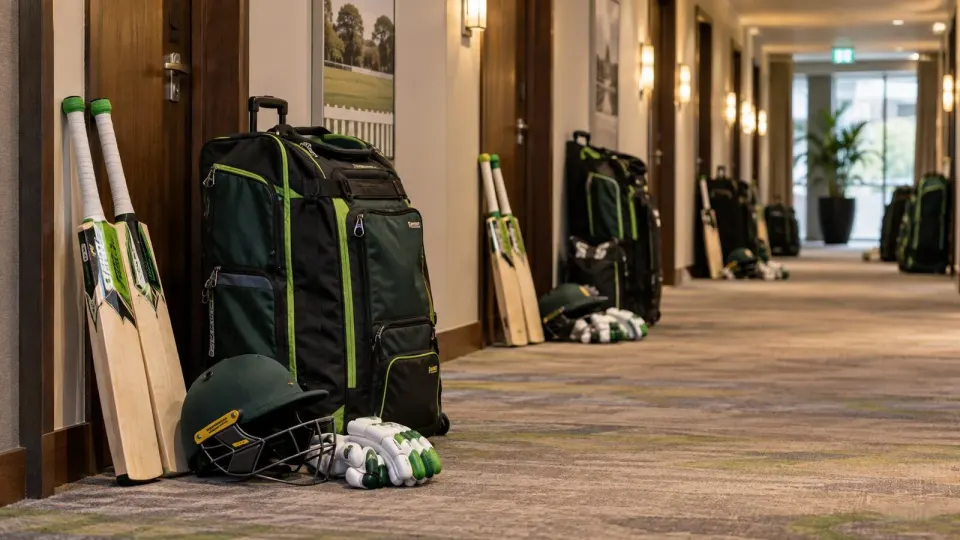
Youth international tours are part of the development pathway for elite players. The squad is made up of young athletes travelling with coaches and support staff, which is why a coach full of men arrived together carrying the sort of luggage normally associated with cricket rather than a Home Office operation.
The England and Wales Cricket Board said it had contacted the Pakistan Cricket Board to check on the team’s welfare and was reviewing security arrangements for the rest of the tour.
What the mistake tells us
This was not merely a harmless mix-up about the wrong coach. People gathered at a hotel because a claim about the identity and immigration status of strangers travelled faster than verification.
The episode shows how a fragment of true information can produce a false conclusion. A coach arrived. A group of young Asian men got off. A transport company may have served different clients in the past. None of those facts established that the passengers were asylum seekers.
Once an online post supplies a confident explanation, however, later viewers often treat the picture as confirmation of the caption. The evidence and the allegation swap places. By the time somebody checks, a crowd may already be outside.
Madgwick described the episode as massively unfortunate and linked it to tensions in the city. Portsmouth has seen demonstrations connected with asylum accommodation and small-boat arrivals. That context helps explain the speed of the reaction, but it does not make the original claim accurate.
The duty to verify before mobilising
People are entitled to protest peacefully and to hold strong views about immigration policy. They are not entitled to invent the status of identifiable hotel guests and treat their appearance as proof.
Organisers have an added responsibility. A call for people to gather can expose guests, staff and passers-by to fear or danger. Verification should therefore happen before names, locations and photographs are amplified, not after a councillor reaches the hotel and discovers an international fixture list.
For broader reporting on stories across Britain, see OutOut’s UK section. For events where reality has arrived wearing a comedy moustache, the Just Daft section remains on standby.
The OutOut verdict
The protesters set out to confront a government policy and instead discovered the cover drive.
The funniest part is the speed with which the gathering ended once somebody introduced facts. The less funny part is that a youth team visiting Britain required a security review because strangers made assumptions about them from a picture.
Cricket already has a review system. Perhaps public outrage needs one too: check the footage, identify the people involved and overturn the original decision when the evidence shows it was nonsense.