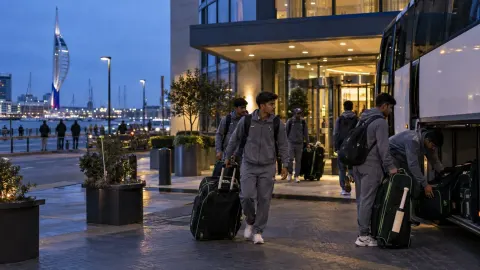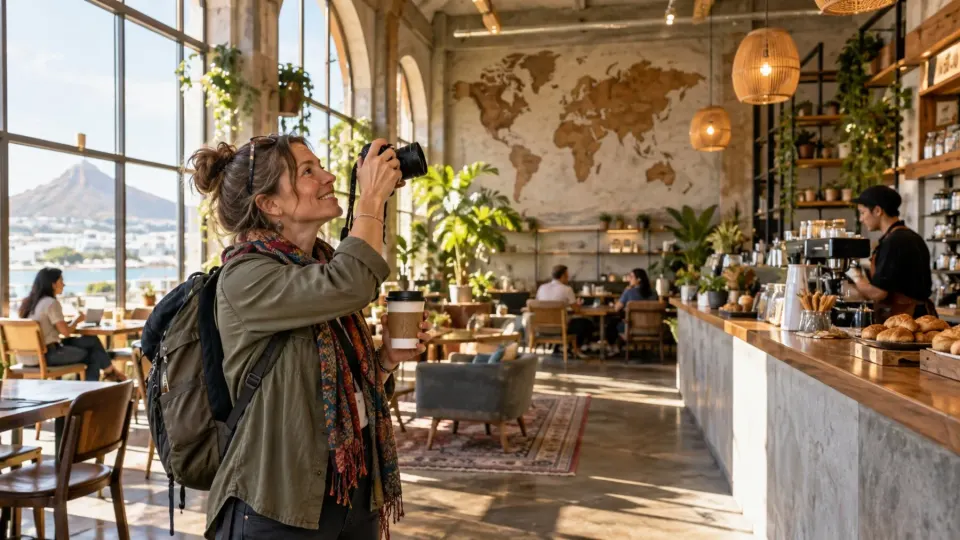
A freelance computer programmer known simply as Winter has visited 20,563 Starbucks shops across 74 countries in an attempt to drink coffee at every branch on Earth.
He began in 1997, when the chain had about 1,500 stores and the challenge looked merely unreasonable. Starbucks now reports more than 29,000 locations, opening and closing them faster than one human with a passport, a car and an apparently indestructible relationship with drip coffee can process.
Winter told Reuters the project has cost at least $180,000, excluding income lost while travelling instead of working. He has slept in his car, designed trips around branch density and legally changed his name to a mononym. His target is now 25,000 visits, although chronic arm pain and carpal tunnel syndrome have placed the future of the quest in doubt.
This is a real human-interest story, not a Starbucks promotion. The company did not verify his claim to Reuters or respond to questions for the article. Winter says nobody, including any employee, has visited more branches. That remains his assertion rather than a Guinness-certified record presented in the reporting.
How a coffee stop became a life project
Winter said he has always collected things—coins, cards and comics. After college he moved to the Dallas area just as Starbucks was expanding there. Each new shop became another object in the collection, except the object contained chairs and required him to buy the shortest drip coffee.
The goal expanded into “Starbucking”: visit a branch, document it and drink a coffee. Honduras became his 74th country. He arrived one afternoon, travelled around the branches and returned to the airport before noon the following day. This is tourism after somebody has removed the sightseeing and retained only the spreadsheet.

He says the quest gives him purpose and a platform to argue that a purpose-driven life can be more satisfying than conventional material accumulation. There is an obvious comic tension in using one of the world’s largest consumer brands to critique materialism, but human beings contain contradictions and, in this case, considerable caffeine.
The project has created relationships as well as strained them. Winter said some friendships exist because of the challenge, while the travel and time commitment harmed others. A hobby becomes something different when every unopened branch feels like unfinished work.
The impossible mathematics
At 20,563 visits, Winter has covered an astonishing number of locations. Yet a chain with more than 29,000 shops leaves thousands outstanding, and the list changes constantly. New stores open while old ones close, sometimes before he arrives.
In September 2025, Starbucks shut 568 stores, including its Seattle roastery. Closures technically shorten the live list but can also erase destinations before they are documented. Winter’s challenge is therefore not a fixed mountain. It is a treadmill that occasionally removes a plank.
He said better organisation early on would have saved money. He once drove from Dallas to Atlanta over a weekend for only a handful of branches. Modern route planning could optimise the journey, although optimisation feels almost impolite after the first 20,000 coffees.
His favourite shop is now Casa Bou in El Salvador, a three-storey flagship with a library and art gallery. His least favourite category is the drive-through or walk-up-only branch, which removes the communal interior he values.
What his journey says about Starbucks
The chain has changed during the project. Winter watched it shift towards drive-through service and away from the “third place” idea of a social space between home and work. He says recent changes under chief executive Brian Niccol—including more seating, electrical outlets and ceramic cups—have improved the experience in nearly 1,000 branches he has seen during that period.
Starbucks acknowledged him briefly in the early years. In 2002 it sent a care package. During a 2003 UK trip, the British managing director gave him a letter to show shops so staff would understand he was not inventing a story to obtain free samples. North American headquarters has otherwise offered little public encouragement, according to Winter.
The indifference is almost artistically perfect. One man reorganises his adult life around the company; the company responds once with chocolate and continues opening stores beyond the horizon.
The claim remains Winter’s own record rather than a total independently certified by Starbucks. That does not make the journey fictitious, but it sets the proper evidential boundary. A verifiable global record would require dated receipts, location data and a definition of what counts as a distinct store, including relocations and licensed outlets. After nearly three decades, the administrative challenge may be the only thing more intimidating than the travel bill.
For more verified stories from the cheerful edge of reason, visit OutOut’s Just Daft section.
The OutOut verdict
Most people respond to a global coffee chain by ordering a drink and forgetting the receipt. Winter saw a branch list and accidentally selected a 29-year side quest with recurring location updates.
It is absurd, expensive, logistically magnificent and strangely moving. His achievement is not consuming 20,563 coffees—the shortest drip order keeps that detail mercifully modest—but sustaining a purpose long after completion became mathematically hostile.
We hope his medical treatment helps and that he reaches 25,000. We also hope nobody tells him about Costa.