Prime Minister Andy Burnham says he is determined to resolve the dispute over Diego Garcia after American opposition stalled the legislation needed to implement Britain’s Chagos Islands agreement with Mauritius.
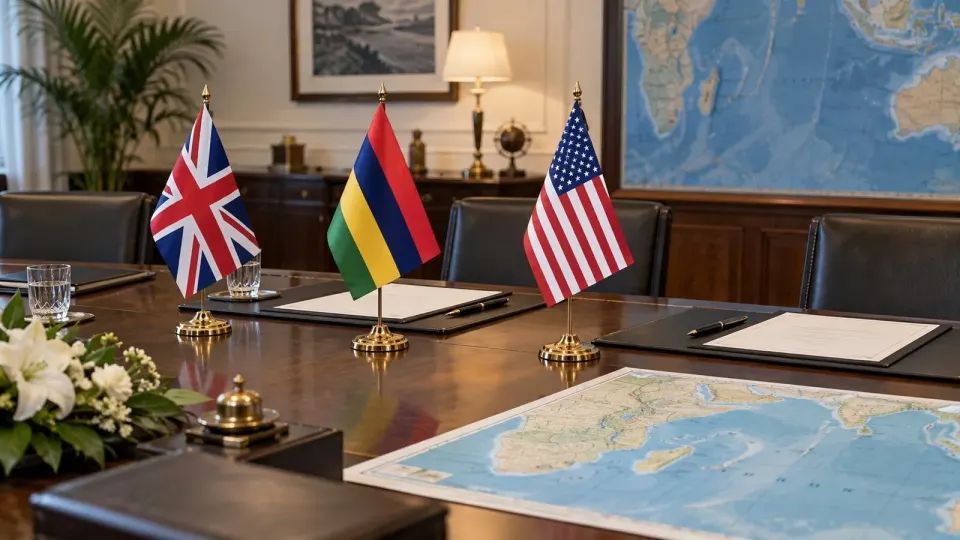
The treaty, negotiated by Burnham’s predecessor and signed in 2025, would transfer sovereignty over the Chagos archipelago to Mauritius while allowing Britain to lease Diego Garcia and its strategically important UK-US military base for 99 years. Britain would pay Mauritius £101 million a year, calculated at a present value of £3.4 billion over the agreement’s lifetime.
The treaty exists. The British legislation needed to make the handover work has not completed Parliament. Donald Trump called the arrangement a “big mistake”, and US opposition helped pause the process.
Burnham spoke to Mauritian Prime Minister Navin Ramgoolam before travelling to New York for the United Nations General Assembly. Their foreign ministers are expected to meet there. Burnham promised to work towards a solution with Mauritius and the United States but acknowledged that no agreement had yet been reached.
In diplomatic language, that is the polite version of “three governments are holding different corners of the same map”.
What the agreement was meant to settle
Britain detached the Chagos Islands from Mauritius before Mauritian independence in the 1960s. Thousands of Chagossians were forcibly removed as the military base on Diego Garcia was developed. Mauritius has long contested British sovereignty, and international legal and political pressure grew against the UK position.
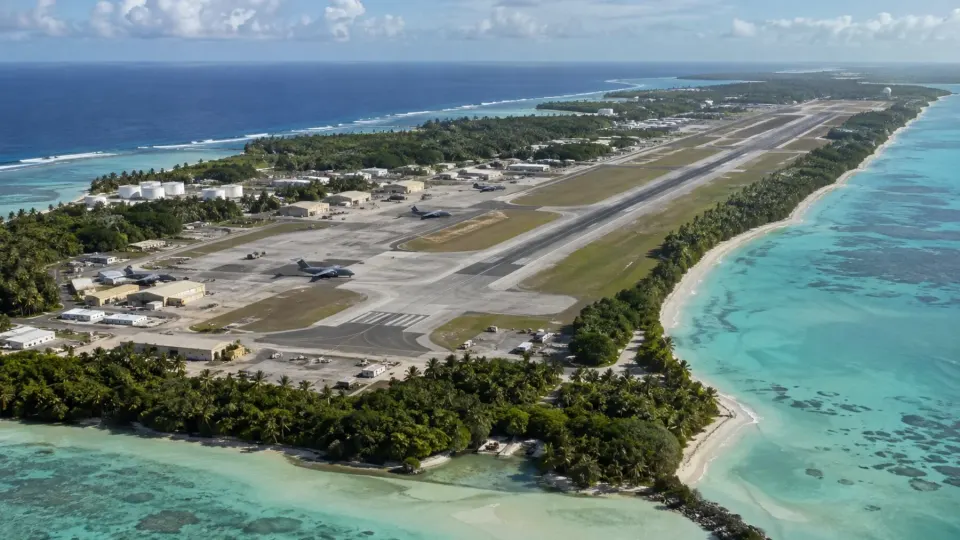
The proposed agreement attempts to settle sovereignty while protecting the base. Diego Garcia is used by the United Kingdom and United States for operations across the Indian Ocean, Middle East and beyond. Its isolated location, long runway and logistics facilities make it unusually valuable.
Under the deal, Mauritius would hold sovereignty and Britain would retain control of the base through the long lease. The government argues that a treaty provides legal certainty for operations that are essential to British and allied security.
Critics object to the cost, the length and terms of the arrangement, security concerns and the treatment of Chagossians. Supporters argue that ignoring international pressure would leave the base resting on a sovereignty dispute with no durable settlement.
Why Washington objects
Reuters reported that Trump described the deal as a major error. US concerns centre on the long-term security of the base and the possibility of strategic influence by China, which has close economic ties with Mauritius. The published British position is that the lease safeguards the base for almost a century.
An objection from Washington has practical force because Diego Garcia is operated as a joint facility and is central to American military planning. Britain can sign a treaty, but an arrangement that its principal base partner distrusts is unlikely to feel secure.
That does not give Washington ownership of British foreign policy or Mauritian sovereignty. It does mean the final settlement must contain security assurances credible to all three governments. Those could concern access, surrounding development, communications, inspection and restrictions on foreign military presence.
The public should resist two easy exaggerations. The agreement does not simply “give away the base”: Britain would retain control through the lease. It also does not preserve everything unchanged: sovereignty, payment and long-term governance would materially alter.
The people too often placed in the footnotes
Chagossians were removed from the islands and have campaigned for recognition, return and meaningful participation. Any discussion reduced to Britain, Mauritius and America risks repeating the central moral failure—powerful states deciding the islands’ future while the displaced community watches from outside the room.
Questions about resettlement, compensation, citizenship and representation are not decorative additions to the base agreement. They are part of whether the settlement deserves legitimacy. Security can require restricted areas around an active military installation without requiring silence about the communities harmed to create it.
What Burnham must now negotiate
A workable compromise needs American confidence that the base cannot be compromised, Mauritian confidence that sovereignty is genuine, British parliamentary support for the cost and obligations, and Chagossian involvement that is more than ceremonial consultation.
The foreign-minister meeting in New York may identify whether the US objections can be met through an additional protocol or security guarantees rather than reopening the whole treaty. If the core terms change, Parliament must see them before voting.
The £101 million annual payment also needs plain explanation. Present-value calculations and nominal payments over 99 years are not interchangeable. Ministers should publish the assumptions, review clauses and liabilities instead of allowing every side to select whichever enormous number best suits its leaflet.
Follow major constitutional and foreign-policy developments in OutOut’s UK section.
The OutOut verdict
Britain spent decades insisting the sovereignty dispute could remain indefinitely in a locked filing cabinet. It has now discovered the cabinet sits on a runway used by its most important ally.
The base matters. International law matters. The cost matters. Chagossians matter most personally of all. A durable agreement must hold those facts together instead of shouting one until the others disappear.
Burnham is right to seek a resolution. The test is whether he produces a transparent settlement rather than a diplomatic patch labelled for 99 years. When three governments describe one island as indispensable, the people displaced from it should not be the fourth and quietest party.