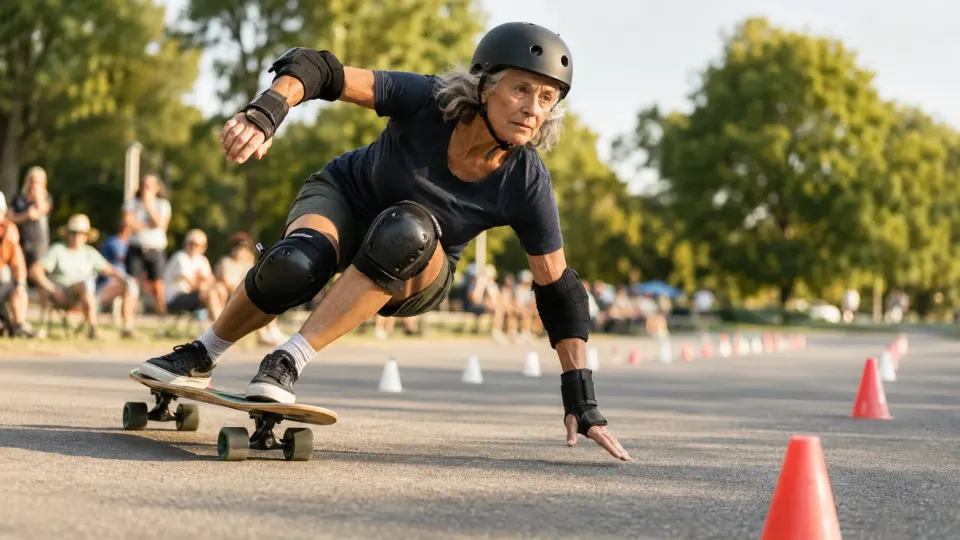
At 66, many people begin approaching physical activity with sensible caution.
They stretch before gardening. They consider a walk after lunch. They make a small involuntary noise when leaving an armchair and hope nobody heard it.
Judi Oyama is still racing skateboards.
The Californian pioneer has been recognised by Guinness World Records as the oldest competitive female skateboarder, with the organisation listing her record age as 66 years and 25 days.
The achievement was verified in connection with the 2025 International Slalom Skateboarding World Championships in São Paulo, Brazil.
She did not receive it for gently rolling along a promenade while holding an ice cream.
She was competing.
SHE STARTED BEFORE SKATEBOARDING HAD A CAREER PLAN
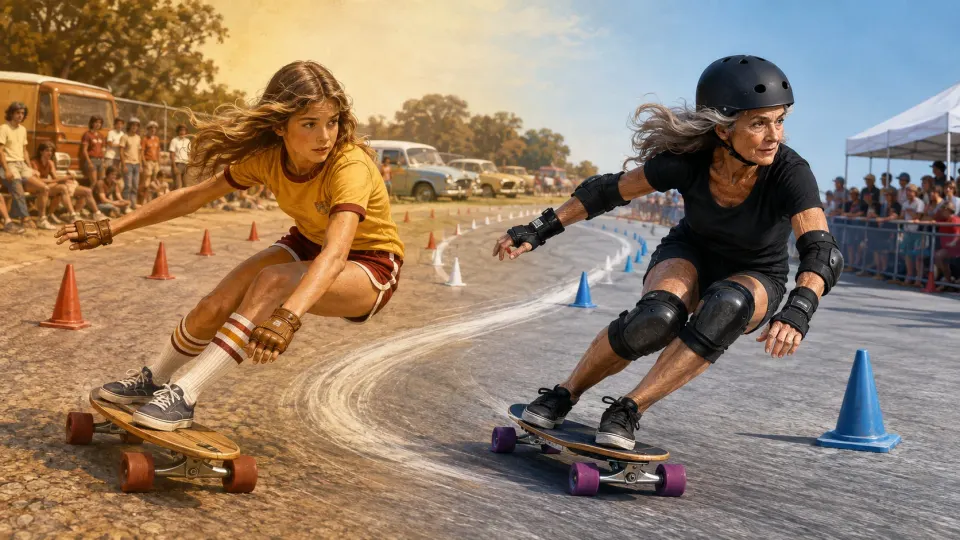
Oyama began skateboarding at 13 and was sponsored by Santa Cruz Skateboards from the age of 16.
That means her relationship with a skateboard began in the 1970s, when the equipment was less sophisticated, protective gear was apparently considered a rumour and adults largely assumed the entire sport would disappear by teatime.
It did not disappear.
Neither did she.
World Skate describes Oyama as a former women’s slalom world champion, winning that title in 2003, as well as a Skateboarding Hall of Fame inductee.
She has competed across slalom and downhill disciplines and continued representing the United States internationally long after most sporting careers would have become a box of medals in the loft.
THE RECORD IS NOT A CEREMONIAL LAP
The crucial word in the title is competitive.
Oyama has not remained involved merely as an ambassador, guest or person invited to cut a ribbon while younger athletes do the dangerous part. She has continued training and racing against the clock.
Slalom skateboarding requires riders to weave rapidly through a course of cones, balancing acceleration, precision and the important sporting skill of not introducing your face to the road.
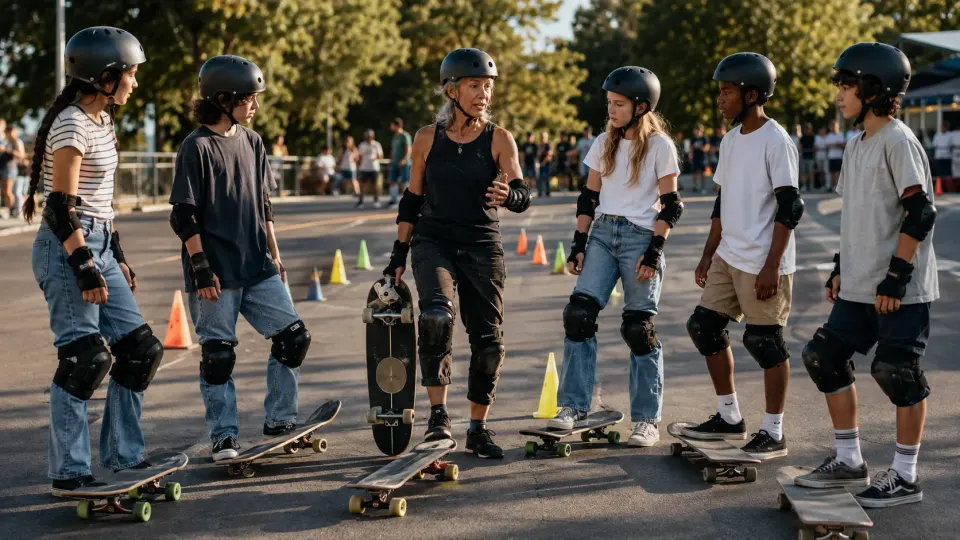
In an interview with World Skate, Oyama said she maintained her fitness with CrossFit four days a week and swimming once a week, while also skating and helping coach younger athletes.
That sentence has caused several gym memberships to hide behind the sofa in shame.
A LIFE BUILT AROUND THE SPORT
Her career has not been limited to competition.
Oyama has worked as a graphic designer and creative director within action sports, producing visual work connected to skateboarding, surfing and other outdoor industries. She has therefore spent decades helping shape both the sport and the culture surrounding it.
She also witnessed skateboarding’s repeated rises, collapses and reinventions: the early parks, the closure of facilities, the move towards streets, ramps, slalom and downhill, and its eventual arrival on the Olympic stage.
Plenty of people claim they have been there from the beginning.
Oyama can produce the race photographs.
WHY THE RECORD MATTERS
Record stories can become little more than novelty statistics: the longest fingernails, the largest collection of traffic cones or the greatest number of spoons balanced on somebody’s forehead.
This one carries more weight.
Female skateboarders from Oyama’s generation entered a scene with fewer competitions, less coverage and far less industry support than their male counterparts. Remaining active across five decades is impressive. Remaining competitive while helping the next generation is something else entirely.
The official Guinness World Records listing records the milestone plainly.
Behind the number is a teenager who started skating in Santa Cruz, became a sponsored rider, won a world title and simply declined to accept that the sport had an expiry date.
OUTOUT VERDICT
Judi Oyama is 66, still competing and apparently better organised than people half her age who need two recovery days after bowling.
Her record is not really about refusing to grow old.
It is about refusing to let other people decide what growing older must look like.
The rest of us should feel inspired.
Unfortunately, inspiration may involve getting off the sofa, which is where this becomes difficult.