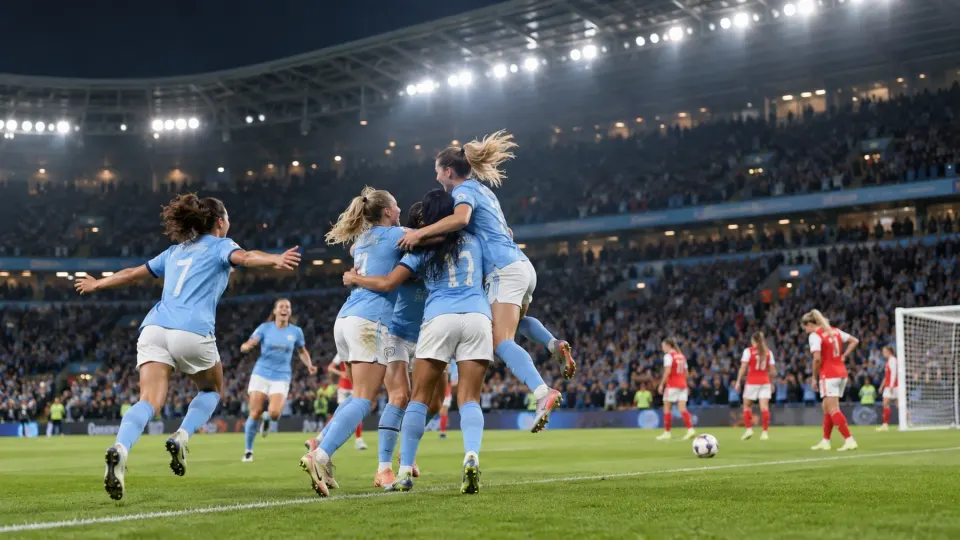
Manchester City Women preserved their perfect Women's Super League start by coming from behind twice to beat Arsenal 4–2 at the Etihad Stadium on Sunday 4 October. Lauren Hemp scored twice, Kerstin Casparij struck with her first touch after coming on and Khadija “Bunny” Shaw completed the win late on.
Arsenal had led through Lisa Baum and then Alessia Russo, but the afternoon became another demonstration of the difference between creating good moments and controlling a match. City have five wins from five and remain top. Arsenal have five points, sit tenth and are already ten points behind the leaders.
The table is not a verdict after five games, but it is no longer a mildly awkward opening paragraph. Arsenal's title challenge has begun by leaving itself an enormous repair bill.
How the match turned
Arsenal scored first when Baum converted from a corner, a goal City felt involved a foul in the build-up. City responded through Hemp, whose movement and directness repeatedly stretched Arsenal's defensive shape.
Russo restored Arsenal's lead with her first goal of the season. The striker's finish offered a glimpse of the attacking quality Arsenal still possess, but City did not retreat into frustration. They increased the pressure after the interval and turned territorial control into goals.
Hemp made it 2–2 before Casparij came from the bench and scored immediately with a superb strike. Shaw then supplied the fourth, her fifth league goal of the season, to give a dramatic game a decisive-looking scoreline.
The exact attribution of City's second goal differed in live accounts, with some early reporting describing an Emily Fox own goal before later match reports credited Hemp. That is the sort of small correction a fast game produces and a sensible report resolves rather than turning into conspiracy content. The settled result is uncomplicated: City scored four and Arsenal could not contain them.
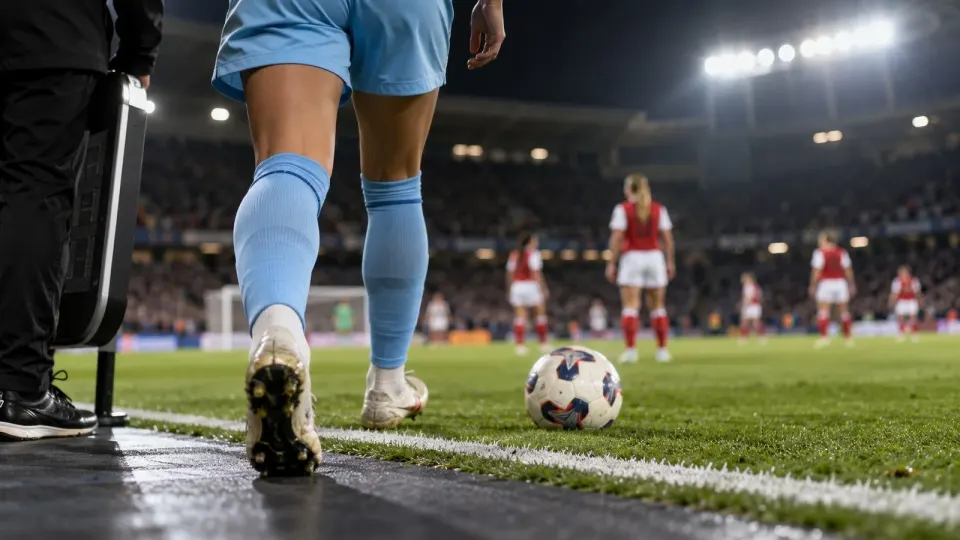
Hemp gave City an answer every time
The match belonged to Hemp because she changed both the geometry and the mood. Arsenal could not comfortably narrow the pitch when she was ready to attack outside, and they could not overprotect the flank without opening space elsewhere.
Her two goals mattered, but so did the insistence behind them. City fell behind twice and responded by continuing to play, not by converting every possession into a rushed appeal for urgency. That emotional control is often the hidden quality of a championship team.
Casparij's impact made the squad argument just as strongly. A substitute scoring with her first touch is partly glorious accident, but it is also what coaches mean when they speak about a bench changing games. Shaw's late finish then punished an Arsenal team forced to chase.
City manager Andrée Jeglertz praised his side's performance and defenders, while maintaining the focus on the collective. Five consecutive victories have made that easier. The danger for City is believing the title is already being engraved. Chelsea are only two points behind after beating West Ham 3–0, and the season will eventually supply injuries, poor finishes and the occasional afternoon when a rebound chooses somebody else.
Arsenal's start is now a genuine problem
Arsenal have not won since the opening day. They have lost consecutive matches against Chelsea and City, the teams most likely to punish uncertainty. Their five points from five fixtures leave them in tenth, an extraordinary position for a club with title ambitions and elite resources.
Manager Renée Slegers signed a contract extension through 2029 and said after the game that she retained the club's support. She also accepted that the international break requires a serious review. Both points can be true. A long contract is intended to protect a project from panic; it is not a voucher exempting the football from examination.
There were positives. Arsenal led twice, Russo scored and phases of their attacking play troubled the champions. Those facts make the defeat more frustrating rather than less. A struggling side that cannot create has one problem. A talented side that creates, leads and still loses has several small problems arriving together in a large coat.
Mariona Caldentey also appeared to suffer a hamstring injury, adding a fitness concern to the tactical review. The international break may interrupt momentum City would prefer to retain, but it gives Arsenal time to diagnose rather than immediately improvise.
Why the table already matters
There are many games left, and football culture enjoys mocking anybody who reads a table before winter. The arithmetic is still real. A ten-point gap means Arsenal need City to drop points repeatedly while building a long winning run of their own.
It also changes the emotional pressure around ordinary fixtures. City can absorb a draw without a crisis. Arsenal will enter winnable matches knowing every dropped point becomes a headline about the manager. That pressure can sharpen performance or make every misplaced pass feel like a shareholder vote.
Chelsea's position is crucial. This is not simply a pursuit of one runaway side. The defending contenders occupy the space Arsenal need to climb through, which reduces the margin for error even if City eventually stumble.
OutOut's sport coverage recently examined England's extraordinary 7–0 victory in Croatia. The shared lesson is that scorelines need context. England's seven confirmed a superb night rather than a trophy. City's four confirms an excellent opening and a deep Arsenal problem, not a title settled in October.
What Arsenal must fix
The first task is defensive control after scoring. Taking a lead should allow a team to choose when to accelerate and when to deny transitions. Arsenal instead allowed City to regain rhythm quickly enough that neither advantage became a platform.
The second is managing wide threats. Hemp's influence was not a surprise delivered in a sealed envelope. Arsenal needed earlier help, better distances and a plan for the space created when defenders moved towards her.
The third is confidence without denial. Players do not need to be told they are terrible; the performance contained enough attacking quality to build from. They do need clarity about why decent passages are not producing results. “Fine margins” is useful only when followed by the identity of the margin.
Slegers must also decide whether selection continuity is building relationships or protecting an idea that needs changing. The break provides training time for players who remain at the club, though internationals will travel. There is no magical reset button, merely a quieter week in which the alarm continues flashing.
What City should resist
City should enjoy the win and ignore the temptation to treat Arsenal's crisis as their own achievement. Their performance deserves credit independent of the opponent's problems: resilience, variety from the bench, width and a clinical centre-forward.
The next challenge is sustaining standards when the match lacks this occasion's crowd and narrative. Championships are frequently won in fixtures that do not receive a dramatic montage. Five from five is a perfect start; perfection becomes useful only when it creates habits rather than pressure to preserve a slogan.
The OutOut verdict
Manchester City were excellent because they refused to let either Arsenal goal rewrite the plan. Hemp supplied the drive, Casparij supplied the instant cinema and Shaw supplied the closing credits.
Arsenal were not hopeless, which is why the position is so alarming. They led twice and showed enough talent to demonstrate what ought to be possible. Yet they leave five matches with five points and a ten-point deficit to City.
Calling the title race over would be October theatre. Calling Arsenal's start a crisis is simply reading the table without protective eyewear. The international break now offers them time to repair the machine. It does not return the points that fell out of it.
Sources
- Reuters: Manchester City beat Arsenal 4–2 to stay top of the WSL, 4 October 2026.
- The Guardian: City comeback extends perfect start, 4 October 2026.