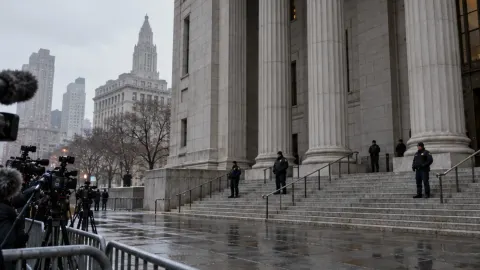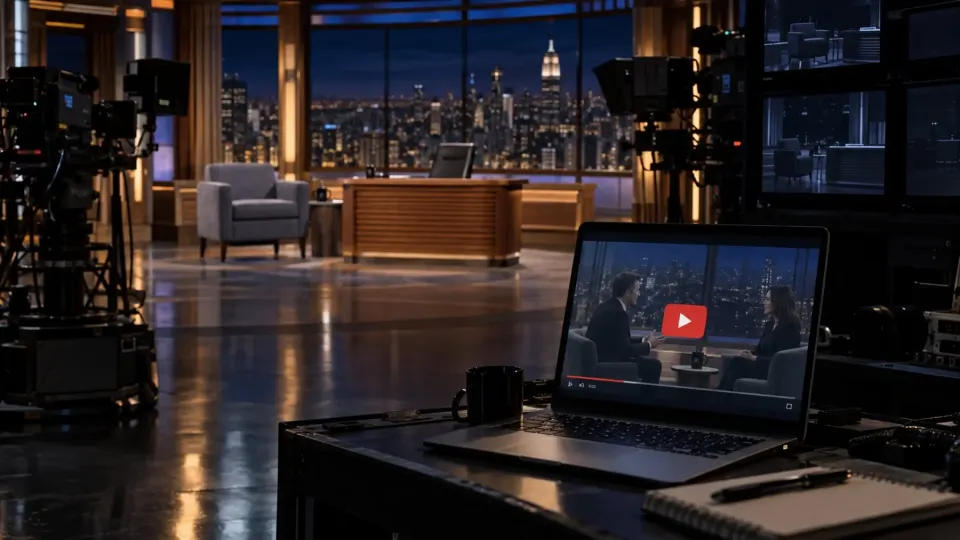
Jimmy Kimmel says an interview with Democratic US Senate candidate James Talarico will be published on YouTube instead of airing on ABC, citing pressure from the federal broadcast regulator.
Kimmel announced the decision on Wednesday night, with Reuters reporting it on Thursday 10 September. Talarico is running in Texas, and the dispute centres on whether his appearance would trigger equal-opportunity obligations for rival candidates under US broadcasting law.
ABC has not simply abandoned the interview. Moving it online preserves the conversation while avoiding rules that apply to licensed broadcasters. That distinction shows how one programme can now exist in two regulatory worlds: the television signal answers to the Federal Communications Commission; YouTube does not answer to the FCC in the same way.
What changed at the FCC?
US law generally requires broadcasters that allow one legally qualified candidate to use a station to offer comparable opportunities to opponents. There are exemptions for bona fide news programmes, interviews, documentaries and on-the-spot coverage.
In January, the Republican-led FCC said daytime and late-night entertainment programmes would no longer automatically be treated as exempt news interviews. That does not ban candidates from appearing. It increases the legal and scheduling risk for a broadcaster if the regulator decides the appearance counts as candidate use rather than news.
Kimmel said FCC threats influenced the decision. The agency has also been reviewing licences connected with Disney-owned ABC stations earlier than their normal renewal timetable, according to Reuters. FCC chair Brendan Carr has defended the regulator’s approach; Democratic commissioner Anna Gomez has argued that the agency lacks lawful authority for political pressure of this kind.

Why YouTube changes the calculation
The FCC licenses use of the public broadcast spectrum. Online platforms distribute video over the internet and are not covered by the same candidate-access framework.
Putting the full interview on YouTube therefore lets viewers see it without ABC having to offer equivalent broadcast time under a contested interpretation. It also demonstrates the weakness of trying to control political speech through rules designed around a smaller number of television and radio gatekeepers.
The workaround is not cost-free. A network broadcast reaches casual viewers who did not seek out the clip. A YouTube upload relies more heavily on recommendation systems, subscriptions and social sharing. Moving material online can therefore preserve availability while reducing its broadest audience.
The free-speech argument
The FCC has a legitimate role in enforcing ownership, technical and public-interest rules attached to broadcast licences. The controversy is whether those powers are being applied consistently or used to influence editorial decisions disliked by an administration.
Timing fuels concern. Reuters reported that the early licence reviews followed public criticism of Kimmel by Trump. Disney has challenged the action in court. Those facts do not establish the outcome of the legal case, but they make transparency essential.
Equal-time rules were intended to prevent broadcasters from handing the public airwaves to favoured candidates. Applied too broadly, they can create the opposite problem: programmes avoid interviews altogether because inviting one candidate produces obligations they cannot practically meet.
Talarico’s opponents are entitled to fair treatment under the law. Viewers are also entitled to a regulator whose decisions are based on a stable rule rather than the identity of the guest or the jokes of the host.
Follow media and culture stories in OutOut’s Entertainment section, and the platform side in Technology.
The OutOut verdict
America has reached the point where a late-night interview must escape television by hiding on the world’s largest video platform.
The workaround is clever, but the principle remains unresolved. Regulators should publish a clear, viewpoint-neutral standard and defend it in court. Networks should disclose when legal pressure changes what audiences see. Otherwise equal time becomes “nobody gets time”, which is wonderfully even and completely useless.