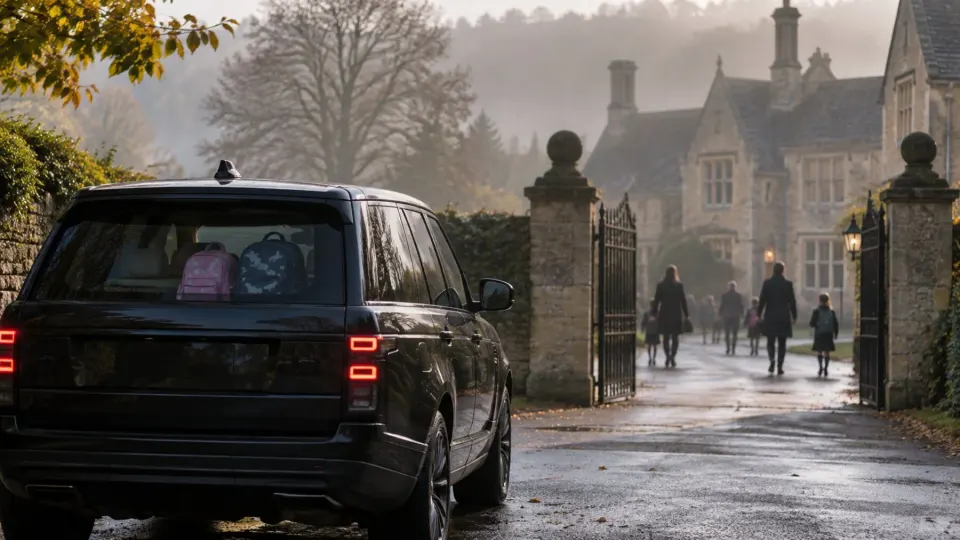
Prince Harry and Meghan are moving their children to a different British school after only two days, following concerns from the family’s security team about the journey between home and the original school.
Reuters reported on Monday 14 September that Prince Archie, seven, and Princess Lilibet, five, had started at the school after the family returned to Britain following six years in California. The problem identified once term began was not the institution or its staff, but the distance, traffic and practical difficulty of protecting the children while travelling.
A spokesperson for the Duke and Duchess of Sussex said the decision was no reflection on the school, where the children had been treated with care. That detail deserves to survive the headline. A family changed a transport and security arrangement; teachers did not fail a two-day royal Ofsted inspection.
Why a journey changes the calculation
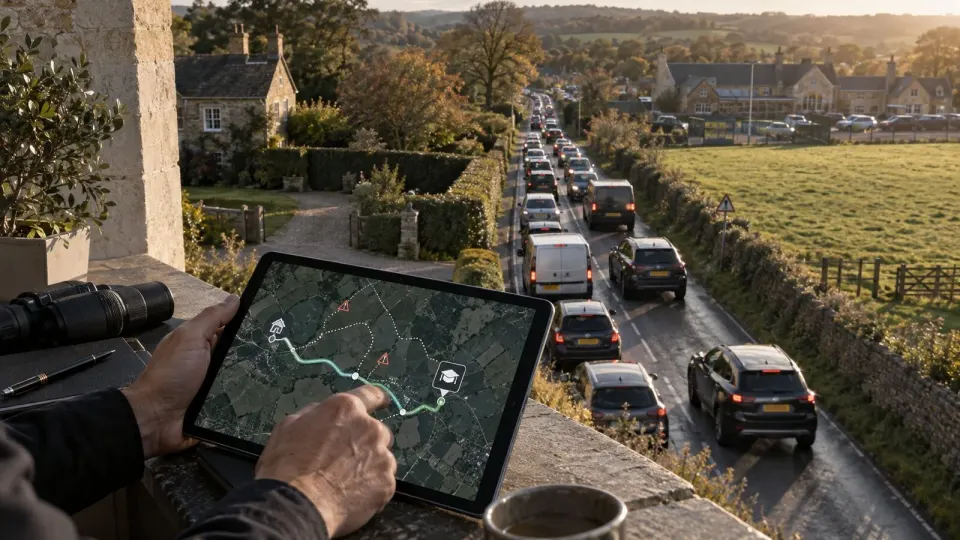
Protective security is not simply a guard standing at a gate. Teams consider predictable routes, choke points, journey time, alternative exits, crowds, publicity and the ability to respond when traffic stops moving. A plan that looks workable during a quiet summer assessment can behave differently when schools reopen and every parent in the county attempts the same roundabout at 8.25am.
Reuters said operational concerns became clear once the commute was tested in normal conditions. Moving school so quickly is disruptive, but persisting with a route that the professionals regard as difficult would turn routine into a repeated vulnerability.
The family’s security arrangements have long been politically and legally contested. Harry and Meghan ceased to be working royals in 2020 and do not automatically receive the same publicly funded protection as senior royals carrying out official duties. Harry has challenged decisions about his protection and has argued that the arrangements affect whether his family can safely spend time in Britain.
The latest school decision does not itself settle that wider dispute. It also does not prove that a specific threat occurred. The reporting concerns a risk assessment about transport. Turning it into a thriller involving unnamed pursuers would add drama and remove facts, which is usually the internet’s preferred exchange rate.
Children are not public property
There is legitimate public interest in royal funding, constitutional roles and government decisions over police protection. There is far less justification for publishing a child’s precise school, timetable or route. OutOut is therefore not naming either school or narrowing down the family’s movements.
That restraint is not inconsistent with reporting the change. The story matters because it illustrates the practical consequence of the Sussexes’ unusual status: internationally recognised members of the royal family who are private citizens, living outside royal residences and arranging much of their own security.
It also exposes the strange appetite surrounding royal children. People who would rightly object to strangers photographing their own school run can become amateur route planners when a title is involved. Security then becomes harder partly because the public wants every logistical detail explaining why security is hard.
What happens next
The children are expected to continue their education at another UK school with a more manageable journey. Reports say the family is trying to establish a longer-term life in Britain, but future residence and security arrangements remain matters for the Sussexes and the authorities involved.
The responsible conclusion is limited: the first placement did not work operationally, the family acted quickly, and their spokesperson explicitly protected the school from blame. Anything more confident requires evidence that has not been published.
For other verified developments involving public life, see OutOut’s UK section.
The OutOut verdict
Two days is an impressively short school career, but changing course after a real-world security test is more sensible than defending a plan because the stationery already has names on it.
The children deserve a safe commute and the former school deserves not to be cast as the villain. Everybody else can survive without knowing which gate opens at what time. Britain has enough traffic reporting already; it does not need live royal school-run telemetry.