<!-- outout-seo-upgrade:great-bernera-dog-dispute:20260923 -->
Great Bernera café dispute: the position in brief
Claire Kellerman alleges that the Bernera Community Association discriminated against and harassed her after a disagreement concerning access to its café with her dog, Tarkina, which she describes as an assistance dog. The association is contesting the claim.
The case seeks £10,000 and had not been decided when this page was updated on 23 September 2026. Reporting about allegations, fundraising totals or legal aid is not a court finding that either party is right.
A row about a dog entering a café on a remote Scottish island has become a £10,000 legal case, a crowdfunding campaign and the sort of community rupture nobody expects when they volunteer to serve tea.
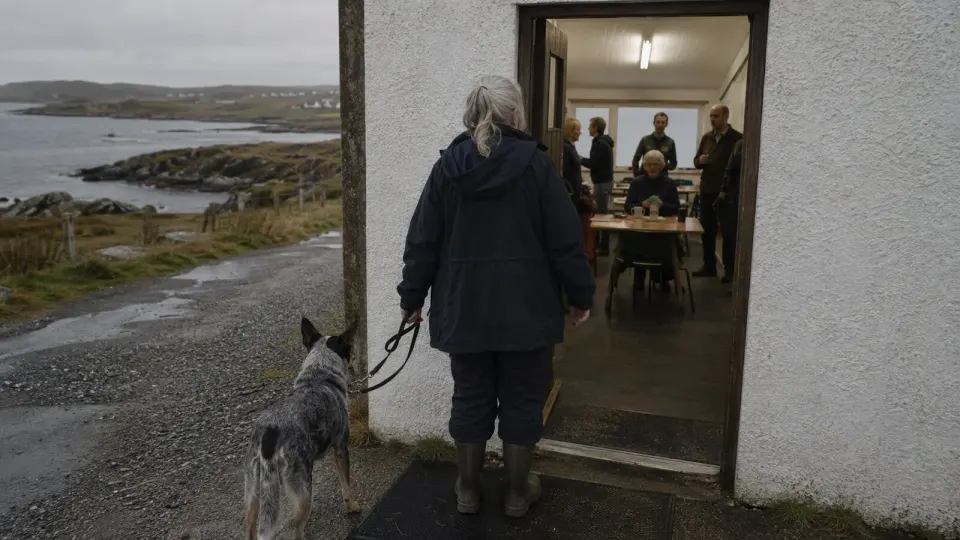
The dispute is between Claire Kellerman and the Bernera Community Association, which runs a café and community facilities on Great Bernera in the Outer Hebrides. Kellerman says her dog, Tarkina, is an assistance animal and that refusing access amounted to discrimination and harassment. The association is contesting the claim.
Those are allegations before a court, not established findings. That distinction matters, especially when a small community and a named individual are both being dissected online by people who were not in the room.
How did a café rule reach the sheriff court?
Kellerman moved to the Isle of Lewis several years ago. She says documentation confirming Tarkina’s assistance role was supplied and that the association’s handling of the matter breached equality law.
The claim initially named the Bernera Community Development Trust. According to reporting by the Law Society of Ireland’s Gazette, that organisation said it had been sued in error and incurred more than £7,000 in legal costs before documents were amended. The action now seeks £10,000 from the Bernera Community Association.
A legal debate is expected at Stornoway Sheriff Court in December. The Scottish Legal Aid Board has said the application for legal aid was dealt with under its normal process and that, at the time of its statement, no payments had yet been disbursed.
Why is the association asking for money?
The Bernera Community Association is a registered charity founded in 1973. It runs with two members of staff and a substantial amount of volunteer effort. Its public appeal says mounting legal costs threaten services and has attracted tens of thousands of pounds from hundreds of donors.
That support does not decide who is legally right. It does show how quickly litigation can overwhelm a small organisation. The charity’s latest reported accounts recorded income of about £213,000 and expenditure of about £195,000 for the year to September 2025. A five-figure claim, plus professional fees, is not loose change found behind the urn.
The association has also said its finances faced wider pressures before this case. It wants donations to help defend the action and protect local services.
Kellerman, meanwhile, is entitled to have her allegation considered through the legal process rather than by a comment section. Assistance dogs do not have to be one particular breed, and not every disability is visible. Whether the legal definition and required facts are met here is exactly what the proceedings are supposed to determine.
Why this story travelled
It contains nearly every ingredient of an internet blaze: a dog, a tiny island, an American newcomer, a volunteer café, legal aid and a famous family connection. Kellerman’s late daughter was actor Sally Kellerman, known for playing Major Margaret “Hot Lips” Houlihan in the 1970 film MASH*.
The temptation is to choose a team immediately. Resist it. Viral accounts often flatten a complicated dispute into “heartless café bans support animal” or “outsider sues beloved community hub”. Both are slogans, not judgments.
The OutOut verdict
Whatever the eventual legal outcome, everybody has already lost something: money, time, trust or the ability to enter the local café without becoming part of a constitutional crisis.
The humane response is not to turn either party into a pantomime villain. It is to let the court test the evidence, recognise the genuine importance of disability access, and understand why a volunteer-led charity is frightened by open-ended legal costs.
Great Bernera has fewer people than many London office blocks. It should not require an island-wide peace summit to share a cup of tea and decide where a dog may sit. Yet here we are.
Timeline of the Great Bernera dog dispute
The disagreement began with access to a community café operated by the Bernera Community Association on Great Bernera in the Outer Hebrides. Kellerman says Tarkina is an assistance animal and alleges that the way the matter was handled breached equality law. The association disputes her account and is defending the action.
The claim initially named the Bernera Community Development Trust. That organisation said it had been included incorrectly and incurred more than £7,000 in legal costs before the papers were amended. The action now concerns the Bernera Community Association and seeks £10,000.
The association subsequently launched a public appeal for help with legal expenses. Donations can support a party’s ability to defend a case, but the amount raised is not evidence about the underlying events. A legal debate was reported as expected at Stornoway Sheriff Court in December.
Is Tarkina legally recognised as an assistance dog?
Kellerman says documentation supporting Tarkina’s assistance role was supplied. The association disputes important parts of the case. No final judicial determination about the dog’s status or the alleged discrimination had been reported at the time of this update.
Assistance dogs are not restricted to a single breed or one familiar form of training, and a person’s disability may not be visible. Equally, describing an animal as an assistance dog does not allow an online audience to decide a disputed legal test. The documents, conduct and relevant duties are matters for evidence and the court.
Who runs the Great Bernera community café?
The Bernera Community Association is a registered charity founded in 1973. It operates community facilities with two staff members and substantial volunteer involvement. Its latest reported accounts showed income of approximately £213,000 and expenditure of about £195,000 in the year to September 2025.
Those figures explain why legal costs are a serious concern for the organisation, but financial pressure does not settle the discrimination claim. Both the accessibility allegation and the charity’s ability to defend itself can be treated seriously at the same time.
What happens next?
The sheriff court will determine procedural and substantive questions through the proper legal process. Depending on the stage reached, possibilities can include further written arguments, evidential hearings, settlement or a judgment. Reporting should be updated when a public order or reliable account becomes available, rather than treating fundraising posts or social-media commentary as a verdict.
Until then, several points remain important:
- Kellerman’s case consists of allegations that she is entitled to have considered.
- The association contests those allegations and is entitled to defend itself.
- The originally named development trust says it was included incorrectly.
- Crowdfunding support does not prove either version of events.
- Online claims about a named person’s identity, health or motives are not substitutes for evidence and will not be repeated here.
Why careful reporting matters
The dispute involves disability access, a named individual, a small charity and a close-knit island community. Each ingredient can generate strong feelings; together they have produced a national argument in which many participants have never visited Great Bernera.
OutOut will keep attributed allegations separate from established facts and will update the article if the court publishes a decision. That is slower than choosing a villain from a short video, but it is considerably more useful.
Follow verified developments through OutOut’s UK news section. Our editorial standards explain how allegations and corrections are handled.