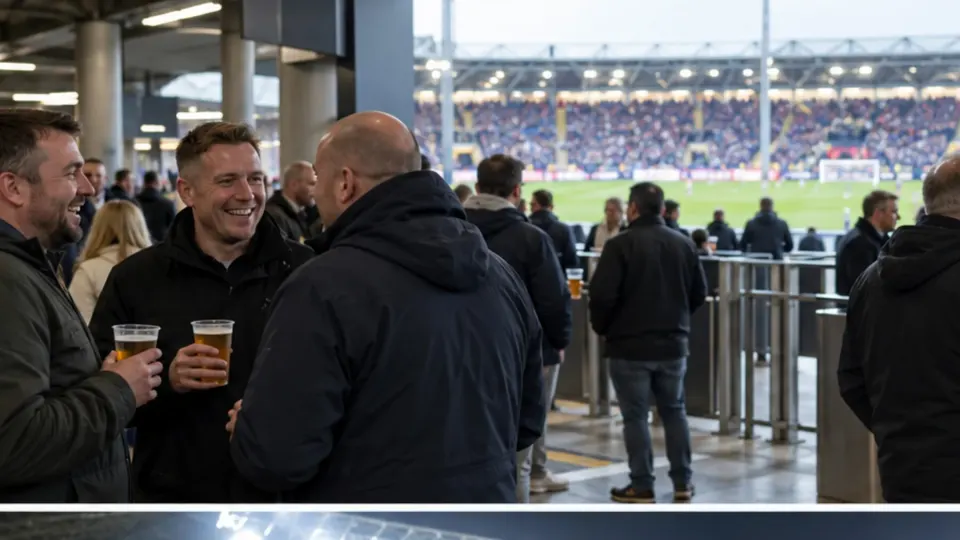
The government is considering a trial that could allow supporters to drink alcohol within sight of the pitch at men’s football matches in England, reopening a rule written during the hooliganism crisis of the 1980s and a debate that has never travelled far from the nearest plastic pint.
Prime Minister Andy Burnham said on Wednesday 23 September that the restriction was outdated and discriminatory when compared with other sports. Under legislation introduced in 1985, alcohol cannot be consumed within view of the playing area at matches in the top five tiers of English men’s football. Fans can generally buy and drink it in concourses away from the pitch.
Reuters reported that Burnham supported a controlled trial rather than an immediate national repeal. A permanent change would require Parliament. The government has not yet announced venues, dates or detailed conditions, so claims that the ban has already been lifted are premature.
Senior police officers have urged caution. Mark Roberts, the National Police Chiefs’ Council lead for football policing, said alcohol remained a significant factor in violence and disorder. That is an operational judgment from forces that police fixtures; it is not proof that every supporter drinking in a seat will cause trouble, but it cannot be dismissed as somebody being miserable near a lager pump.
Why football is treated differently
Spectators can drink while watching rugby, cricket, concerts and many other stadium events. Football’s separate rule came from a particular history of disorder and crowd management. The question is whether modern stadiums, ticketing, CCTV, stewarding and banning orders have changed the risk enough to justify a carefully measured experiment.
Supporters argue the current system creates its own problems. Thousands of people leave their seats shortly before half-time, queue, drink quickly and rush back. Allowing a drink to be taken to a seat could spread demand across a longer period and reduce crowding on concourses. Clubs would gain additional revenue and adults would be treated more like adults.
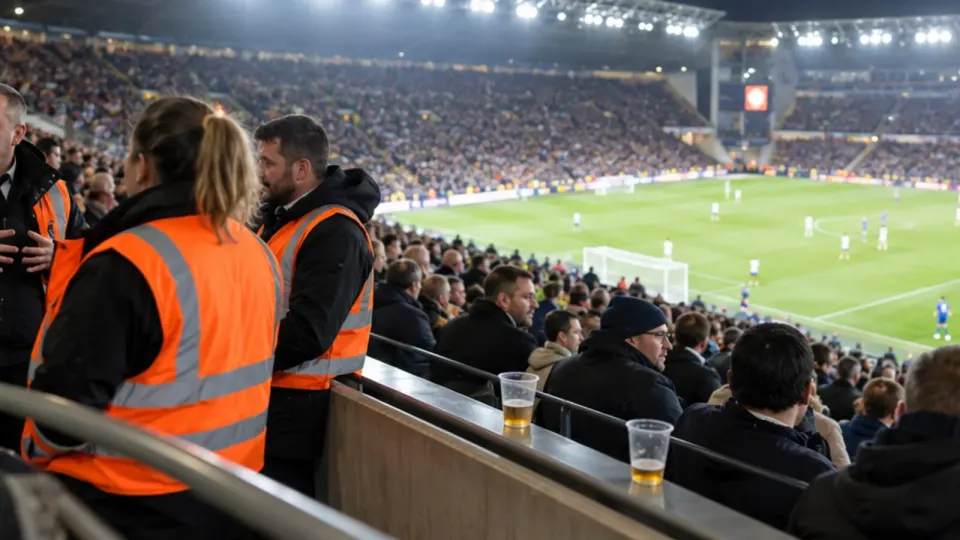
Opponents see a different behavioural effect. A drink visible throughout the match may increase total consumption, encourage throwing and make it harder for stewards to identify intoxication. High-risk fixtures, late kick-offs and intense rivalries are not the same environment as a quiet afternoon in a family stand.
The Women’s Super League has already provided useful evidence. A 2025-26 trial allowed alcohol in seating areas at selected clubs. League research cited by Reuters found 90% of attendees still regarded the experience as safe and family friendly. That is encouraging, but the profile, crowd behaviour and policing demands of WSL fixtures cannot simply be copied onto every men’s derby.
What a responsible trial would need
A useful trial must be designed to answer questions, not merely to generate favourable photographs. It should include a mix of grounds and kick-off times, while initially excluding fixtures assessed as highest risk. Participating clubs should cap sales, use plastic or reusable cups that cannot become dangerous objects and stop service well before the final whistle.
Independent researchers should compare arrests, ejections, medical incidents, steward reports, queue times and supporter experience with similar fixtures under the existing rules. Police deployment and costs must also be counted. A trial that produces more club revenue by transferring a larger bill to local policing has not discovered free money.
There should be clear control areas for families and people who do not want alcohol around them. Staff need authority and training to refuse service, and clubs should face consequences if commercial pressure overwhelms safety decisions. Accessibility matters too: spills, blocked aisles and repeated movement during play can make the experience worse for disabled supporters and children.
Ticket holders must know the rules before arriving. A patchwork in which one stand permits alcohol, another does not and an away fan learns the difference from a steward’s outstretched hand is an efficient machine for producing arguments.
The case for changing a forty-year-old law
Laws should not survive purely because they are old enough to have their own retro merchandise. English football in 2026 operates with all-seater grounds in the top divisions, sophisticated surveillance and far more diverse crowds. The overwhelming majority of supporters attend without committing violence.
Yet progress is not uniform. Disorder, discriminatory abuse and attacks around matches still occur. Alcohol is rarely the only cause, but intoxication can increase aggression and complicate crowd control. Any reform should therefore be reversible and based on evidence by fixture type, not a single national average.
The fairest policy may be a licensing framework rather than a blanket entitlement. Grounds with strong safety records could apply, local safety advisory groups could set conditions and police could recommend restrictions for particular games. That would acknowledge football’s improvement without pretending risk vanished when stadiums installed contactless tills.
Read more match reporting and the policies shaping the game in OutOut’s Sport section.
The OutOut verdict
The current rule contains an obvious absurdity: a supporter can buy a beer, stand a few metres from the pitch and drink it quickly, but becomes a public-order emergency by carrying the same cup through the wrong doorway. A controlled trial is reasonable.
Reasonable does not mean inevitable success. Clubs must prove that slower drinking replaces faster drinking, not supplements it. Police concerns deserve measurement, supporters deserve consistent rules and families deserve areas where the match does not arrive with somebody else’s pint down their back. Test it, publish everything and let evidence make the decision before the drinks industry writes the celebration speech.