Céline Dion has returned to full-length live performance after more than six years away, opening a Paris residency with tears, an ovation and the considerable problem of fitting an entire arena’s emotion into one evening.
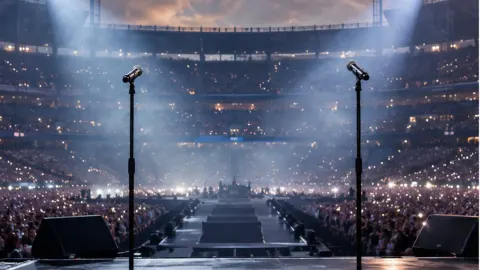
Reuters reported that Dion performed on Saturday 12 September at Paris La Défense Arena in Nanterre. She opened with “On ne change pas” and addressed an audience that had waited through cancellations, uncertainty and her diagnosis with stiff person syndrome.
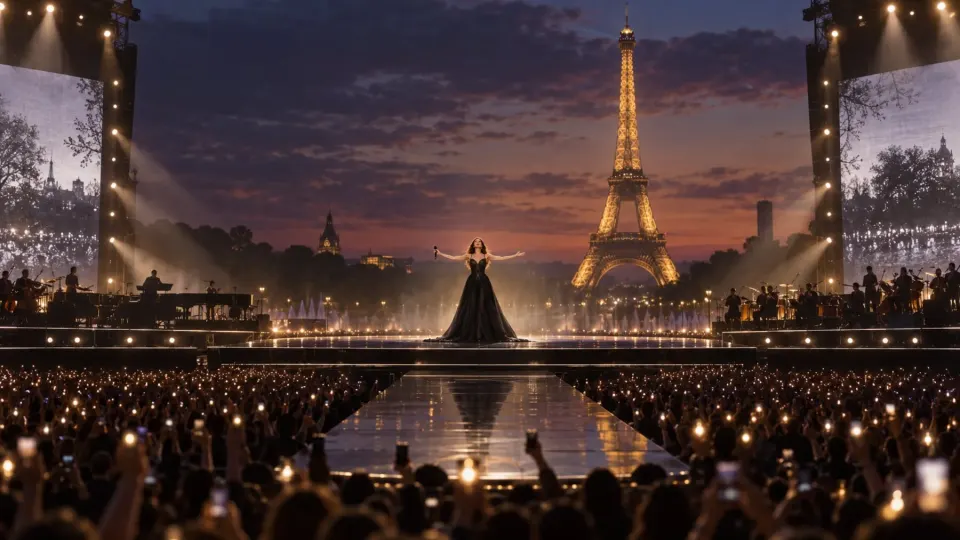
It was her first complete concert since 2020. Dion made a celebrated appearance at the opening ceremony of the Paris Olympics in 2024, singing from the Eiffel Tower, but that single performance was not the same physical undertaking as carrying a full show.
Why the absence lasted so long
Dion disclosed in 2022 that she had stiff person syndrome, a rare neurological condition associated with muscle stiffness and painful spasms. She postponed and cancelled performances while undergoing treatment and rehabilitation.
The condition can affect mobility and the muscles involved in singing. That makes a concert return more than a question of whether the voice still produces the famous notes. Touring demands rehearsals, travel, repeated performances and the ability to recover between them.
Her public updates resisted the standard celebrity-comeback script in which determination is treated as a magic override button for biology. Progress was uneven, and no responsible observer could guarantee a date. Saturday’s show therefore represented work completed, not illness defeated in a montage.
What happened in Paris
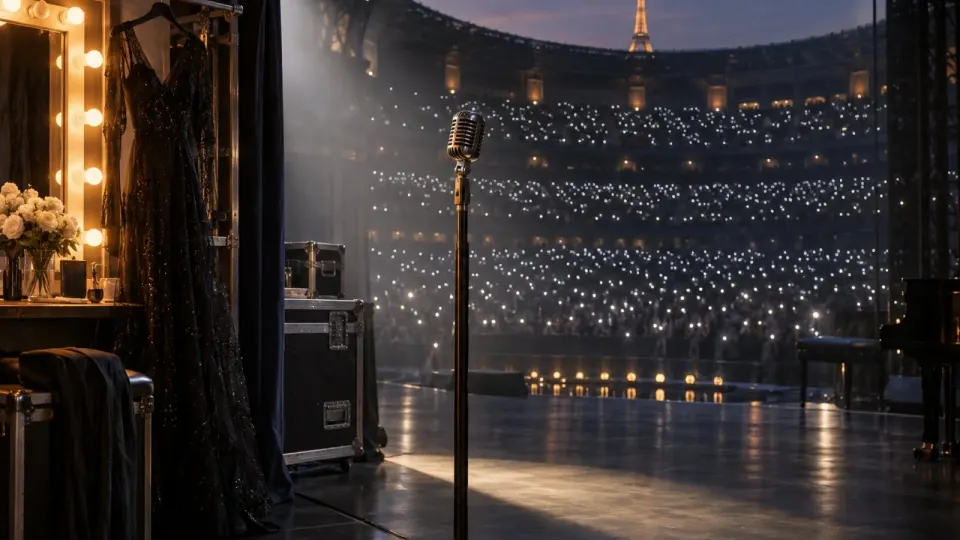
Reuters described Dion as emotional during the opening and reported a set that included “All By Myself” and “My Heart Will Go On”. The residency comprises 16 concerts, with a further ten dates planned for 2027.
The choice of Paris carries obvious significance for a French-speaking Canadian star whose francophone career long preceded her biggest English-language hits. It also connects the comeback to her Olympic performance, when the Eiffel Tower provided a stage no production designer could sensibly attempt to improve.
Fans will naturally focus on the voice. The more important test across a residency is sustainability. A single triumphant night can run on adrenaline; a schedule must accommodate health, recovery and the possibility of change. Ticket holders should celebrate the return without treating every altered note or rescheduled date as evidence in a trial.
There is also a wider shift in how audiences discuss performers’ health. Previous generations were often expected to hide illness until a tour simply disappeared. Dion has made the limits visible. That can disappoint people holding expensive tickets, but it also challenges an industry built around the fiction that a human body is merely another piece of production equipment.
A comeback without a neat ending
The word “comeback” suggests a door that closes behind the difficult chapter. Chronic conditions rarely cooperate with that structure. Success may mean performing with adaptations, protecting rest days and cancelling when necessary.
Nothing about that diminishes the achievement. It places it in the correct frame. Dion has returned because treatment, preparation and judgement made this performance possible, not because applause cured her.
For more stories from music, film and television, visit OutOut’s Entertainment section. Our UK and world coverage follows the public-health and cultural stories around the headlines.
The OutOut verdict
After six years, Céline Dion walked back into a full concert and began with a song whose title means “we don’t change”. Subtle? Perhaps not. Effective? The arena appears to have become one enormous tear duct.
The right response is joy with room for reality. This was not a promise that every future night will be identical; it was proof that Saturday happened. For an artist whose health made the stage uncertain, one complete show is not a warm-up fact. It is the headline.