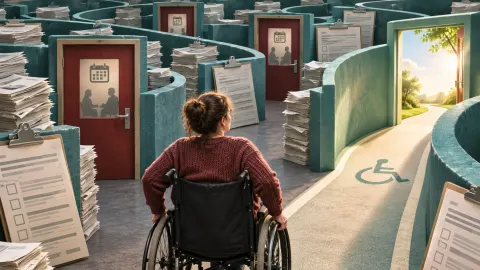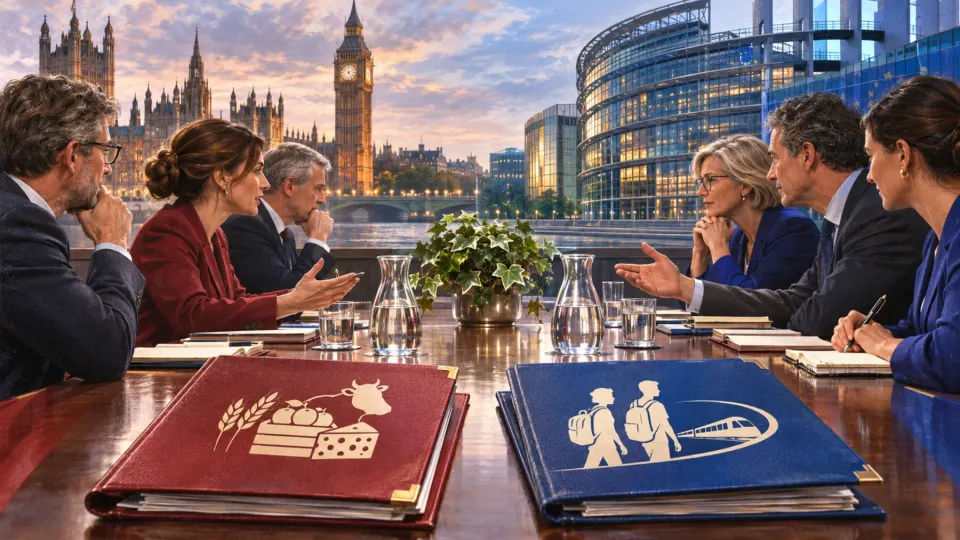
Prime Minister Andy Burnham told MPs on Monday 23 November that it would be “unthinkable” for Britain to rejoin the European Union without a referendum. He also said he was not proposing to rerun the 2016 vote now and defended a new UK-EU package covering food trade, carbon markets, youth mobility, education and security cooperation.
That is narrower than both sides of the loudest argument would prefer. The government has not announced an application to rejoin the EU. It has agreed closer cooperation in defined areas while accepting shared rules and institutional arrangements in return for reduced barriers. Burnham has left open the longer-term direction of travel but attached any return to membership to a public vote.
The Commons exchange matters because the summit documents are detailed enough to change real journeys and business processes, yet broad enough to invite a decade's supply of Brexit theatre. The useful question is not whether every clause represents “Brexit betrayed” or “Europe restored”. It is what has actually been agreed, when it starts and what Britain gives in return.
What the new package contains
The UK and EU concluded negotiations on a sanitary and phytosanitary agreement for food, animals and plants. The government's explainer says a common SPS area will remove or reduce many checks and paperwork requirements affecting trade between Great Britain and the EU. It also says the interaction with the Windsor Framework should make movements from Great Britain to Northern Ireland easier and less costly. OutOut has already published a dedicated guide to what the UK-EU food deal is expected to change for Northern Ireland from 2028; this article focuses on Burnham's Commons position and the wider summit package rather than duplicating that operational explainer.
Alignment is the price of that convenience. Britain will apply relevant rules within the common area and accept agreed governance. Businesses that have spent years paying for certificates, delays and duplicated inspections may welcome fewer barriers. Critics will argue that Britain is following rules it no longer writes. Both descriptions can be true; the political choice is whether the economic benefit justifies the constraint.
The package also links the UK and EU carbon markets, intended to avoid carbon-border costs for sectors including steel and cement. Government estimates attach large values to the combined agreements, including a claim that the package could be worth up to £17 billion a year. That is an official projection, not £17 billion already sitting in a Treasury account. Forecasts depend on implementation, business response and assumptions that deserve independent testing.
A youth scheme, not restored free movement
The two sides concluded negotiations on a Youth Experience Scheme for people aged 18 to 31. The joint statement says 100,000 young people from the EU and 100,000 from the UK would be able to reside for up to three years for work, study, au-pairing, volunteering or travel under the respective legal frameworks.
That is substantial, but it is capped and age-limited. It is not the restoration of general free movement. The leaders aim to apply the agreement no later than 2028 and to make opportunities available no later than January 2030. Those dates leave implementation work, application rules and practical costs still to be settled and communicated.
Britain is also participating in Erasmus+ in 2027. The UK and EU said they would work towards an additional agreement on tuition fees for each other's students, with negotiations intended to conclude within six months of the summit. Until that agreement is signed, headlines declaring equal domestic fees everywhere are ahead of the documents.
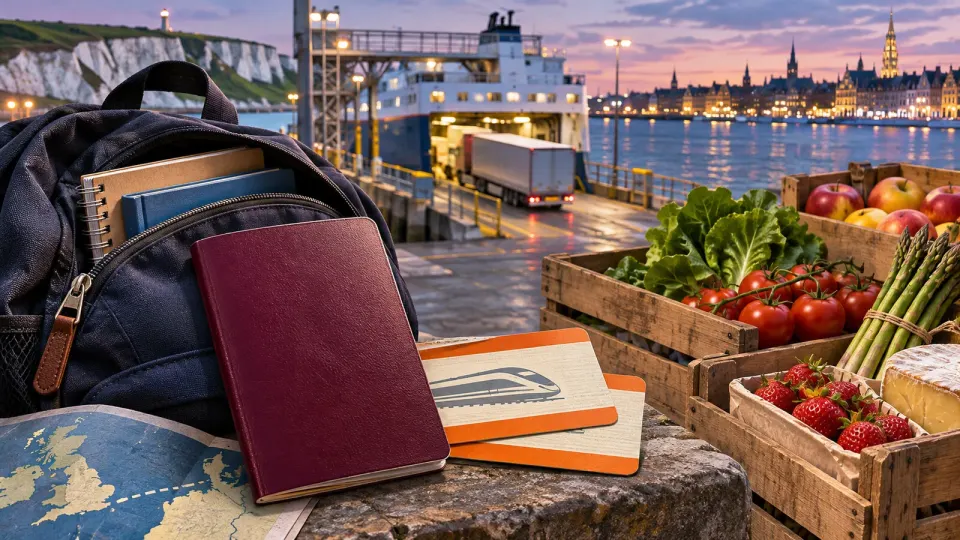
Burnham's referendum line
Conservative MP Sir Bernard Jenkin asked Burnham in the Commons whether it would be unthinkable for any prime minister to take Britain back into the EU without a referendum. Burnham replied yes. In the wider statement, he said there was no fixed destination for closer ties and described his approach as pragmatic.
That answer places a democratic lock on formal membership while preserving political room to negotiate cooperation short of membership. It does not promise a referendum during this Parliament, set a timetable for rejoining or specify the question voters would face.
The opposition accused the government of making Britain a rule taker without a mandate. Ministers answered that the deal stays within their manifesto and reduces costs. This is the argument the country will keep having because post-Brexit policy is not a binary switch. Every agreement chooses a point between autonomy and access, then politicians pretend they have discovered a configuration containing all of both.
The food deal offers the clearest example. Divergence gives Britain freedom to set different rules, but exporters then face checks because the EU cannot assume the products comply with its standards. Alignment reduces that friction but limits divergence. No amount of podium varnish removes the trade-off.
OutOut previously reported industry warnings that a “Made in Europe” approach could exclude UK-built cars from EU incentives. The new summit does not settle every automotive dispute, but it shows why regulatory access and supply-chain rules remain live economic questions rather than museum exhibits from 2016.
Burnham's wider domestic programme also matters to the politics. Our coverage of his free personal care and post-2030 pension proposal shows a prime minister trying to combine closer European ties with large promises at home. Voters will judge the EU package less by diplomatic adjectives than by prices, jobs, travel and whether public services feel any better.
What to watch next
First, the legal agreements must be implemented. Businesses need commencement dates, guidance and systems that work at borders. A treaty that removes paperwork in theory but produces a new portal with a spinning wheel will not persuade anyone who has watched a lorry wait for clearance.
Second, Parliament and independent analysts should test the government's benefit estimates. “Up to” is doing industrial-scale lifting in the £17 billion claim. Readers should expect ranges, time horizons and costs as well as the headline maximum.
Third, details of the Youth Experience Scheme will decide who can use it. Application fees, healthcare arrangements, proof of funds, work rights and annual allocation rules can turn an opportunity into either a broad exchange or an advantage mainly for young people with savings.
Finally, Burnham's “no fixed destination” language will keep the membership question alive. His referendum answer sets a condition, not an objective. Anyone claiming Britain is rejoining tomorrow has skipped several elections, negotiations and one rather consequential national vote.
The OutOut verdict
The government has chosen managed closeness: align where friction is expensive, cooperate where threats cross borders and create capped routes for young people. It is a recognisable policy, even if Westminster insists on describing every adjustment as either national surrender or the second coming of duty-free Toblerone.
The package may lower genuine costs and expand genuine opportunities. It also accepts genuine constraints. Adults can hold all three facts at once without being removed from a television studio for insufficient fury.
Burnham was right to say membership could not be restored by executive mood music. A referendum would be necessary for a decision of that scale. For now, however, this is not a rejoin plan. It is a detailed attempt to make the relationship after Brexit less cumbersome. The test begins at borders, universities and application desks—not in the volume of the Commons heckling.
Sources
- UK Parliament Hansard: UK-EU Summit statement and questions, published 23 November 2026.
- UK Government: UK-EU Summit 2026 joint statement, published 20 November 2026.
- UK Government: UK-EU Summit 2026 explainer, updated 20 November 2026.
- European External Action Service: EU-UK Summit joint statement released, published 20 November 2026.