THE MOST IMPORTANT PERSON IN THE ROOM BROUGHT A WEATHER MAP
Brendan Fraser says the new Second World War drama Pressure carries a modern warning about the danger of dismissing science when the evidence is inconvenient.
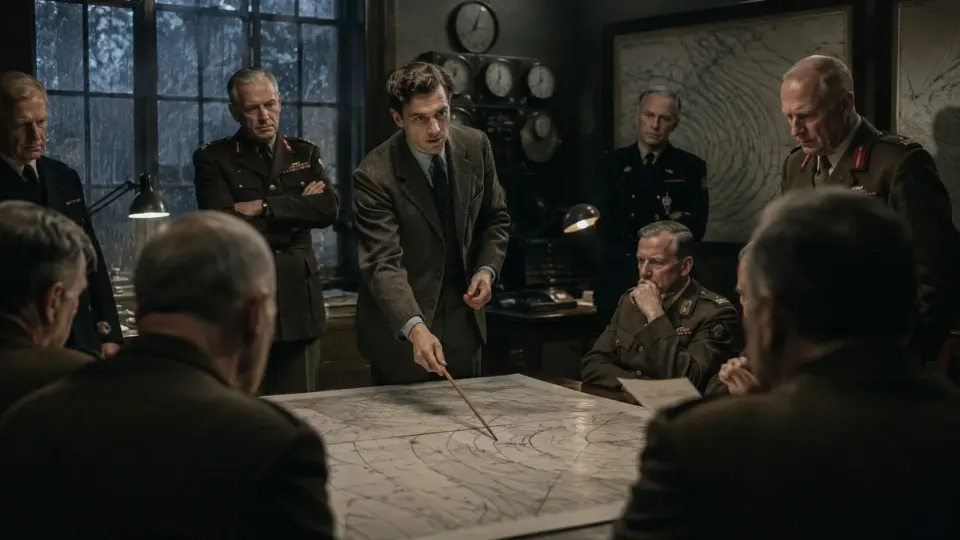
The film tells the story of Captain James Stagg, the Scottish meteorologist who had to challenge senior Allied commanders in the tense days before D-Day. His forecast warned that severe weather would make the planned invasion date of 5 June 1944 dangerously unsuitable.
The operation was delayed by 24 hours. The improved weather window on 6 June allowed the Normandy landings to proceed, helping to change the course of the war against Nazi Germany.
It is a story with no shortage of military power, but the decisive weapon in the room is a forecast delivered by somebody prepared to tell senior leaders that the timetable was wrong.
ANDREW SCOTT PLAYS JAMES STAGG
Andrew Scott portrays Stagg as a largely overlooked wartime figure placed under immense pressure. Fraser plays General Dwight D. Eisenhower, the supreme Allied commander who ultimately had to decide whether to postpone the invasion.
Damian Lewis appears as Field Marshal Bernard Montgomery, one of the commanders depicted as pushing back strongly against delay. Kerry Condon, Chris Messina and Harrison Osterfield are also among the cast.
The film was directed by Anthony Maras and adapted from David Haig’s 2014 stage play. Haig co-wrote the screenplay and has described the careful decision-making at the heart of the story as a contrast with a modern culture in which enormous choices can be rushed through under the pressure of social media.
FRASER WAS DRAWN TO EISENHOWER’S HUMANITY
Speaking at the film’s European premiere in London, Fraser said the historical story remains relevant because nature and physics do not bend to personal belief.
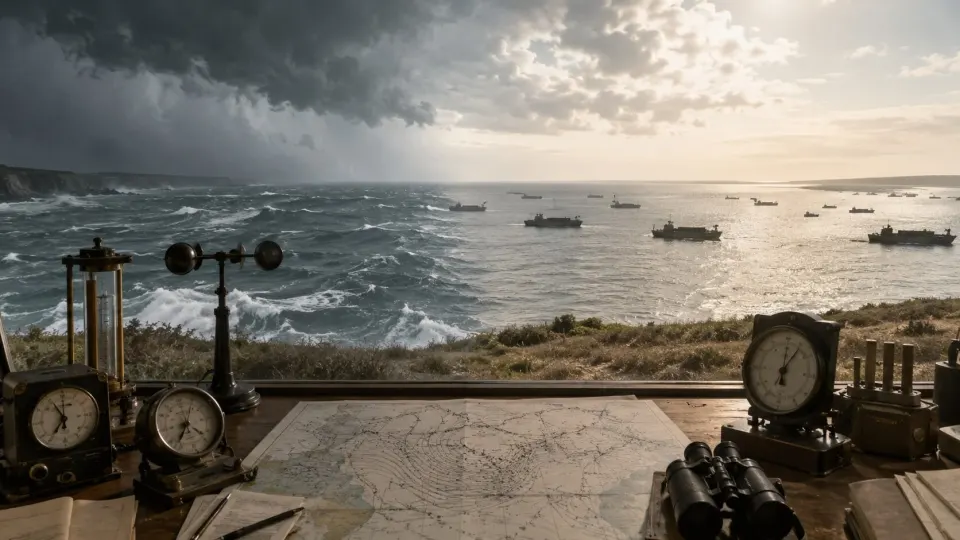
He said his research left him admiring Eisenhower’s leadership and concern for the troops whose lives depended on the decision. The choice was not simply between good and bad weather. Delay risked exposing the invasion plan and losing the necessary combination of tides, moonlight and military readiness. Proceeding into the forecast storm risked catastrophe at sea and on the beaches.
That is what gives the story dramatic pressure without requiring history to be rewritten. Everybody knows the invasion happened. The tension comes from understanding how uncertain the decision remained until the final hours.
BRITAIN WILL AT LEAST UNDERSTAND THE WEATHER
The cast has highlighted the film’s broader argument for evidence, patience and leaders willing to hear an unwelcome answer. British audiences may also connect with its most basic premise: an extremely important national plan being held hostage by weather that refuses to behave.
Pressure has begun its international cinema rollout and is scheduled for release in the UK on 9 September.
The lesson is not that forecasters are never wrong. It is that ignoring the person with the data because the forecast is inconvenient can be far more dangerous than changing the plan.
Source: Reuters.