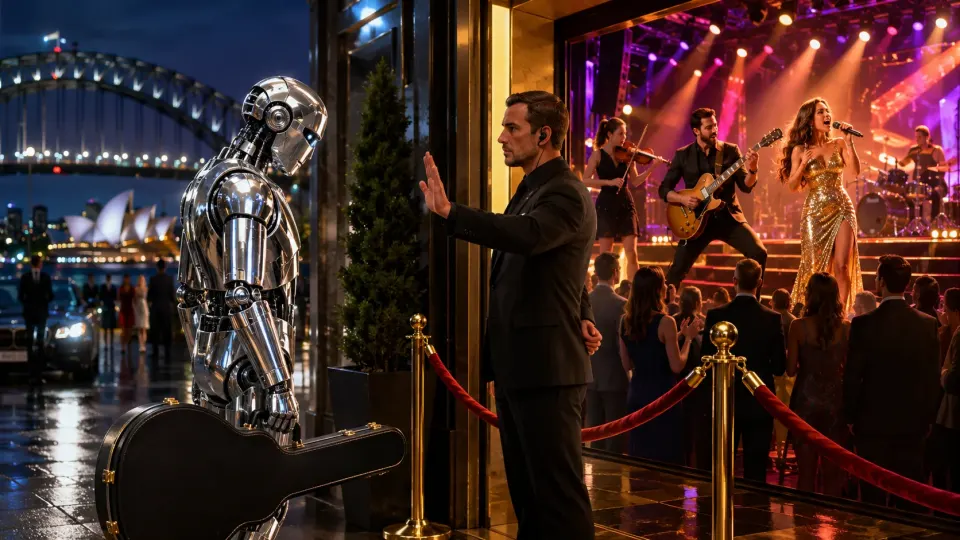
Australia has examined the rapidly expanding pile of computer-generated music, listened carefully and decided its official chart still requires somebody with a pulse.
From Friday, recordings created mostly or entirely by artificial intelligence will be excluded from the ARIA Charts, the weekly rankings operated by the Australian Recording Industry Association.
AI is not being completely marched out of the studio. Artists can still use it as a supporting tool, provided the finished recording is substantially human-made and does not raise concerns about artificial streaming or chart manipulation.
So the machine may help. It just cannot write the song, sing the song, play the important bits and then send a laptop to collect the trophy.
HUMAN BEINGS RETAIN A NARROW LEAD
Under ARIA’s updated code, an ineligible recording can be removed, have its chart position altered or lose a chart award. Artists and representatives will be able to challenge a decision.
The rules follow principles adopted by official chart programmes around the world as the music business attempts to answer a question it hoped would remain science fiction for another decade: what exactly counts as an artist when the singer does not breathe, tour or demand twelve white candles backstage?
ABC News reports that ARIA will continue accepting AI-assisted work when the human contribution remains substantial.
That distinction matters. Digital production, pitch correction, sampling and computerised instruments have been part of music for years. This is not a ban on musicians touching software. It is a line against software replacing the musicians and entering itself for a plaque.
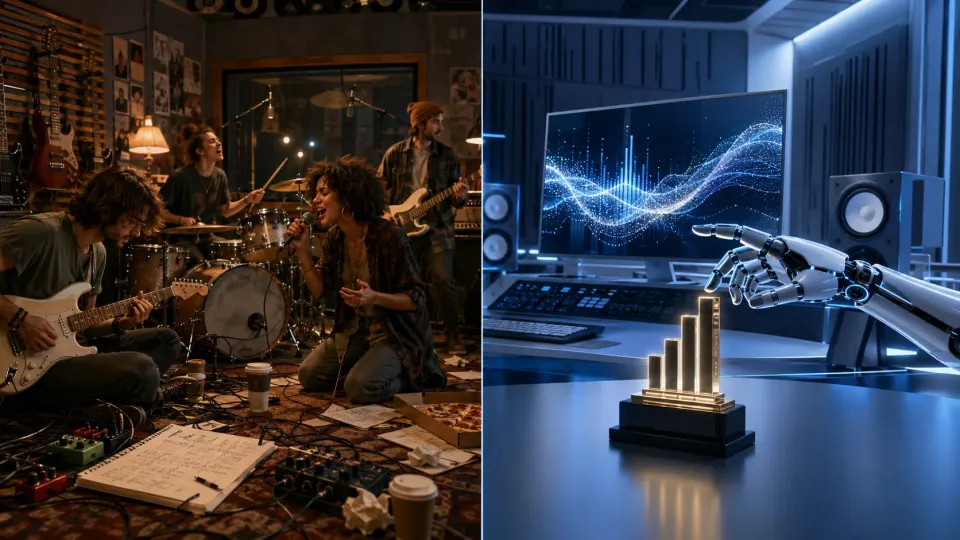
THE COVER THAT MADE THE ARGUMENT LOUDER
The debate intensified after Queensland DJ and producer Josh Fawaz released a cover of Madonna’s Like a Prayer.
The recording became the most-played track on Australian radio and reached number four on two ARIA charts in July. Fawaz said he had used AI as a tool and later updated the Spotify listing to state that its vocals and drums were AI-generated.
That left the industry trying to locate the human element with the intensity of airport security searching a suitcase.
ARIA’s new position suggests that lead vocals or key instrumentation created by AI could make a recording ineligible, although individual releases will have to be assessed under the code.
The cover has therefore achieved something unusual: it made radio listeners nostalgic for the simpler age when the main musical controversy was whether somebody had used too much Auto-Tune.
AI-ASSISTED IS NOT AI-MADE
There is a sensible middle ground buried beneath the shouting.
A musician using AI to clean up a recording, experiment with an effect or assist part of the production process is still making creative decisions. Pressing a button and receiving a complete imitation of human work is a different proposition.
The industry is also wrestling with how generative systems were trained. Record labels and performers argue that some models have consumed vast catalogues of copyrighted music without permission, then produced remarkably familiar results without needing to pay, sleep or suffer through a six-month van tour.
ARIA chief executive Annabelle Herd said the rule gives people releasing music in Australia a clearer standard and urged radio and other music gatekeepers to support human artistry.
It also arrives while streaming services attempt their own solutions. Labels, badges and recommendation controls may tell listeners that an artificial persona is involved, but identifying precisely which parts of an individual track were generated remains considerably messier.
THE ROBOTS HAVE ALREADY ANNOYED BETTE MIDLER
This is not an isolated Australian argument.
As OutOut recently reported, Bette Midler attacked the rise of an AI singer attracting millions of streams, describing the wider threat to human performers in language considerably less diplomatic than a charts code of practice.
Musicians are understandably concerned. A computer-generated act does not require royalties in the traditional sense, cannot miss a promotional appearance and is unlikely to throw a television through a hotel window unless somebody installs remarkably ambitious arms.
The commercial temptation is obvious.
So is the danger of filling playlists with technically competent musical wallpaper assembled from everything audiences already liked.
OUTOUT VERDICT
ARIA has not banned technology from music. It has said that somebody should probably make a meaningful amount of the music before receiving a place in a chart designed to celebrate musicians.
That feels less like panic and more like basic housekeeping.
AI can remain in the studio, help with production and offer suggestions. It just cannot become the singer, drummer, songwriter, manager and fan club before lunchtime.
For now, Australian chart success still requires human creativity.
The robots will be devastated as soon as somebody updates their emotional software.