
ASOS has now told customers that a cyber intruder accessed names and contact details after tricking an employee into handing over login credentials. The retailer's update on Thursday 8 October is a material step beyond the alarming, unauthorised app notification shoppers received on Tuesday 6 October: the company says its initial investigation has identified an actual exposure of some customer information. It says payment card information and account passwords were not accessed. Those are ASOS's current findings, not a guarantee that every question about the breach has been settled.
The route in matters. According to the account ASOS gave customers, the intruder impersonated a trusted contact, obtained an employee's credentials and used them to reach information held on certain third-party platforms used by the business. ASOS says those platforms were locked down, that its website and app remained safe to use, and that it is working with law enforcement and regulators. That describes an account compromise and access through connected services. It does not, on the evidence made public, prove the much larger claims made in the rogue notification about any particular cloud database.
What is confirmed, and what remains open
The confirmed customer-data categories in ASOS's email, as reported by Reuters, are names, contact details and what it called certain non-personal account-related information. The company did not give a final number of affected people in that report. It also did not publish a complete list of the third-party platforms, exactly which records were read, or how long access lasted. The investigation may refine the scope. Readers should be sceptical of a viral post that fills these gaps with an impressive-looking number or an alleged download link.
The rogue app notification is part of the incident, but it is not an independent forensic report. A person who controls a messaging channel can make sweeping claims to put pressure on a company or draw customers toward a malicious link. ASOS's statement and any later regulatory finding deserve more weight than the attackers' own advertisement. That does not mean the confirmed data exposure is harmless. Names and contact details are precisely the raw material for convincing follow-up scams.
This is why the absence of stolen card numbers is welcome but incomplete reassurance. A criminal who knows that somebody shops with ASOS can write a plausible message about a failed delivery, refund, account check or order problem. The message may use the customer's name and arrive by email, text or phone. The object would be to persuade the customer to hand over a password or card details that the intruder did not obtain from the original access. That is an inference about risk, not a claim that ASOS customers are already receiving a specific campaign.
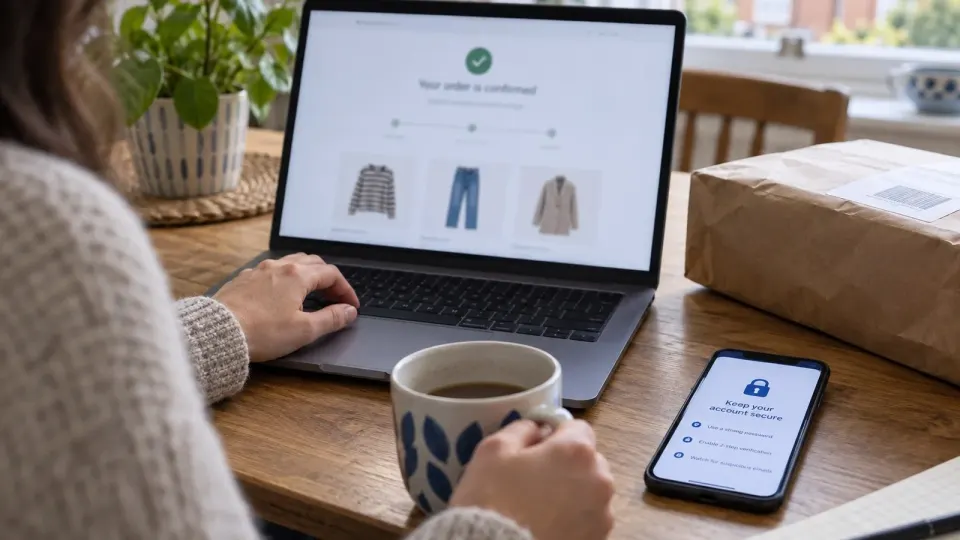
What should an ASOS customer do?
First, treat unexpected requests to log in or pay as untrusted. Open the ASOS app or type the address yourself instead of following a link in a message. Do not call a phone number supplied in a suspicious email. If a supposed agent says your account will be locked in minutes, the urgency is part of the reason to slow down. The UK's National Cyber Security Centre advises forwarding suspicious emails to [email protected]. If money has actually been lost, use the appropriate fraud-reporting route and contact the bank promptly.
Second, use a unique password for the ASOS account and enable any available additional sign-in protection. ASOS says account passwords were not taken in this incident, so a blanket claim that everyone must change theirs immediately would misstate its finding. Changing a reused password is still sensible: an old password stolen somewhere else can be tried against a retailer regardless of this breach. Check account activity through the genuine app, and be particularly cautious about unexpected password-reset requests.
Third, read direct updates from ASOS and watch for a specific notice if the company determines that your information was involved. A general report about a breach cannot establish that any one reader's record was accessed. Customers should be able to learn which data categories were involved, what the company has done to close the route in, and whether the picture changes as investigators work through the logs. That is more useful than a generic instruction to “stay vigilant” with no indication of what to look for.
The case also exposes a familiar weakness in the retail technology chain. A shop may secure its payment form and main website while staff accounts can still reach marketing, support and notification tools outside the main storefront. These services need access controls proportionate to the customer data they hold. Once a credential is obtained by impersonation, the question is whether additional checks, limited permissions and monitoring prevent a single account from becoming a master key. We cannot know from the public account which specific controls failed or succeeded here. The incident does show why customer communications systems belong in a retailer's security plan, not in a footnote.
ASOS says its website and app were safe to use throughout. That is relevant to anyone wondering whether to shop today; it should not be read as saying the incident was imaginary. It is possible for the storefront to keep working while information on a connected platform is exposed. The two statements answer different questions. Investors may watch the cost and reputational effects, but for customers the immediate issue is a trustworthy account of what was accessed and how to recognise an attempted impersonation.
Britain has seen a string of high-profile corporate cyber incidents, but lumping them together as if each used the same method is unhelpful. Here, the reported entry point was an employee deceived by somebody posing as a trusted contact. That should focus scrutiny on verification of unusual requests and the privileges attached to business accounts. It should also remind any organisation that the customer does not care whether the exposed record sat on its own server or a contractor's: the trust relationship still belongs to the retailer.
For a wider look at how a convincing digital helper can blur responsibility when money changes hands, read our report on banks' concerns about AI shopping agents. The mechanisms are different, but both stories turn on a basic question: who controls the final trusted step in a transaction?
The OutOut verdict
The reassuring line is that ASOS says the cards and passwords were not exposed. The uncomfortable line is that a stranger reportedly got through by borrowing the authority of a trusted contact and an employee account. A fashion retailer can put a password on the fitting room, but the door to its connected services still needs a proper lock. Customers deserve a clear count and a precise account once the investigation can support them. Until then, an unexpected “ASOS” message asking for the very details that were not stolen should be treated as a fresh attempt to steal them.