THE COUNTRY WAS APPARENTLY AVAILABLE FOR A SHORT BREAK
Consumer watchdog Which? managed to create a fake holiday-rental listing for 10 Downing Street, complete a test booking and have a payment processed — an achievement that sounds like satire until you remember that real customers use the same systems with real money.
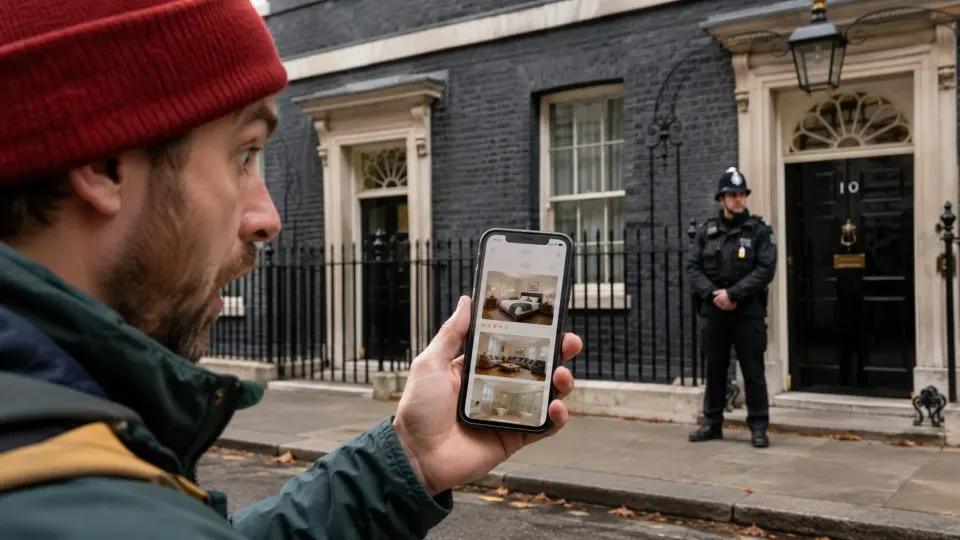
Researchers listed the prime minister’s official London residence as a one-bedroom apartment in the heart of the capital. The page used the exact address and a photograph of the famous black front door, while its location promised an unusually short walk to the Houses of Parliament.
The listing was created on 18 June. Which? briefly opened a booking window so one of its own researchers could carry out a controlled test, rather than allowing an unsuspecting member of the public to stay somewhere guarded by armed police and constitutional convention.
Booking.com processed the researcher’s payment for a week-long stay, according to the watchdog. Which? said the money had still not been refunded more than six weeks later.
LARRY THE CAT ALSO RECEIVED A REVIEW
The investigation did not stop at getting the front door through the listing process.
Researchers also uploaded a fake review describing the imaginary stay as exceptional and referring to time spent with Larry, Downing Street’s resident cat. Which? said the review appeared almost immediately despite a message saying it would be checked by moderators.
The team then used the platform’s messaging system to send an external link requesting payment-card details. That matters because fake accommodation messages and links are a familiar route into travel fraud. Which? said the link was not blocked by the protections it had been told could identify suspicious activity.
The fake property was eventually removed on 27 August, about six weeks after it was set up.
BOOKING.COM DISPUTES HOW LIVE THE LISTING REALLY WAS
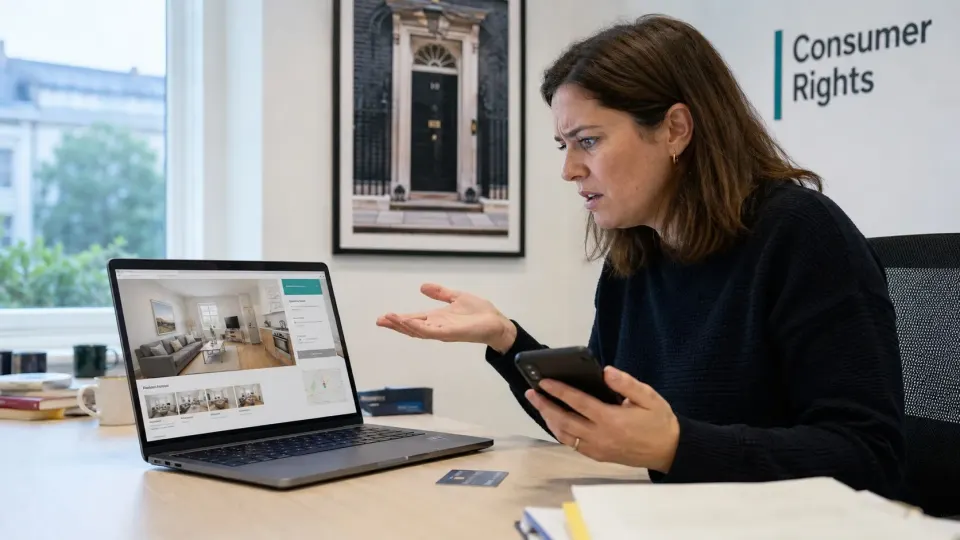
Booking.com said the controlled test was not representative of the millions of genuine listings on its platform. It said the Downing Street property was not visible to customers or live for the entire period described and that, because it was not generally open and bookable, some automatic fraud controls were not triggered.
The company said it uses checks, verification measures and artificial intelligence to identify suspicious properties, adding that most fraudulent listings are removed within 24 hours.
That response explains why the test may not mirror a conventional scam from beginning to end. It does not make the successful creation of the listing, payment and review irrelevant. The entire point of a fraud-control system is to notice when the thing being offered is obviously not a holiday flat — and few British addresses are more obviously not a holiday flat than Number 10.
Which? called the weaknesses systemic and urged Ofcom to investigate. Ofcom said platforms have duties to remove illegal user-generated content once they know about it, but noted that Booking.com is not currently within future rules covering paid-for fraudulent advertising.
WHAT CUSTOMERS SHOULD TAKE FROM IT
The test does not show that every listing is unsafe. It does demonstrate why a familiar website, polished page and internal message do not automatically make a payment request genuine.
Travellers should be wary of messages pushing them to external sites, requests to re-enter card details and prices that seem implausibly generous. Contacting the accommodation through independently verified details can help when anything feels wrong.
As for the Downing Street listing, there was no breakfast buffet, the neighbours would have been difficult and checkout might have involved the Cabinet Office.
Sources: The Guardian and ITV News.