Five TikTok videos about moving on to start with
Searching for the best TikTok videos about moving on can leave you with a feed full of dramatic sunsets and absolutely no idea what to watch first. Start with these five specific clips: three focused breakup videos from Dr Julie Smith, one candid personal moment and one example of looking back after difficult years.
This is an editorial selection, rather than a ranking by views. Choose a practical clip if you want a starting point, or a personal reflection if you want something relatable. You do not need to watch all five.
1. For a practical starting point — Dr Julie Smith
The psychologist's five-tip breakup clip keeps the subject focused. Our pick when you want a short starting point rather than another motivational montage.
Watch Dr Julie's coping clip on TikTok.
2. For understanding the difficult days — Dr Julie Smith
This clip discusses grief after a relationship ends. Our pick for perspective when your experience does not resemble an overnight transformation.
Watch Dr Julie's relationship-grief clip on TikTok.
3. For a short, structured reminder — Dr Julie Smith
Her three-rule breakup clip offers a compact format. Our pick when you want a clearly defined topic you can return to later.
Watch Dr Julie's three-rule clip on TikTok.
4. For an honest personal moment — @rumsbirken
This creator filmed herself crying in a car while lip-syncing to SZA's Open Arms. Our reason for including it is recognition: a moving-on feed can make room for sadness as well as confidence. It is a personal moment, rather than advice to follow.
Watch @rumsbirken's clip on TikTok. Glam's coverage identifies the original clip.
5. For a look back at starting again — Bebe Rexha
Rexha's September 2026 post combines earlier emotional moments with later footage of herself appearing happier. Our pick for the contrast between a difficult chapter and life beyond it. A celebrity montage is a personal reflection, rather than a timetable for anyone else's recovery.
Watch Bebe Rexha's reflection on TikTok. PEOPLE's coverage identifies the original post.
The Dr Julie clips come from 2020 and were identified through POPSUGAR's linked collection. TikTok can require a login, and older posts can become unavailable; the source links provide context if a clip does not open.
Which moving-on video should you choose?
Start with one clip that suits the moment. A focused explainer, an honest diary and a defiant song do different jobs. You can enjoy the song without treating its lyrics as relationship advice, and recognise yourself in a diary without deciding to share your own private life online.
Our practical rule is simple: stop if a video keeps you checking an ex's profile or makes somebody else's recovery feel like a deadline. Pick one small thing to do after watching, then put the phone down. The washing up has never gone viral, but it remains stubbornly real.
Follow OutOut's moving-on topic for related coverage. Below is our original commentary on the Strong Era, followed by more advice on choosing useful content.
There is a dangerous moment after a breakup, betrayal or spectacular friendship collapse when you watch one motivational video.
Just one.
A stranger stares into the camera from the driver’s seat and explains that losing people is actually winning. There is emotional music, slow-motion rain and the calm confidence of somebody who has apparently completed six years of therapy during a lunch break.
You watch until the end.
TikTok notices.
Within fifteen minutes, your entire feed has become an aggressively supportive rehabilitation programme.
People are walking towards sunsets. People are lifting weights. People are lip-syncing in cars with the conviction of somebody delivering evidence at The Hague.
Every third video informs you that they lost you, you found yourself and the universe has removed what your blocked list somehow failed to finish.
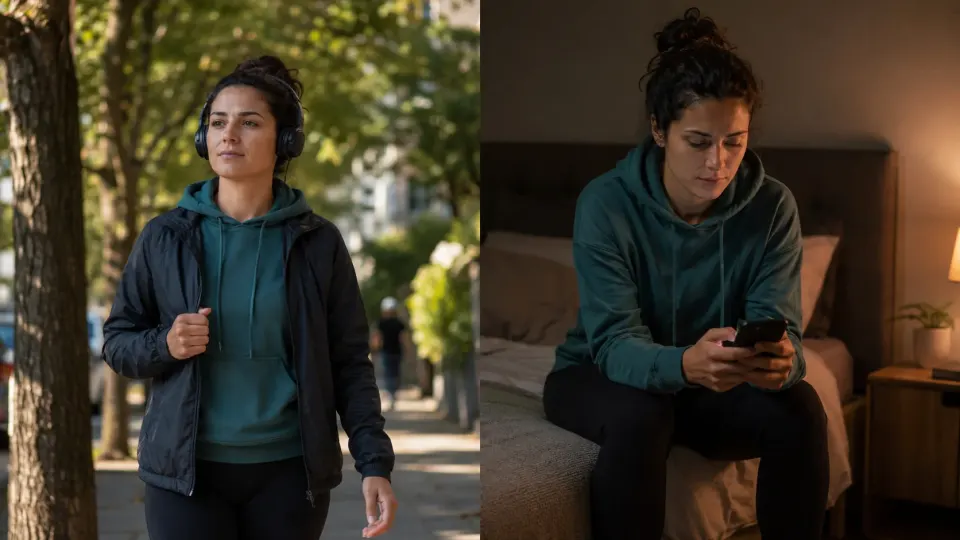
Meanwhile, you are lying in bed checking whether the person you no longer care about has viewed the story you posted specifically for them.
Welcome to the Strong Era.
You are healed, thriving and moving forward.
Please ignore all available evidence.
THE ALGORITHM HAS DECLARED THE HEALING COMPLETE
The current wave has found an especially direct soundtrack in Fuck All The People Who Done You Wrong by SymphonicAngel and Yuki�
Spark.
Spotify lists the track under both artists, while Shazam credits Peter McGreevy as its songwriter and producer. An extended remix followed in August 2026, because apparently ordinary-length emotional defiance was no longer sufficient.
The appeal is not difficult to understand.
It does not ask you to consider both sides.
It does not suggest that everybody made mistakes, communication was complicated or perhaps you simply wanted different things.
It arrives with the emotional subtlety of a chair being thrown through a patio door and says: those people hurt you, you survived and now you rise above them.
For anyone who has spent months trying to be reasonable, that feels magnificent.
Reasonable is exhausting.
Sometimes you do not need a podcast about attachment styles. You need a chorus loud enough to drown out the imaginary argument you keep winning in the shower.
YOU ARE DEFINITELY OVER IT, WHICH IS WHY YOU POSTED THAT VIDEO
The moving-on video follows a strict ceremonial format.
First, locate footage of yourself looking unexpectedly attractive.
Add a song about survival, betrayal or becoming impossible to replace.
Then place a sentence over it explaining that you no longer chase, beg, explain or tolerate.
Finally, upload it and spend the next forty minutes checking whether one extremely specific person has watched it.
This is not hypocrisy.
It is the emotional equivalent of putting scaffolding around a damaged building and hanging a banner on the front saying GRAND REOPENING.
The structure may still be unstable.
There may be debris in the kitchen.
But the sign is up, and sometimes the sign has to appear before anybody believes rebuilding has begun.
That includes you.
IT IS NOT ALWAYS ABOUT AN EX
That is why these videos travel so well.
The face in your head might belong to a former partner, but it could just as easily be a friend who vanished when life became inconvenient.
It might be a relative who used guilt as a remote control.
It might be a manager who spent three years calling you “essential” and six minutes making you redundant.
It might be somebody who lied, cheated, borrowed money, broke a promise, chose everybody except you or returned only when their preferred option stopped replying.
Different wound. Same soundtrack.
The video gives all of them one temporary category: people who no longer get access to you.
That can feel powerful when you have spent too long believing the only way to prove your goodness was to keep the door open while people repeatedly carried your furniture out through it.
ANGER IS A BRIDGE, NOT A NEW HOME
There is value in the angry stage.
Anger can be the first emotion that finally stands up for you.
Sadness asks what was wrong with you. Anger occasionally remembers to ask what was wrong with them.
It helps you block the number, cancel the favour, stop writing explanations and admit that what happened was not acceptable simply because you once loved the person responsible.
But anger is most useful as a bridge.
You cross it to get away from somewhere dangerous or painful. You are not supposed to build a bungalow in the middle and spend the next decade waving at passing traffic.
The strongest version of moving on is not hating somebody forever.
It is reaching the point where their name no longer changes the temperature of your entire day.
That rarely happens during the length of a motivational clip.
REAL MOVING ON IS PAINFULLY UNFILMABLE
Social media recovery is cinematic.
Real recovery is mostly admin.
It is deleting a draft message.
It is making dinner when nobody is asking whether you have eaten.
It is going somewhere you once visited together and discovering the building has not collapsed in sympathy.
It is hearing the song without checking their profile afterwards.
It is a whole afternoon passing before you realise you did not think about them.
Nobody films that bit because very little happens.
There is no sunrise drone shot. No dramatic walk. No perfectly timed chorus.
You simply become yourself again in increments too small for the camera to notice.

YOU DO NOT HAVE TO BE GRATEFUL FOR THE LESSON
The internet loves telling hurt people that everything happened for a reason.
Perhaps.
Sometimes the reason was that another person behaved terribly and you happened to be nearby.
You do not have to turn betrayal into a blessing before you are allowed to recover from it.
You do not have to forgive on a schedule, wish them well or post a graceful statement thanking the experience for helping you grow.
Growth is not an invoice they get to claim credit for.
If you became stronger afterwards, that strength belongs to you.
The person who pushed you into deep water does not deserve applause because you learned to swim.
THE VIDEO CAN STILL HELP
None of this means the motivational wave is fake or useless.
Sometimes borrowed confidence is exactly what gets you through the evening.
You hear somebody sing the thing you have been too polite to say. You save the clip. You play it in the car. For three minutes, the story changes.
You are not the abandoned one, the rejected one or the fool who ignored the warning signs.
You are the person who got out.
That feeling may not last all day, but it does not have to.
Healing is not invalid because it arrives in short bursts between sadness, anger, nostalgia and accidentally opening their profile with your thumb.
Use the video.
Sing along.
Take the walk.
Post the suspiciously confident selfie if you need to.
Just remember that moving on is not something you must successfully perform for an audience.
You are allowed to be strong and still miss them.
You are allowed to know it was wrong and still wish it had worked.
You are allowed to move forward badly, slowly and without inspirational lighting.
OUTOUT VERDICT
If TikTok has filled your feed with defiant singers and strangers announcing that losing people is an upgrade, the algorithm may be crude—but it has recognised something real.
You are trying.
Not flawlessly. Not without checking. Not without occasionally composing a devastating speech that will never be sent.
But you are trying.
Play the anthem. Drive around the supermarket car park as though the closing credits have started. Imagine every person who hurt you watching your magnificent return.
Then go home, put the phone down and do one small thing that has absolutely nothing to do with them.
That quiet part is where moving on actually begins.
Best TikTok videos about moving on: what actually helps
The best TikTok videos about moving on are not always the loudest, saddest or most dramatic clips. The most useful ones usually do something practical: they make you feel understood, give you one manageable next step, or show that recovery is rarely a straight line.
If you arrived here after a breakup, friendship ending or another difficult change, start with videos that leave you calmer and clearer — not clips that encourage you to keep checking an ex, decoding every message or comparing your recovery with somebody else's highlight reel.
Five types of moving-on videos worth looking for
- Honest recovery diaries. Creators who show ordinary progress over several weeks can be more reassuring than overnight transformation stories.
- No-contact encouragement. Look for practical advice about muting notifications, removing reminders and getting through the urge to send another message.
- Healthy routine resets. Sleep, food, exercise, fresh air and seeing other people sound basic, but these habits often provide the structure that difficult days lack.
- Confidence without revenge. Good moving-on content is about rebuilding your own life, not making somebody jealous or staging a perfect comeback.
- Humour that releases pressure. A funny, relatable clip can help when it makes the situation feel less isolating without humiliating anyone involved.
TikTok searches that can produce better results
Searching only for “breakup” can produce an endless stream of emotional videos. More specific searches are usually more useful. Try phrases such as “moving on after a breakup”, “no contact motivation”, “healing after heartbreak”, “starting again after a relationship” or “breakup routine reset”.
Use TikTok's save and “not interested” controls deliberately. Save clips that genuinely help and move past content that makes you spiral. Your recommendations respond to what you watch, replay and interact with, so even hate-watching upsetting clips can bring more of them into your feed.
A quick test before you take advice from a video
Ask three questions: does the creator explain why the advice may help, does it respect normal boundaries, and would following it make tomorrow easier rather than more chaotic? Be wary of anyone promising a guaranteed way to get an ex back, diagnosing a stranger from a few seconds of footage, or encouraging public revenge.
TikTok can offer recognition and a sense of community, but a short video cannot know the full story. Treat it as a prompt, not a diagnosis or a substitute for personal support.
What to do after watching
Choose one small action rather than consuming another hour of clips. Message a friend, take a walk, put photographs into a hidden folder, plan something for the weekend or write down what you want your next month to look like. Progress is usually built from small repeated choices rather than one perfectly worded video.
If sadness or anxiety is affecting everyday life, the NHS Every Mind Matters service has practical wellbeing guidance. If you feel at immediate risk, seek urgent help rather than relying on social-media advice.
The bottom line
The best TikTok videos about moving on should help you turn your attention back towards your own life. Keep the clips that offer perspective, practical steps or a genuine laugh. Skip the ones that keep you trapped in speculation, anger or comparison.