The Princess of Wales will discuss cancer, recovery and life beyond diagnosis in a new documentary filmed around her completion of the National Three Peaks Challenge. Heal with The Princess of Wales will be available on BBC iPlayer from noon and broadcast on BBC One on Sunday 29 November 2026.
The BBC announced the programme on Saturday 21 November alongside a trailer released by Kensington Palace. The film follows Catherine as she climbs Ben Nevis, Scafell Pike and Yr Wyddfa, the highest mountains in Scotland, England and Wales, within 24 hours. She completed the challenge in June in support of the Royal Marsden Cancer Charity.
The existence of a trailer does not make every detail in tabloid coverage equally firm. The confirmed story is a documentary about the personal and wider effects of serious illness, built around a completed endurance challenge and conversations with other people navigating health problems. It is not a medical update about a new diagnosis, and it should not be treated as one.
What the documentary contains
The BBC says the programme is introduced by Kirsty Young and was made by Detail Films. Against the backdrop of the climb, Catherine reflects on her own experience and meets people dealing with serious illness and recovery. The stated themes include comfort, strength, hope and the effect illness has on the whole person and the people around them.
In the trailer, the princess says cancer changes the body but also produces a deeper shift. She describes healing as a journey involving reconnection, hope and joy alongside uncertainty. Those words are her personal reflection. They are not a universal recovery plan, a promise about outcomes or a substitute for clinical advice.
Catherine announced in March 2024 that cancer had been found after major abdominal surgery and that she was receiving preventative chemotherapy. She said in September 2024 that she had completed chemotherapy and announced in January 2025 that she was in remission. She has not publicly identified the type of cancer. Responsible reporting should not attempt to diagnose it by rummaging through photographs, schedules or anonymous internet theories.
The Three Peaks frame
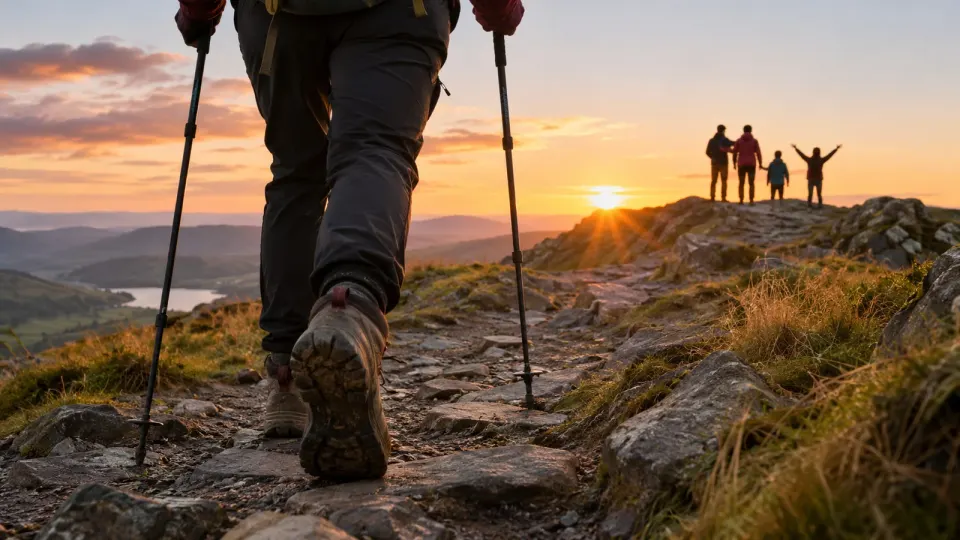
The National Three Peaks Challenge gives the documentary a clear physical structure: three summits, long road transfers and a 24-hour clock. It also risks producing an unhelpful comparison if viewers read the feat as the expected shape of recovery. Most people living with or beyond cancer will not climb Britain's highest mountains, nor should their progress be measured against somebody who did.
The value of the challenge is symbolic and charitable. It provides a landscape in which the programme can discuss fear, effort, uncertainty and support. Kensington Palace said Catherine undertook the challenge with mountain-rescue support and met other fundraisers along the route. The film's message, according to its publicity, is explicitly collective: serious challenges are not meant to be carried alone.
That focus may resonate precisely because “recovery” is often reported as a neat ending. Treatment finishes, a public figure returns to work and the story is filed under good news. Real life can include monitoring, fatigue, changed priorities and anxiety long after the formal treatment stage. The documentary appears designed to stay in that less tidy territory without turning uncertainty into despair.
OutOut has previously covered the tension between royal public interest and personal boundaries in reporting on Harry and Meghan's family security concerns. The same discipline applies here. Catherine has chosen to discuss parts of her experience on camera; that does not create a public entitlement to undisclosed clinical records or speculation about her body.
Where and when it will be shown
The BBC says Heal will premiere in the UK on 29 November. International broadcasts are scheduled through NBCUniversal in the United States on 30 November, Channel 9 in Australia on 1 December, and CTV and Noovo in Canada on 7 December. Kensington Palace said funds received through international distribution are being directed to the Royal Marsden Cancer Charity.
The international rollout makes this more than a domestic royal television special. Catherine's experience supplies the attention, but the programme's stated ambition is to widen discussion about holistic support, wellbeing, resilience and quality of life during and after diagnosis. Whether the finished film achieves that will be clearer after viewers can assess the full documentary rather than a carefully edited trailer.
There is also a practical point. Anyone affected by cancer may find the subject difficult. The BBC says the programme will sit alongside an iPlayer collection about cancer and life-threatening illness, with signposting to support organisations. Viewers can choose when, how or whether to watch. Emotional significance is not an instruction to press play.
The OutOut verdict
Royal documentaries often arrive carrying orchestral music, a mountain and enough soft-focus dawn to make a kettle feel historic. Heal has all the ingredients for reverence. Its more useful test will be whether it leaves room for ordinary recovery: the appointments, the people who help, the uncertainty and the days when progress looks nothing like a summit photograph.
The confirmed material suggests Catherine is using an extraordinary physical achievement to make a modest point—that illness changes people and support matters. That is stronger than presenting recovery as a heroic solo act.
The trailer will generate headlines about bravery. The documentary deserves to be judged on whether it also makes viewers who are tired, frightened or nowhere near a mountain feel included in the conversation.
Sources
- BBC Media Centre: Heal with The Princess of Wales, published 21 November 2026.
- Associated Press: Princess Catherine reflects on life after cancer, published 21 November 2026.
- Reuters: Princess of Wales to feature in documentary, published 21 November 2026.
- NBC: Official Heal trailer, published 21 November 2026.