ONE MODEL IS TRYING TO HEAR THE WORDS, THE SPEAKER AND THE FULL STOP
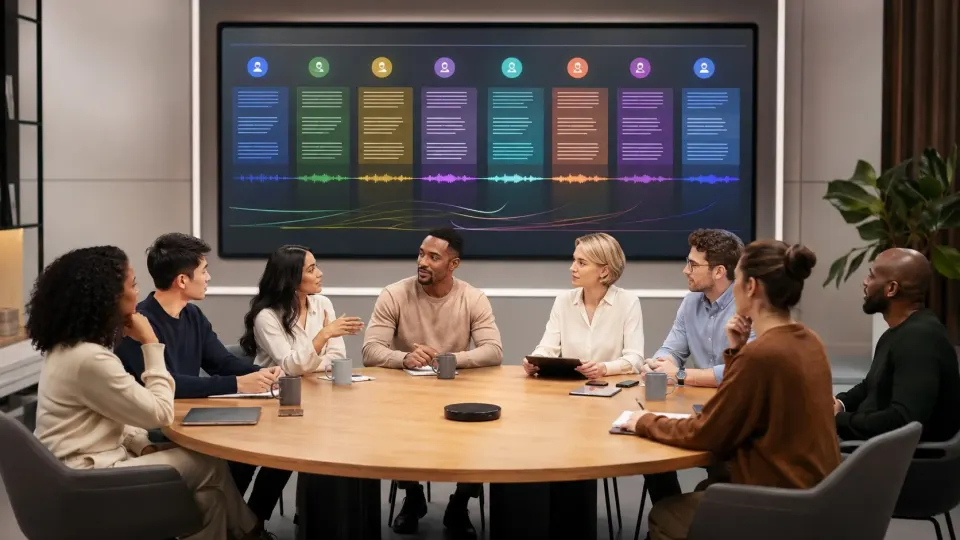
Meta has launched Muse Voice Transcribe, a real-time audio model designed to turn live speech into text while identifying who is talking and deciding when each person has finished.
Those sound like small distinctions until a system is dropped into a meeting with several people interrupting one another, switching languages and refusing to end a sentence before beginning the next one.
Traditional voice systems often split the job between separate components. One recognises the words, another attempts to separate speakers and a third decides when enough silence has passed to mark the end of an utterance. Meta says Muse Voice Transcribe combines those tasks in a single model.
The result is intended to reduce delays and mistakes created when several systems pass audio between them.
MORE THAN 20 SPEAKERS AND LIVE LANGUAGE SWITCHING
Meta says the model can distinguish more than 20 speakers in recordings lasting over an hour. It supports live multilingual input and can follow code-switching, where somebody changes language during the same conversation.
Its research announcement says the system natively handles more than 25 languages, with additional training across a broader language set. Users can also bias the transcription towards particular languages, keywords or context — useful when ordinary speech contains names, technical terms or specialist vocabulary.
The company says Muse Voice Transcribe ranked first on streaming speech-to-text and public speaker-separation benchmarks as measured on 1 September 2026. That is Meta’s claim against the benchmark set available on that date, not a guarantee that every noisy pub discussion will emerge as perfect minutes.

WHERE IT IS AVAILABLE
The technology already powers dictation in Meta AI for Mac and Muse Code. Developers can access it through the hosted Meta Model API rather than downloading model weights and running it wherever they choose.
Meta lists a price of $3 per 1,000 audio minutes. At scale, that makes the service potentially useful for meetings, interviews, podcasts, captions and customer-service calls.
It also makes accuracy and privacy more than academic details. A transcript that assigns a statement to the wrong person can create a serious record-keeping problem, while long recordings of several voices may contain personal or confidential information. Organisations will still need clear consent, retention rules and human checking for important material.
THE REAL TEST IS A ROOM THAT REFUSES TO COOPERATE
Controlled demonstrations are useful, but live audio is hostile territory. People speak over one another. Microphones are uneven. Accents, background noise, laughter and unfinished sentences all make clean separation difficult.
Muse Voice Transcribe is a significant attempt to solve the complete listening problem in real time rather than improving transcription in isolation. Whether it changes daily work will depend on how well it handles the meeting where twelve people say “just one final point” at exactly the same moment.
Sources: Meta AI Research and Engadget.