The Premier League season is one match old and Manchester United have already compressed their entire post-Ferguson experience into a convenient 90-minute package.
There was renewed optimism.
There were exciting new signings.
There was talk of momentum, direction and finally returning to the elite.
Then there was Hull City away.
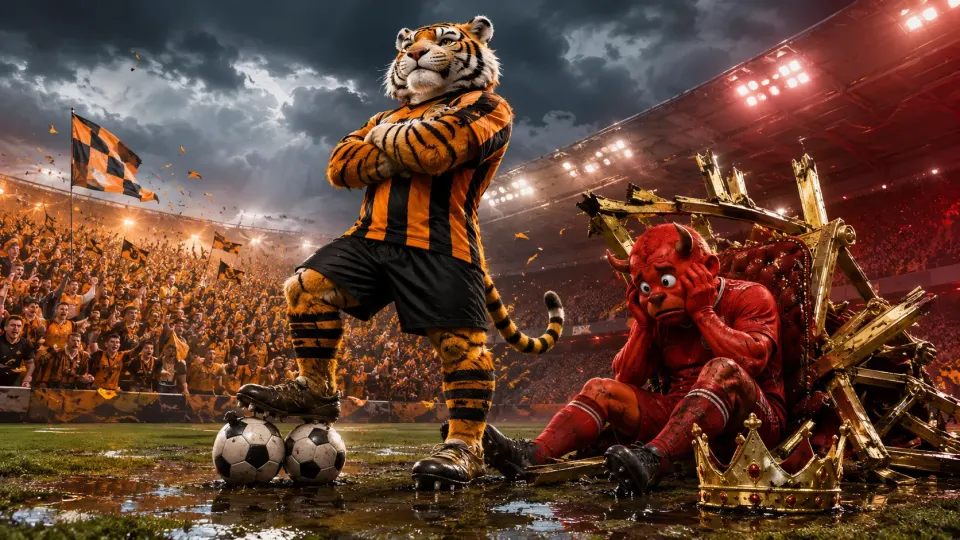
Hull had spent nine years outside the Premier League. United arrived at the MKM Stadium after finishing third last season and apparently expected their grand new campaign to begin with a polite confidence-building exercise.
Hull instead used them as the ribbon at their Premier League reopening ceremony.
It took just 17 minutes for Semi Ajayi to score the opening goal.
By the 38th minute, Nobel Mendy had added another.
Manchester United’s title challenge therefore lasted approximately as long as a supermarket lunch break.
TWO CENTRE-BACKS, TWO GOALS, NO MARKING
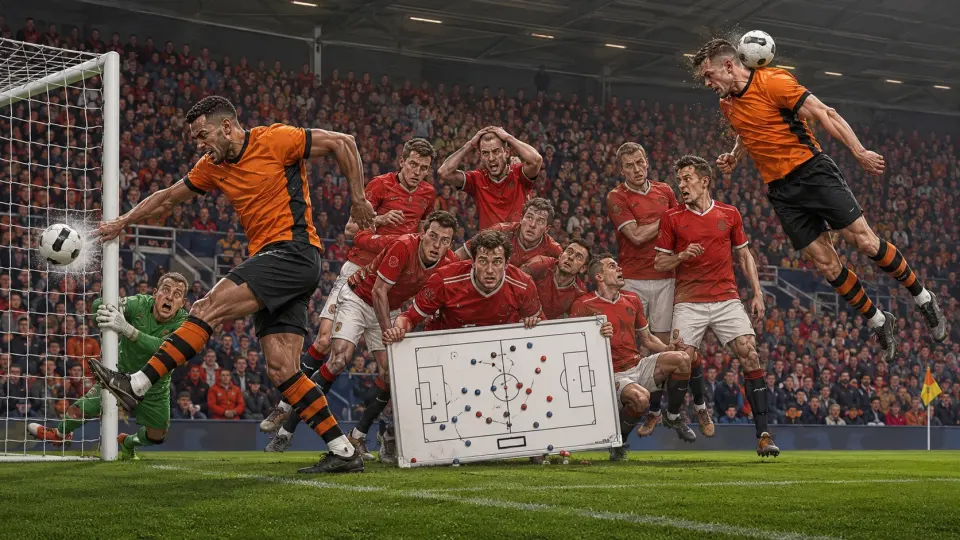
Both Hull goals came from defenders and both followed set pieces.
Ajayi reacted first after Oli McBurnie’s effort was pushed against the post, hammering the loose ball home while United’s defence conducted a detailed investigation into whose job that might have been.
Mendy then headed in Regan Slater’s free-kick seven minutes before half-time.
United’s tactical response to conceding from one set piece was therefore to concede from another one.
Consistency is important at the highest level.
The Premier League’s official report confirms that this was Hull’s first top-flight victory over Manchester United and their first league win against them since 1974.
Hull had waited 52 years for another one.
United kindly ensured they did not have to wait until the second weekend.
71.5% POSSESSION, ZERO PER CENT POINTS
Manchester United finished with 71.5% of the ball and attempted 21 shots.
Hull managed eight.
Unfortunately, football continues to award points for goals rather than how long a team can maintain a respectful professional relationship with the ball.
United put only five of their 21 attempts on target. Hull put four on target and scored twice.
Those official United statistics reveal a team that possessed the ball with the confidence of European royalty and used it with the cutting edge of a buttered crumpet.
The ball travelled sideways, backwards and occasionally forwards when somebody became confused.
Hull had 28.5% possession because they did not require the remaining 71.5%.
They had already used theirs.
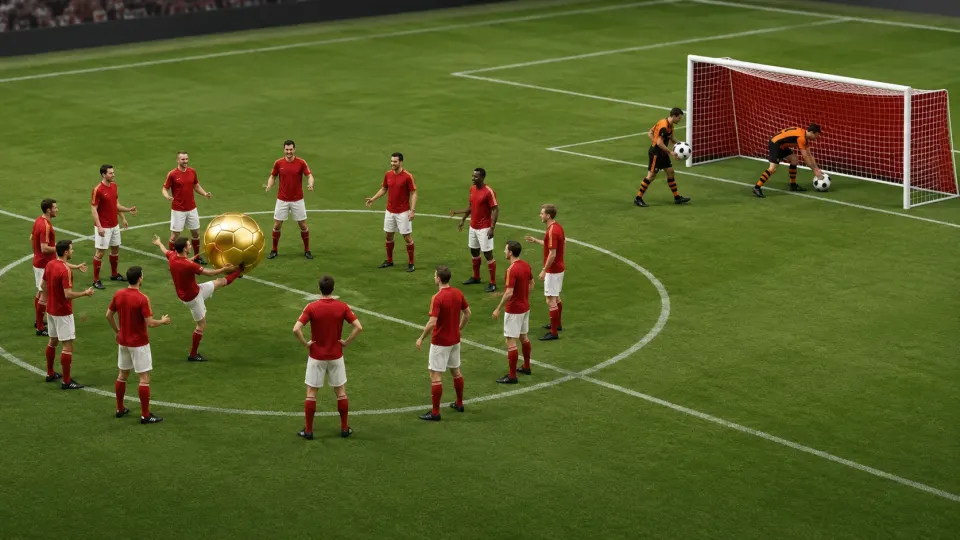
Even Harry Maguire reportedly became one of United’s more threatening attacking outlets, which is rarely the opening sentence of a successful title campaign.
HULL HAVE JUST RETURNED AND ALREADY OWN THE PLACE
This was not a Hull team assembled from expensive global superstars.
Eight members of their starting line-up had played for the club in the Championship last season.
They returned to the Premier League, looked at Manchester United’s famous shirts, huge revenues and collection of international players, and decided none of it appeared especially relevant.
Hull were quicker, stronger and considerably more organised.
They defended as a team, attacked United’s weaknesses and treated every set piece as an opportunity.
United treated them more like an unexpected fire drill.
The result deserves to be remembered as a magnificent Hull victory, not merely another Manchester United catastrophe.
Fortunately, there is plenty of room for both.
THE CARRICK REVOLUTION ENCOUNTERS HULL
Michael Carrick had transformed United after taking charge in January, collecting 39 points from 17 league matches and dragging them to third place.
New arrivals including Youri Tielemans and Andrey Santos added to the belief that United might finally be ready to challenge properly again.
Then Hull subjected the entire project to its first annual service and found several warning lights already flashing.
Carrick said afterwards that United had improvements to make but insisted one result would not alter the club’s direction.
“One game doesn’t change the direction of everything,” he said.
That is correct.
United may still be travelling forward.
Saturday merely looked remarkably like reverse with the hazard lights on.
WELCOME BACK, MARCUS — EVERYTHING IS FINE
The afternoon also featured Marcus Rashford’s first Manchester United appearance since December 2024 following loan spells with Aston Villa and Barcelona.
Imagine escaping a burning building, spending some time recovering in Spain and then being invited back because somebody had repainted the hallway.
Rashford entered as a second-half substitute with United already 2–0 behind.
He showed some sharpness but could not rescue a side whose attacking plan largely consisted of reaching the edge of Hull’s penalty area and waiting for inspiration to be delivered.
It never arrived.
Possibly because the trains had been cancelled.
EVEN THE RAILWAY JOINED IN
As if losing 2–0 to a newly promoted side was not enough, United’s travelling supporters were informed during the second half that two trains back to Manchester had been cancelled.
According to Reuters’ report from the match, the stadium announcement immediately produced another contribution from the Hull supporters:
“You’re going home in a taxi.”
It was a rare afternoon when Manchester United’s movement off the pitch was no more convincing than its movement on it.
The fans had travelled across the country expecting to watch the beginning of a new campaign.
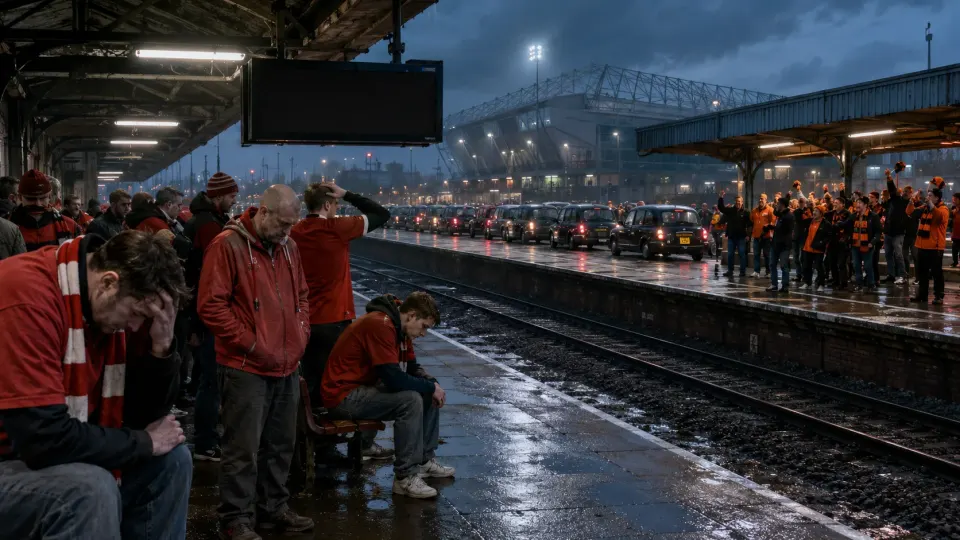
They received two set-piece goals, no points and an emergency investigation into surge pricing.
THE OUTOUT VERDICT
One defeat does not define a season.
But it can draw an impressively detailed preliminary sketch.
Manchester United arrived believing last season’s recovery had restored momentum. They left after being comfortably beaten by a promoted team playing its first Premier League match in nine years.
Hull were organised, fearless and thoroughly deserving winners.
United were slow, soft and apparently astonished that the opposition had also turned up.
Next weekend, Carrick’s side host Ipswich Town.
Another newly promoted club.
What could possibly go wrong?