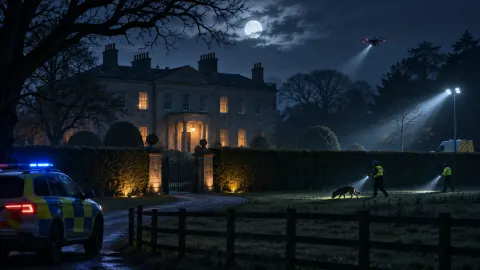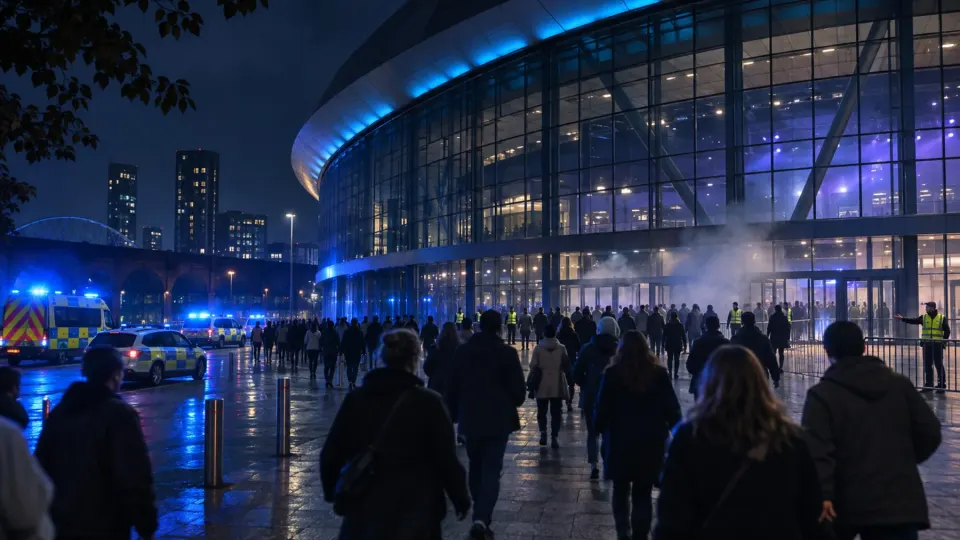
Greater Manchester Police says 89 people displayed symptoms after an unknown substance was dispersed during a concert at Manchester's Co-op Live arena on Sunday night, 22 November. One woman was taken to Manchester Royal Infirmary, while 88 people underwent dry decontamination at the scene and were temporarily accommodated at the Etihad Stadium.
More than 12,000 people were attending the Don Toliver concert. Police initially said the substance was believed to be tear gas, but their later update deliberately returned to the more cautious description of an unknown substance. Testing was continuing on Monday 23 November, no arrest had been made by the time of the force's 3.50pm update, and investigators said they were still trying to establish where the substance came from, what risk it presented and whether any criminality occurred.
Those are the verified facts. Social-media clips, crowd accounts and speculation about how an item entered the venue may help investigators, but they do not yet identify a substance, a person responsible or a proven security failure. The correct story is alarming enough without giving the internet a chemistry qualification and a detective badge before breakfast.
What happened at Co-op Live
Emergency services responded near the end of Sunday's concert after reports that a substance had been released in the crowd. The arena was evacuated and a major incident was declared so police, ambulance, fire and partner agencies could coordinate their response. Greater Manchester Police said that status was lifted at 4am on Monday.
The force's first statement said the substance was believed to be tear gas and that no serious injuries had been reported. Its later statement gave the fuller numbers: 89 people displayed symptoms believed to be linked to exposure, one went to hospital and 88 received dry decontamination. Assistant Chief Constable Tom Harding said the incident was isolated and there was no wider threat to the public.
The distinction between the two updates matters. Early emergency information is necessarily provisional. It tells people what to do while responders establish what happened. A later investigation may confirm the original assessment, refine it or replace it. Calling the material confirmed tear gas would therefore go beyond the latest police wording.
Police asked anyone who attended the event and subsequently noticed side-effects or became ill to attend hospital, contact their GP or call 101. That was the official advice published on Monday; it was not a claim that every cough, headache or anxious moment after a frightening evacuation had the same cause.
Security questions are legitimate, verdicts are premature
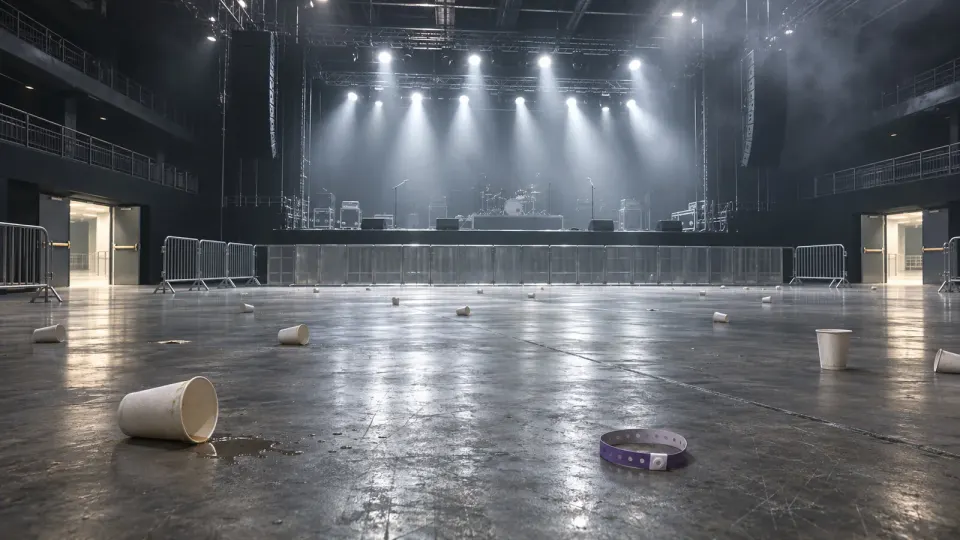
Concertgoers quoted by the Guardian raised concerns about security and described people apparently getting into the venue without tickets. Those accounts deserve examination, particularly at an arena responsible for moving thousands of people through searches, barriers and exits. They are accounts from attendees, not a completed inspection report.
Venue security is a chain rather than one magic checkpoint. It includes ticket verification, bag policies, staff positioning, crowd observation, incident reporting, ventilation decisions, evacuation routes and communication with emergency services. A review should ask whether procedures were followed, whether staffing and barriers were adequate and whether warning signs were missed. It should also recognise what worked: police said more than 12,000 people were safely escorted out.
An evacuation on that scale can itself create risk. People may be separated from friends, pushed towards transport at the same time or left waiting in cold conditions without clear information. The decision to use the neighbouring Etihad Stadium for those undergoing decontamination gave responders a controlled place to support them while the arena remained a scene.
The public will reasonably want to know what testing finds, whether CCTV or ticketing data identifies how the substance arrived, and whether anyone deliberately released it. Until police answer those questions, the words “unknown”, “believed” and “investigation” are not bureaucratic padding. They are the guardrails between reporting and accusation.
OutOut applies the same caution across public-safety stories. Our report on two men charged over an alleged plot against Manchester's Jewish community separates what prosecutors allege from what a court has decided. The principle here is simpler still: police have not announced a suspect or even a final identification of the substance.
What happens next
Items recovered from the venue were due to undergo further testing. Investigators will also be able to examine arena CCTV, entry records, witness statements, medical information and any material collected by emergency responders. Police said a scene would remain in place during Monday while enquiries continued.
Any finding of criminality would start another stage rather than finish the story. An arrest is not a charge, a charge is not a conviction and a viral clip is not forensic proof. If the investigation instead identifies an accidental release or another explanation, that should receive the same prominence as the initial alarm.
The venue and organisers also face a practical test before the next large event. Visitors need to know whether operations have resumed, whether any procedures have changed and where to find current advice. Clear updates will do more for confidence than a corporate paragraph declaring safety the “number one priority” while answering none of the numbered questions.
For readers following the continuing investigation, OutOut's UK news section will distinguish confirmed updates from claims circulating online.
The OutOut verdict
The emergency response prevented a frightening incident from becoming a stampede of rumour and confusion inside a packed arena. More than 12,000 people got out, affected concertgoers were assessed and the major-incident structure was stood down within hours. That deserves recognition.
It does not erase the central fact that 89 people developed symptoms at a night they had paid to enjoy. “Nobody seriously hurt” is good news, not a customer-service voucher that cancels the need to explain how an unknown substance reached a crowd.
The roast belongs with anyone trying to turn incomplete evidence into a fully cast crime drama. Police are testing objects; social media has already tested everybody's patience. The useful questions are unglamorous: what was released, how did it get there, were searches and barriers adequate, and what changes before the doors open again?
Until those answers arrive, the responsible headline remains narrower than the loudest post. An unknown substance caused symptoms, an arena was evacuated, and an investigation is active. Facts first; amateur gas chromatography can wait outside with the touts.
Sources
- Greater Manchester Police: update on Co-op Live incident as enquiries continue, published 23 November 2026.
- Greater Manchester Police: initial update following incident at Co-op Live, published 22 November 2026.
- North West Ambulance Service: incident at Co-op Live, Manchester, published 22 November 2026.
- The Guardian: concertgoers raise security concerns after Manchester incident, published 23 November 2026.